Gallery
Problems from many fields, each on a page of its own: stated in a few
lines, solved with pm.solve, and drawn. Every picture is drawn by the
code of its page when this website is built, so no picture can disagree
with its code.
Potentials and steady states
Charges and the potentials they make, heat that has settled, membranes that sag.
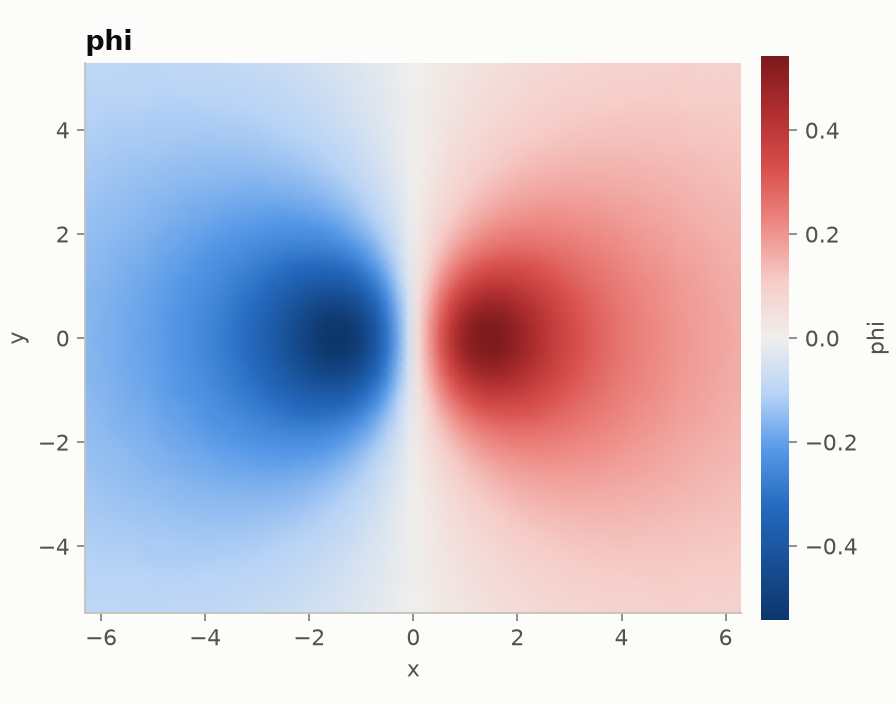
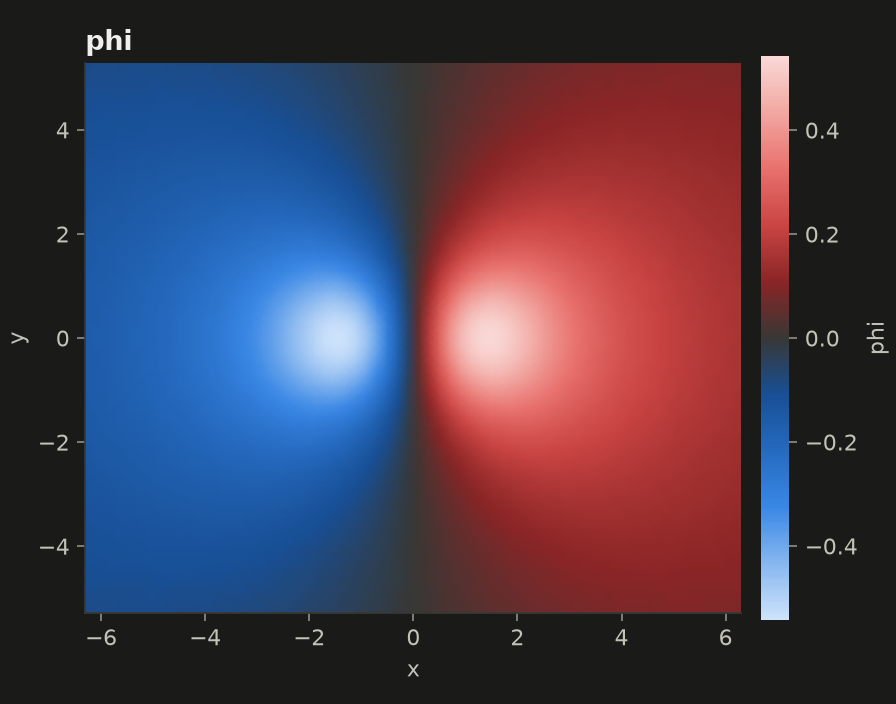
The potential of a positive and a negative charge in free space, with nothing around them.
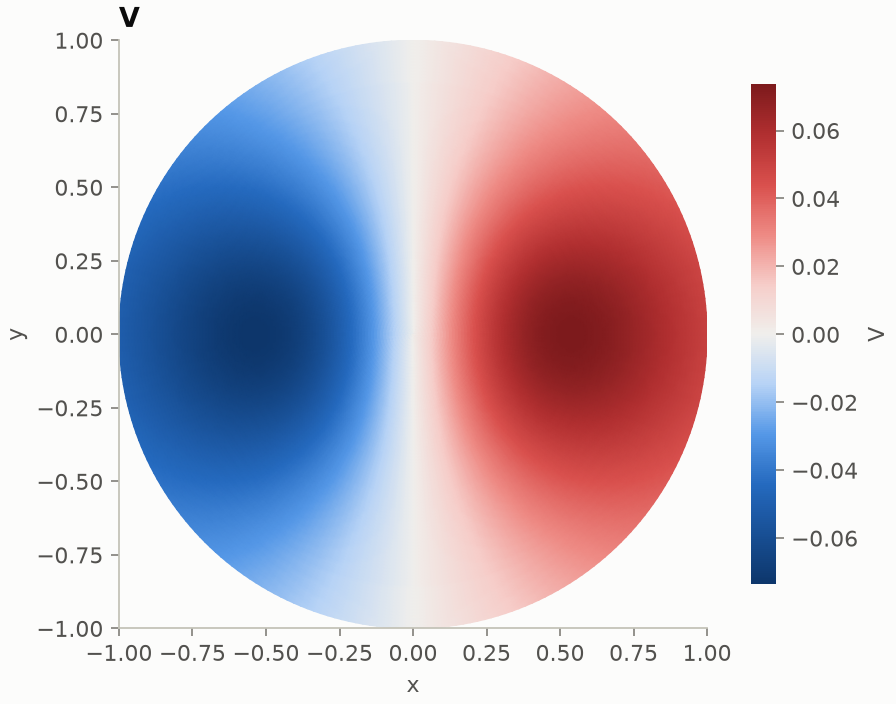
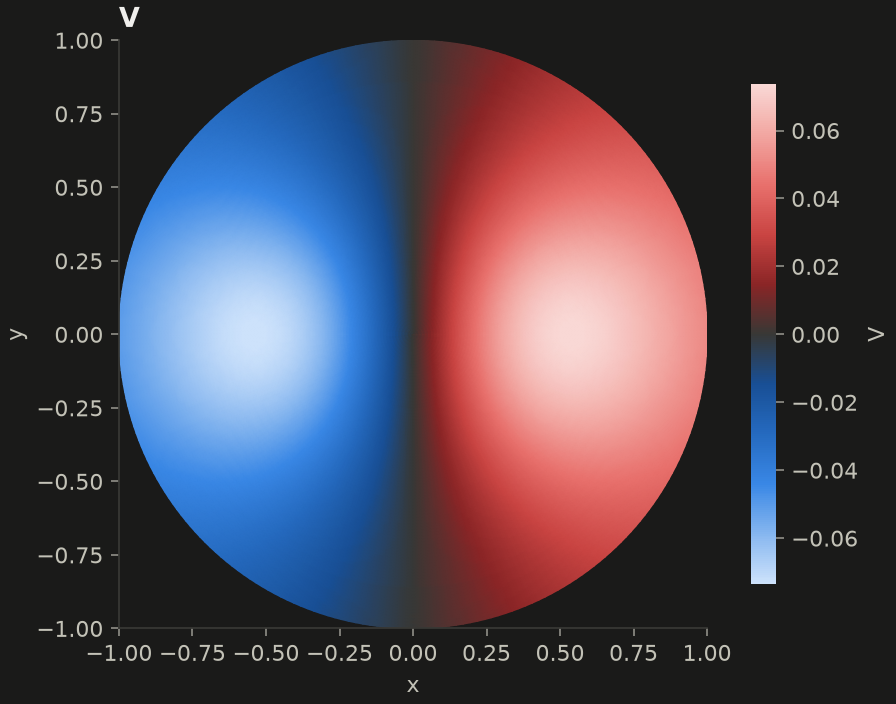
Two charges of opposite sign in a disk with vacuum outside, on a grid that follows the disk.
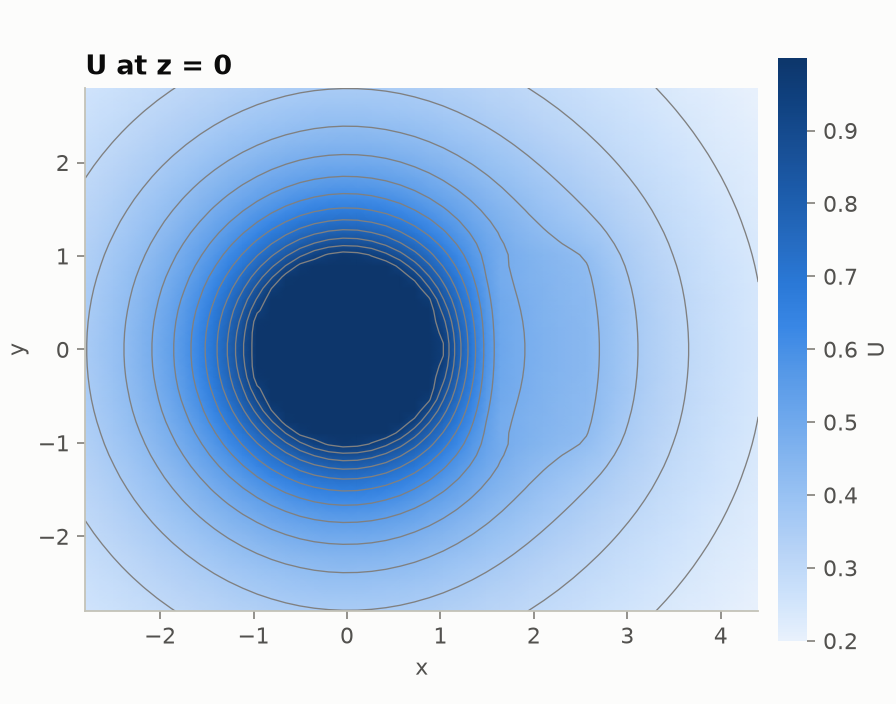
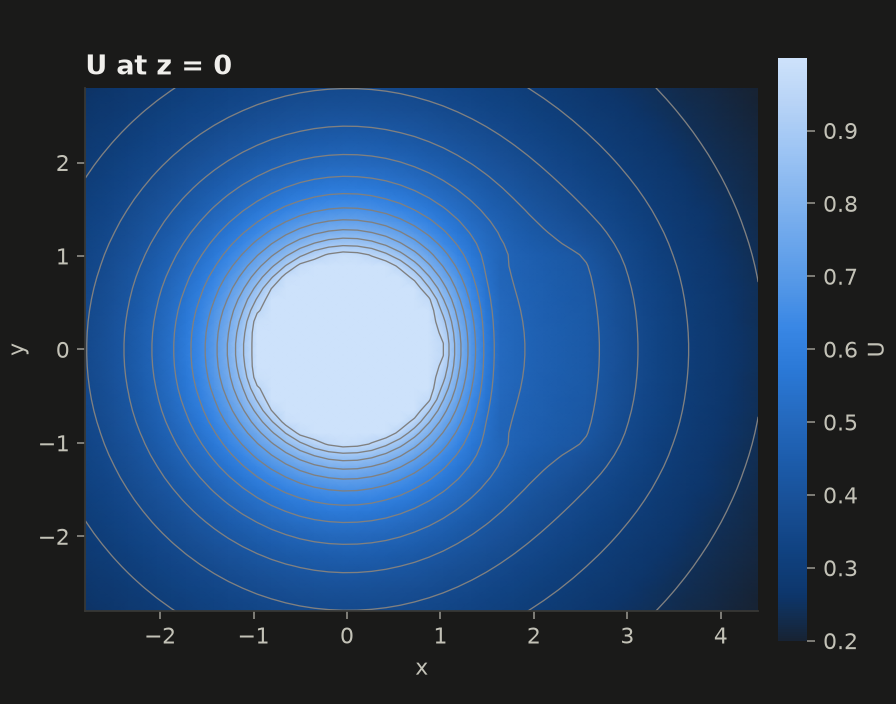
A section through the potential of a conducting sphere at the potential one, with a block of glass next to it.
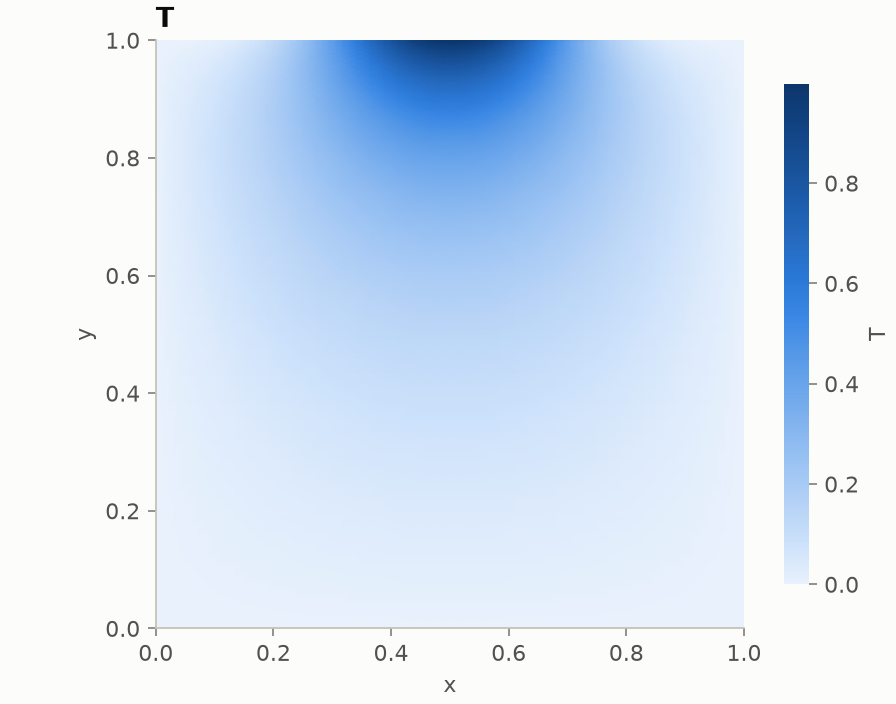
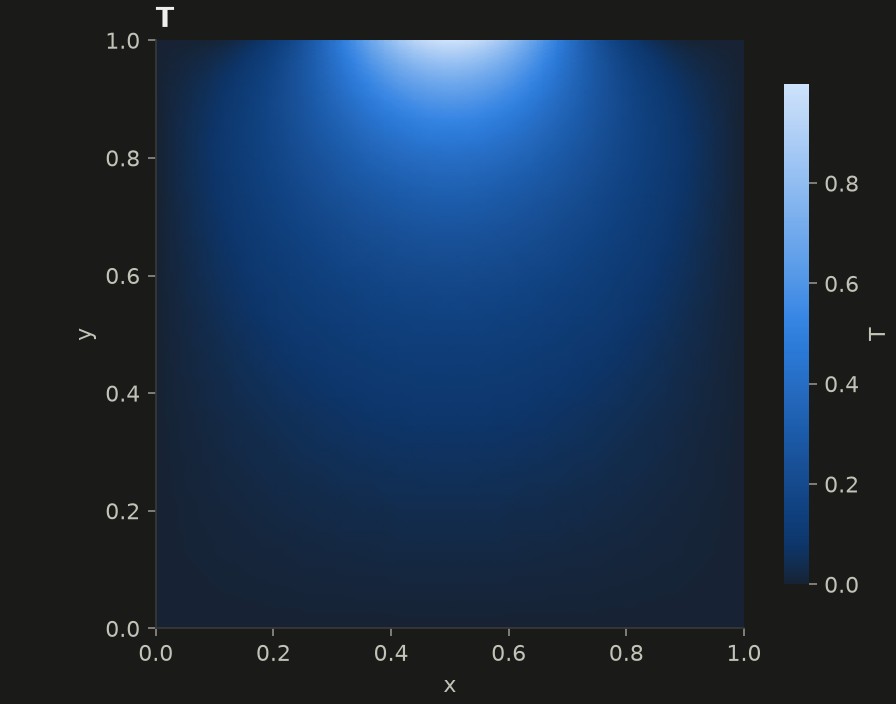
The temperature of a square plate with three cold sides and a fourth that is heated in its middle.
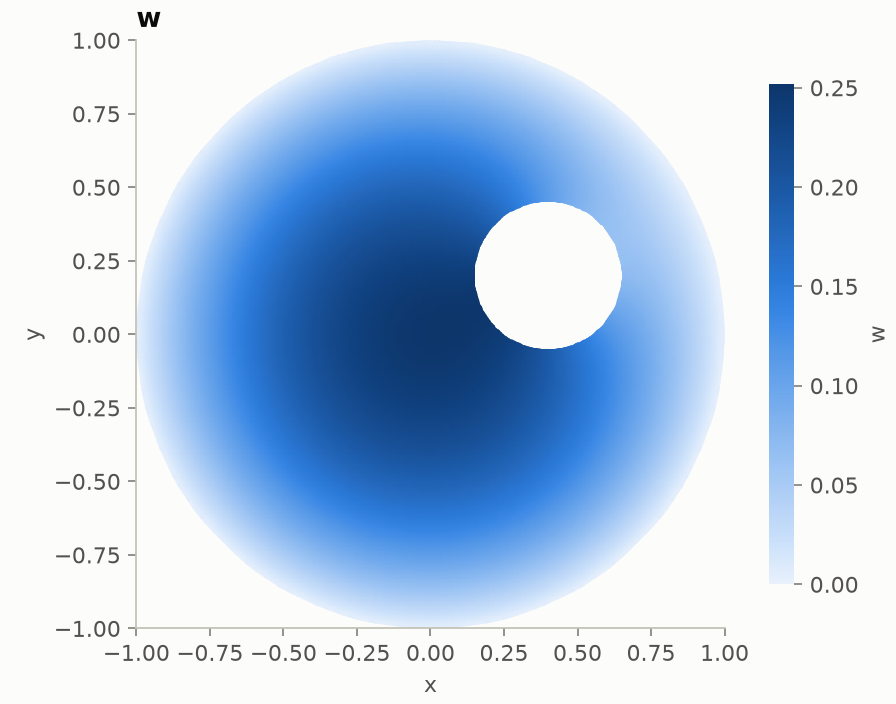
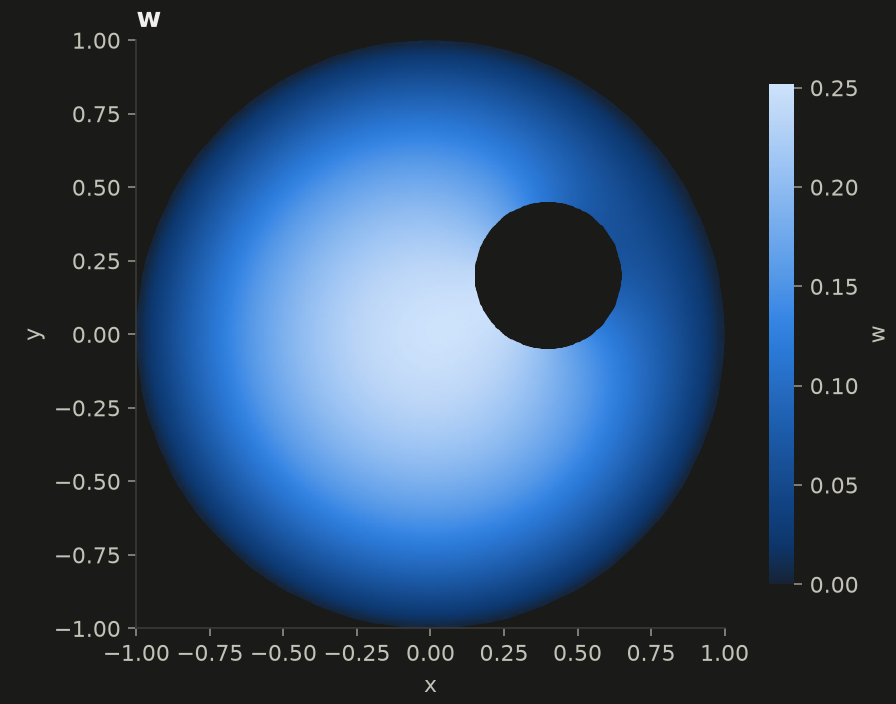
A round plate that is heated evenly and kept cold along its rim, with a hole that lets no heat through.
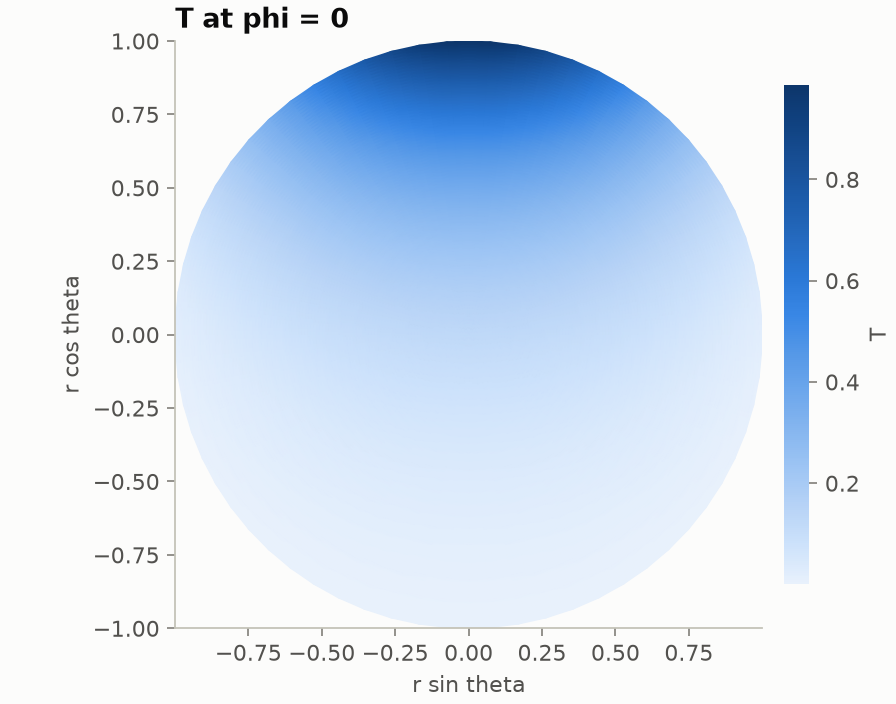
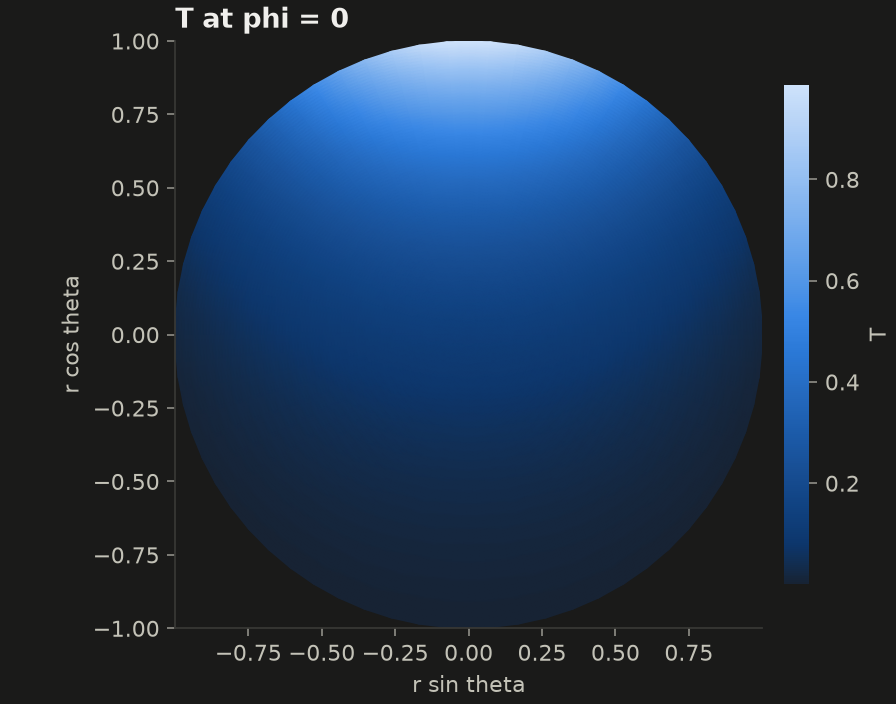
A section through a ball whose surface is hot around one pole and cold elsewhere.
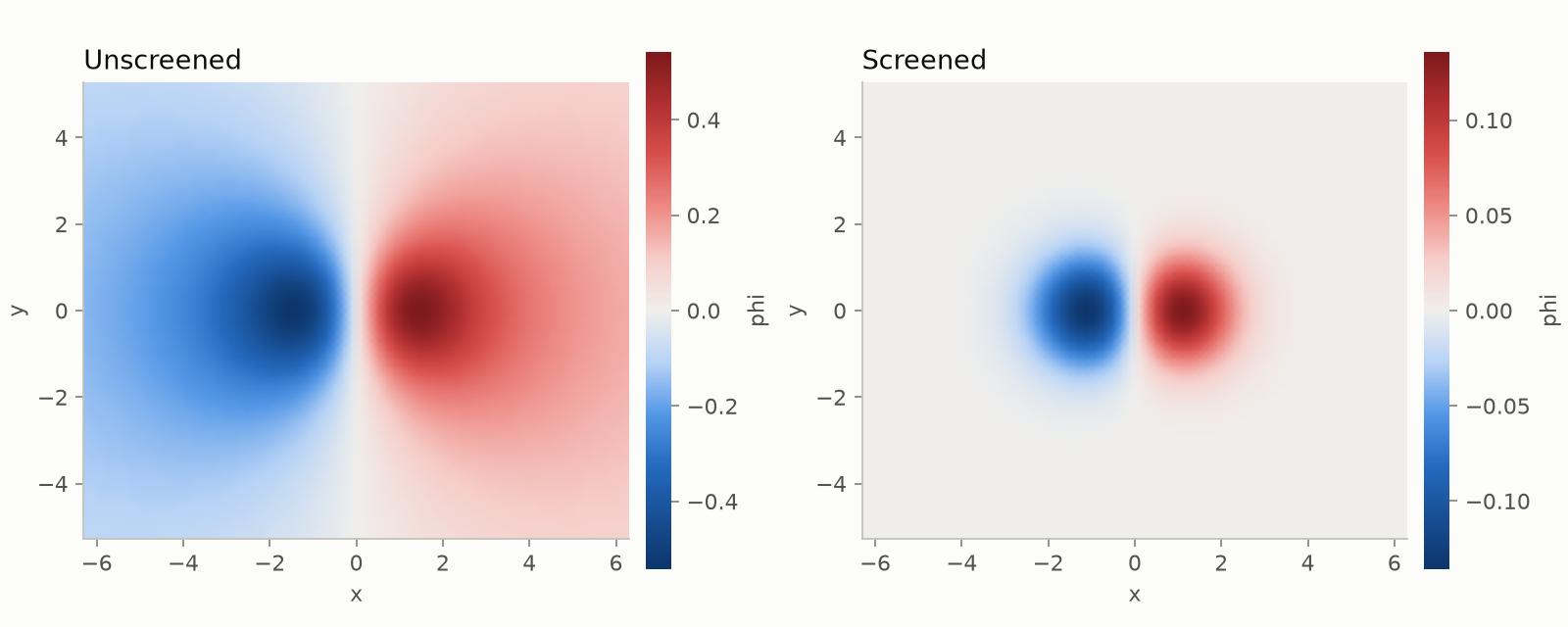
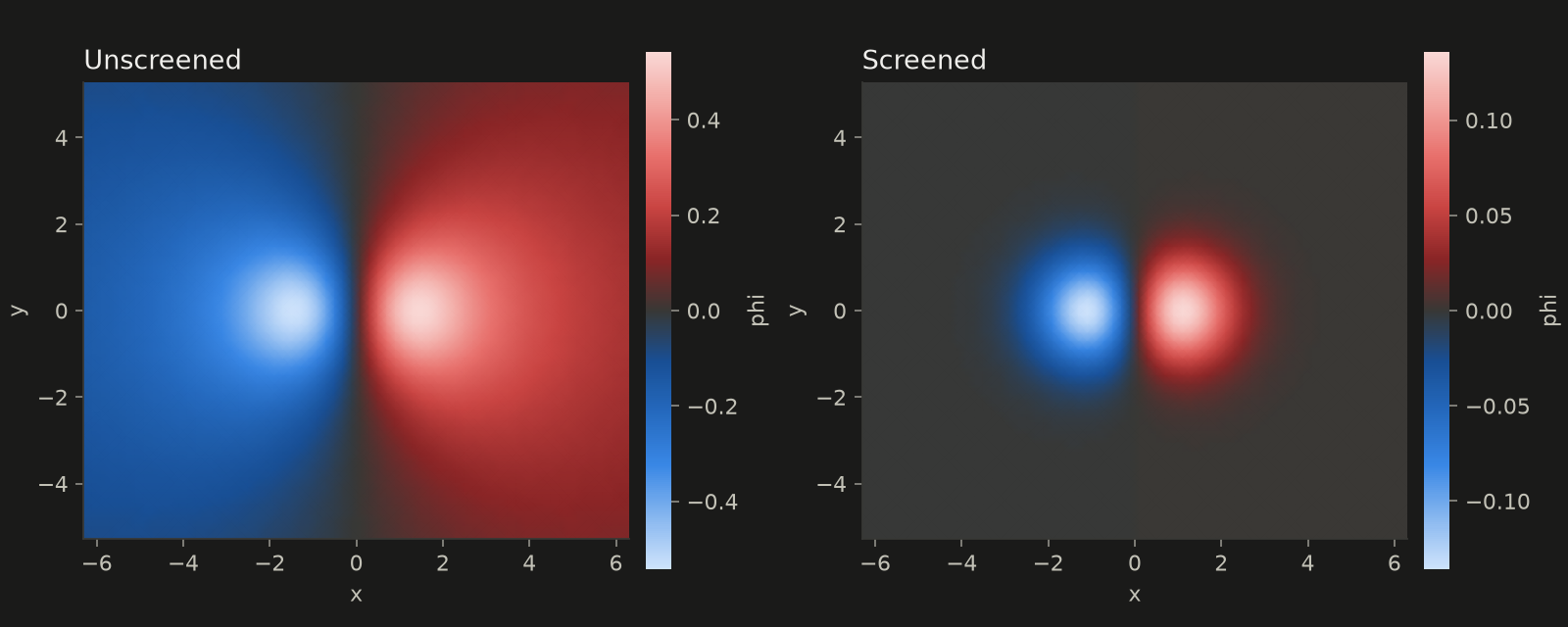
The potential of two charges in free space, and beside it the same potential when the space around them screens it.
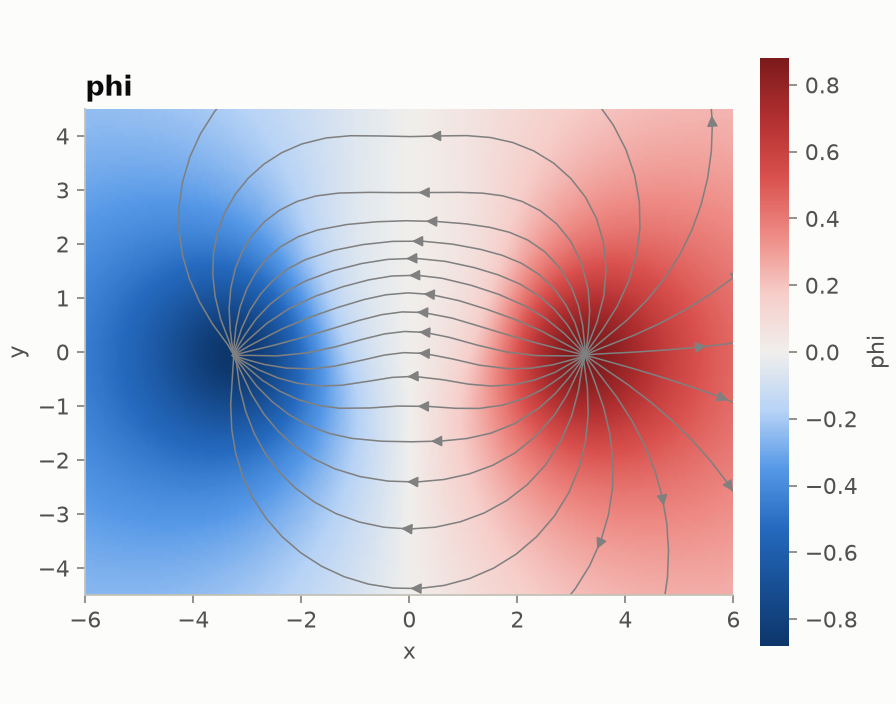
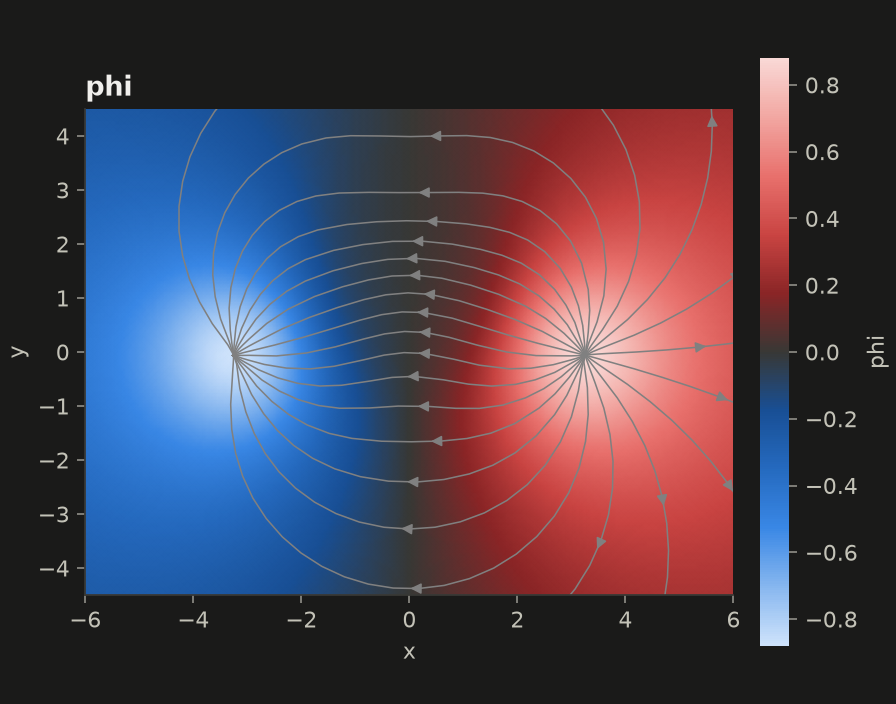
The field between two charges, drawn into a piece of glass that lies beside the straight way from one to the other.
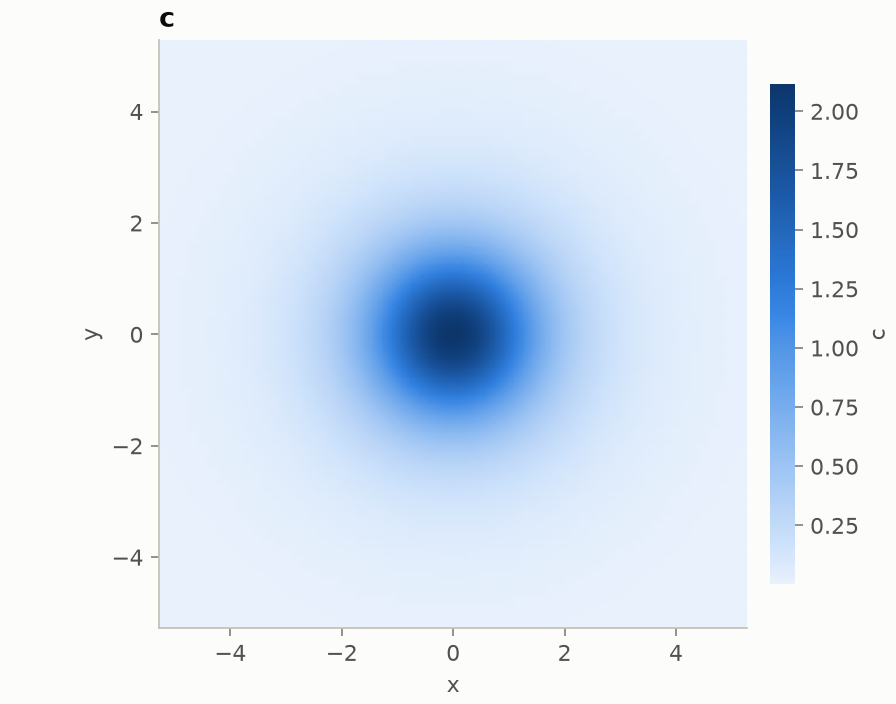
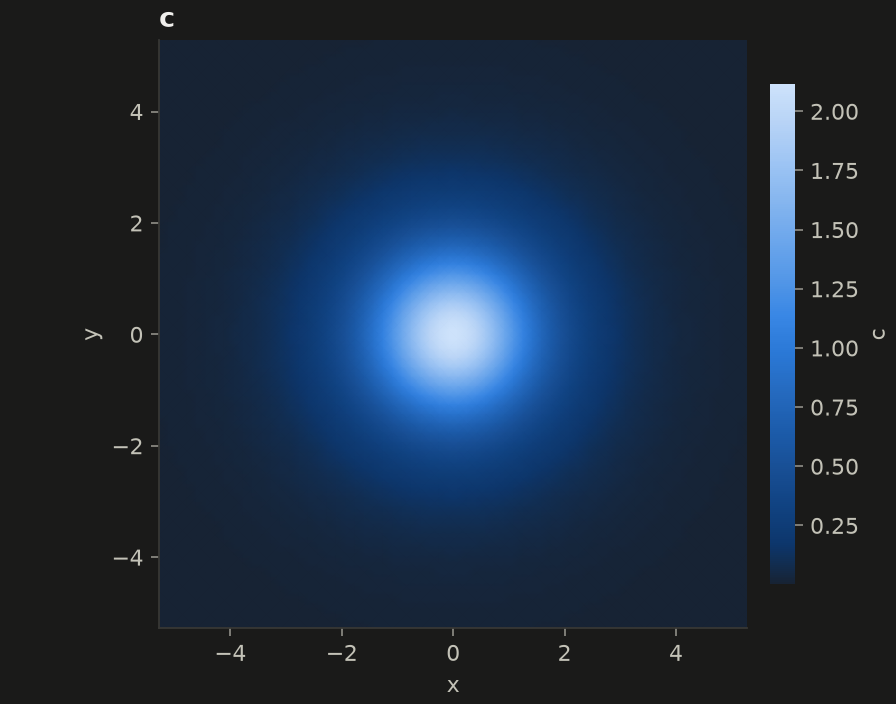
The potential around a charged rod in salt water, where the ions that screen it respond to it exponentially.
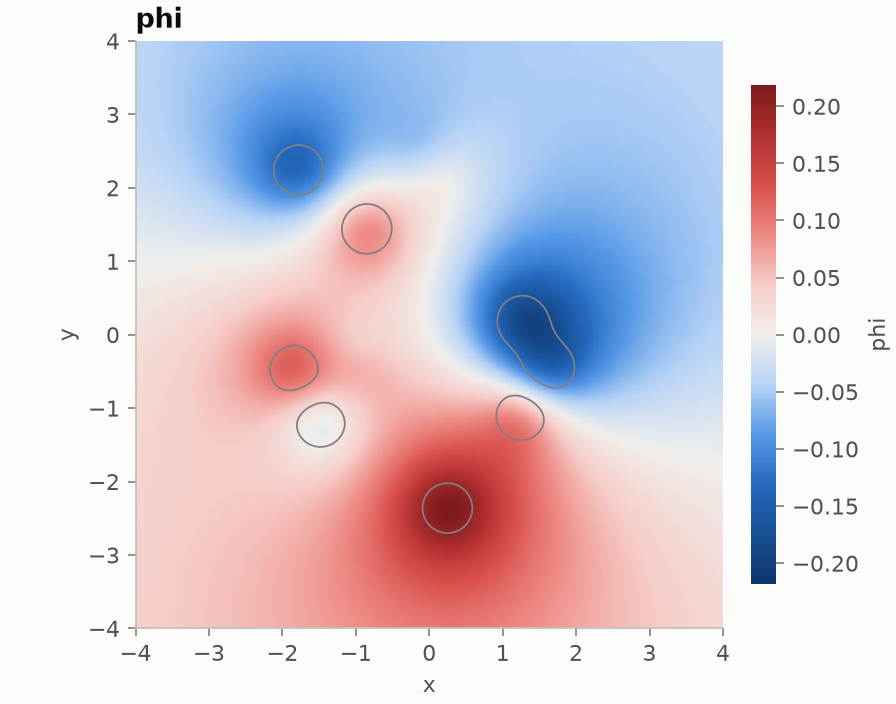
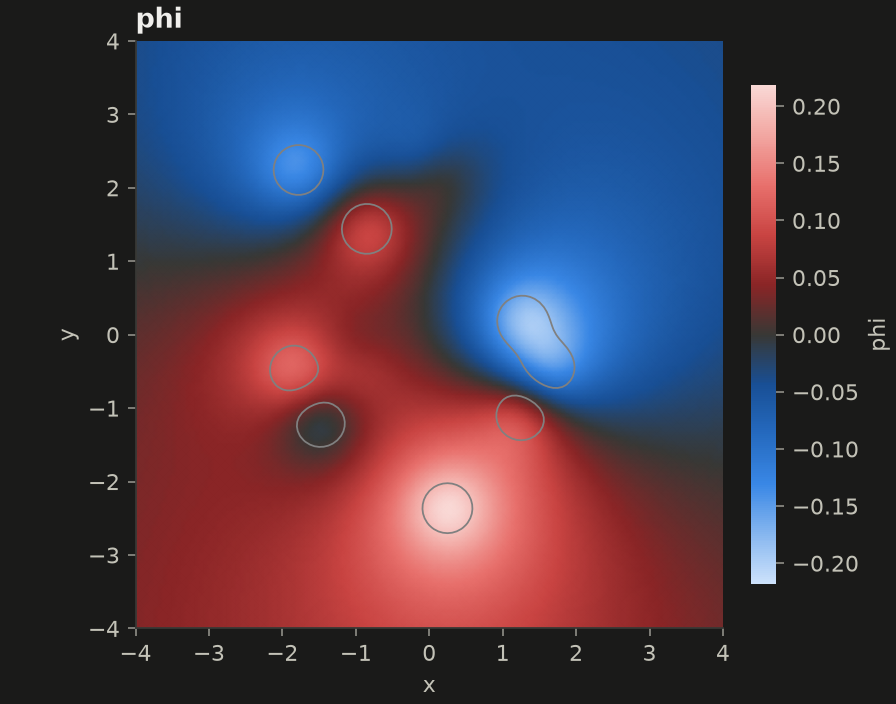
The potential of a dozen charges that are given as an array of numbers, not as a formula.
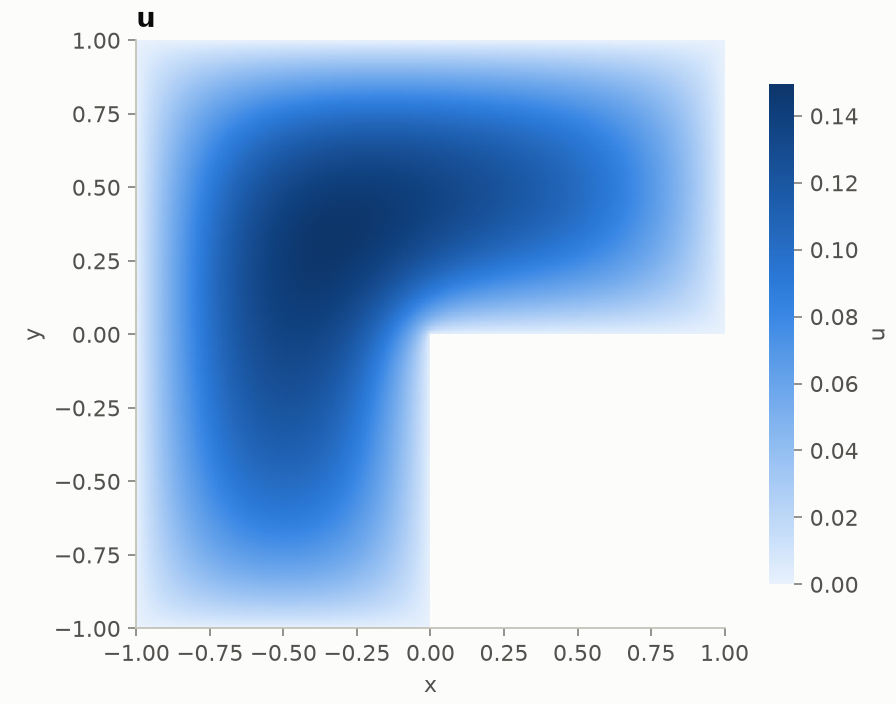
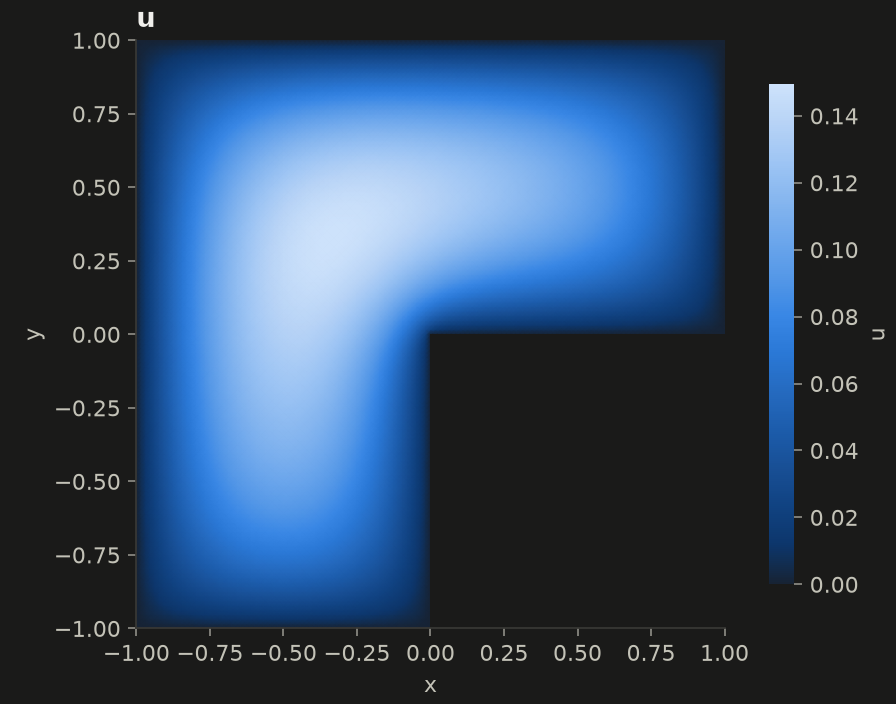
A membrane in the shape of an L, held along its edge, that sags under an even load.
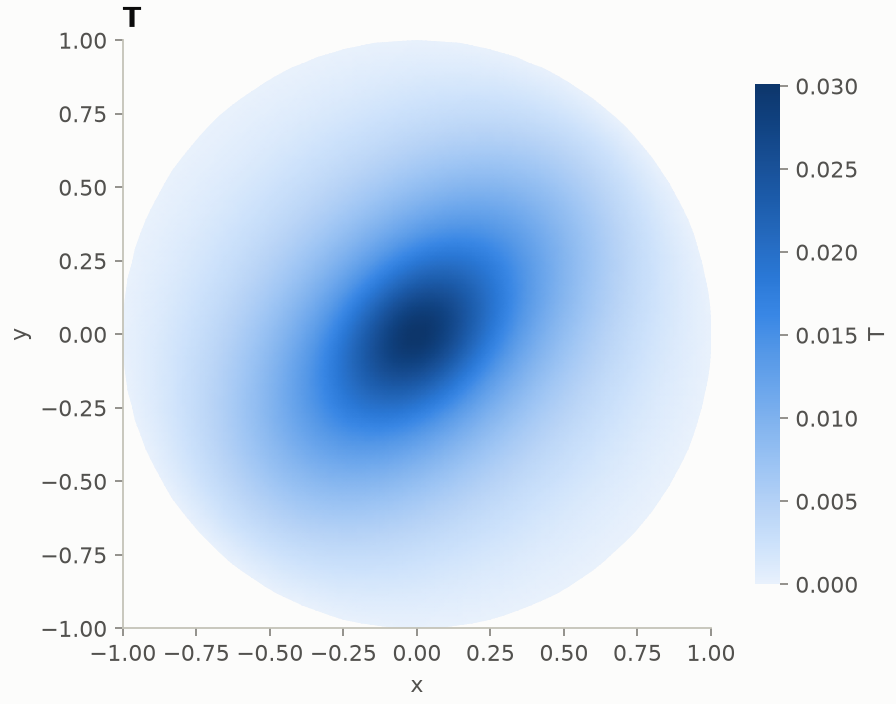
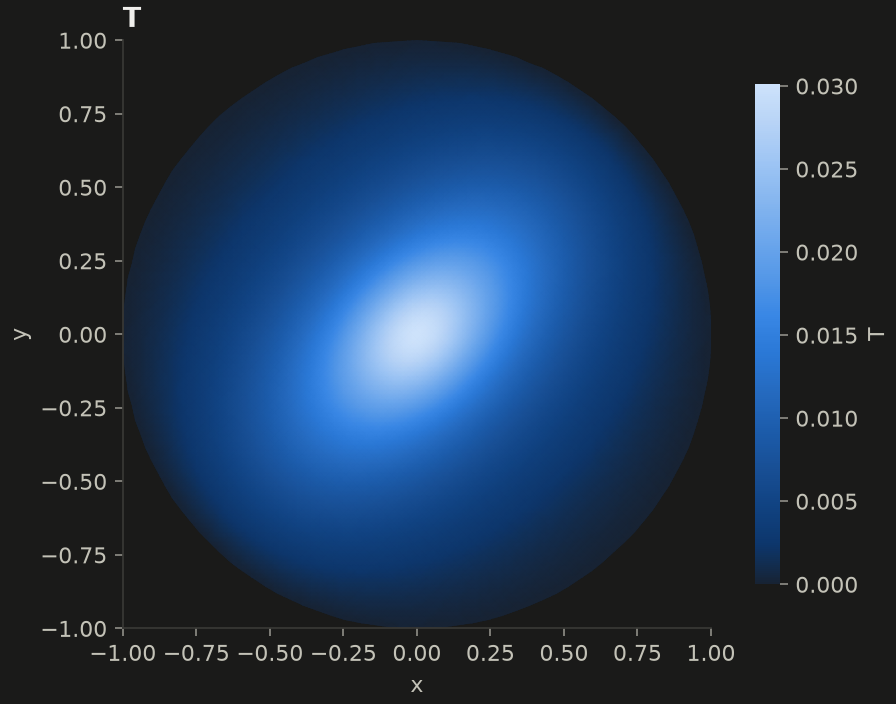
A round plate cut from a crystal that conducts heat four times as well along one diagonal, with a flame under its middle.
Waves of one frequency
The Helmholtz equation: waves that leave into free space, that are guided, focused and let out.
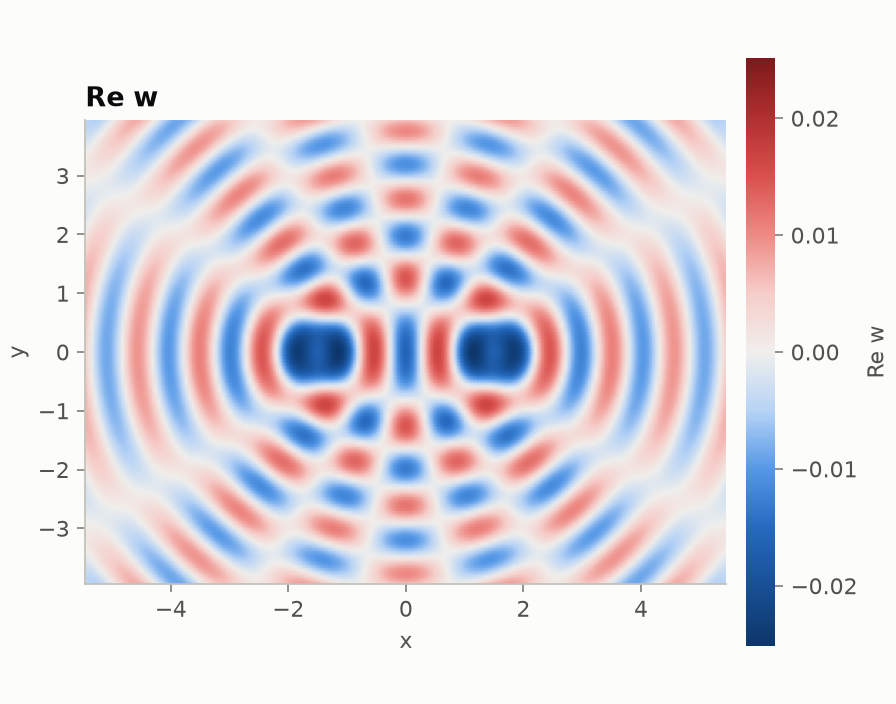
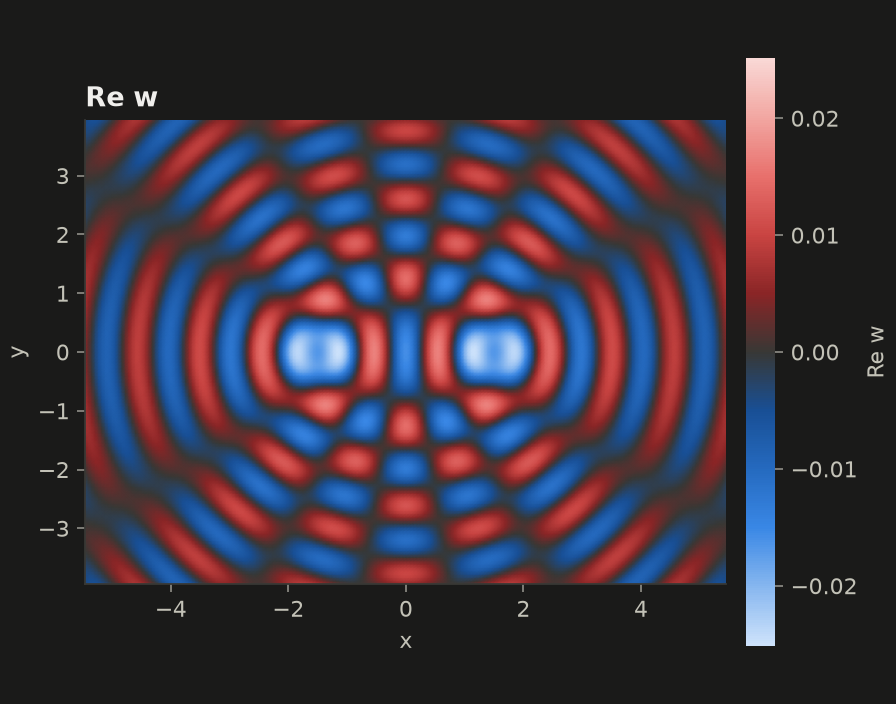
Waves of one frequency from two sources in the plane, which reinforce each other in some directions and cancel in others.
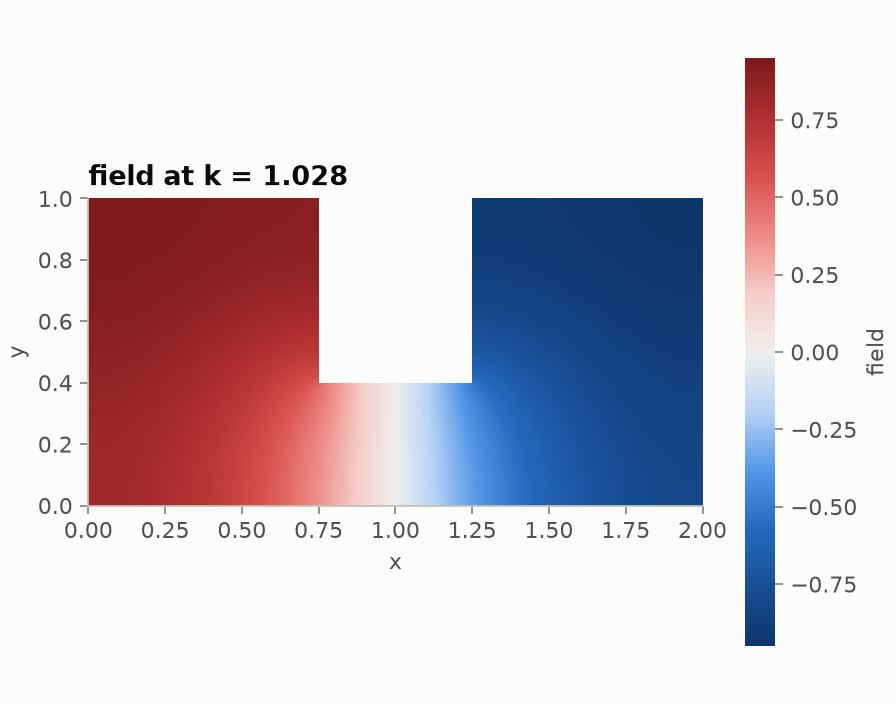
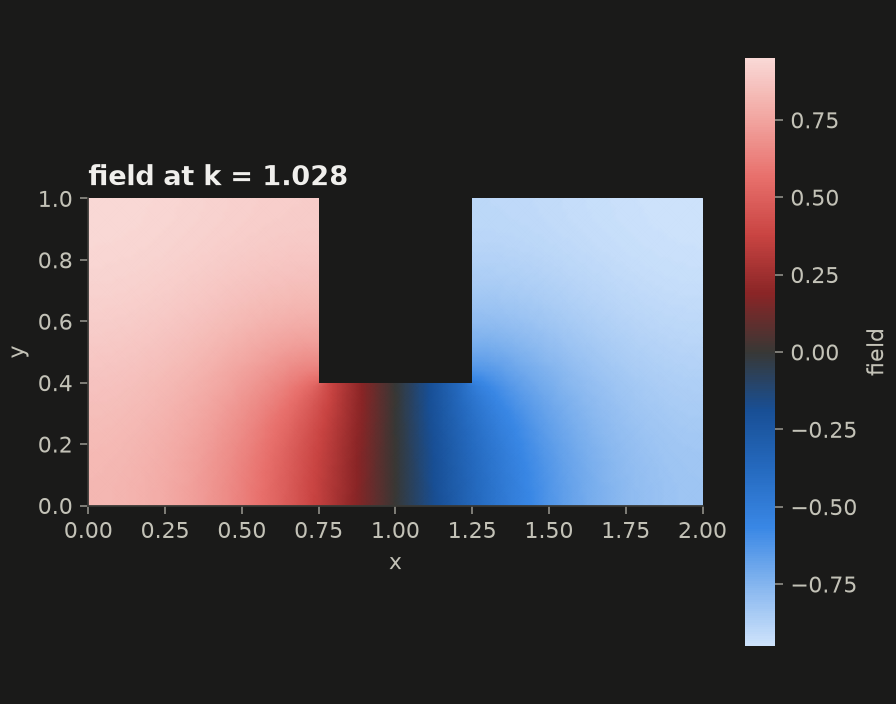
The wave that a metal pipe with a ridge carries first: the lowest mode of its cross section that is not constant.
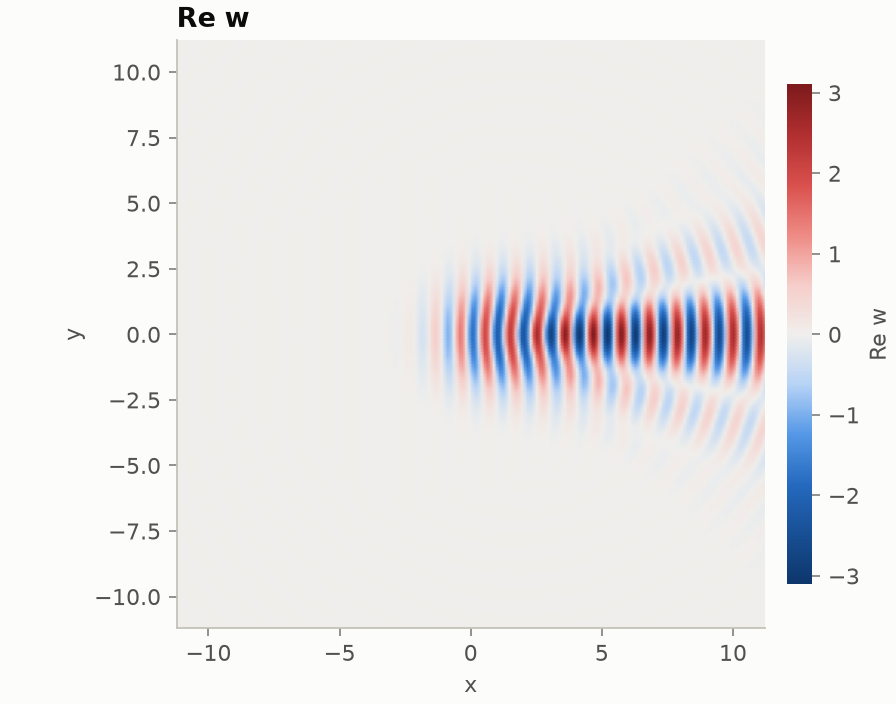
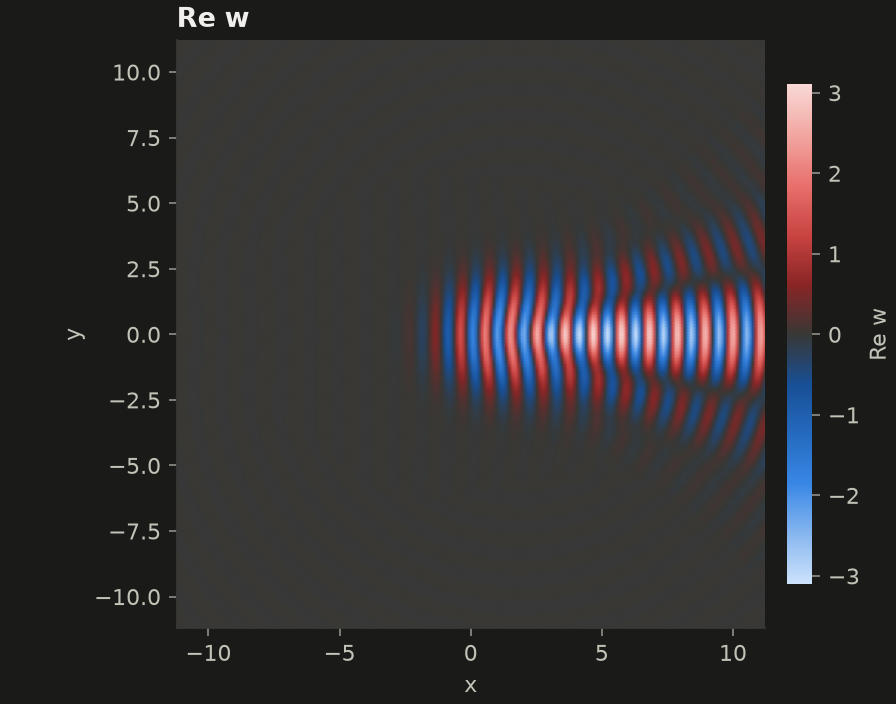
What a lens adds to a wave that comes in from the left: almost nothing in front of it, and a beam behind it.
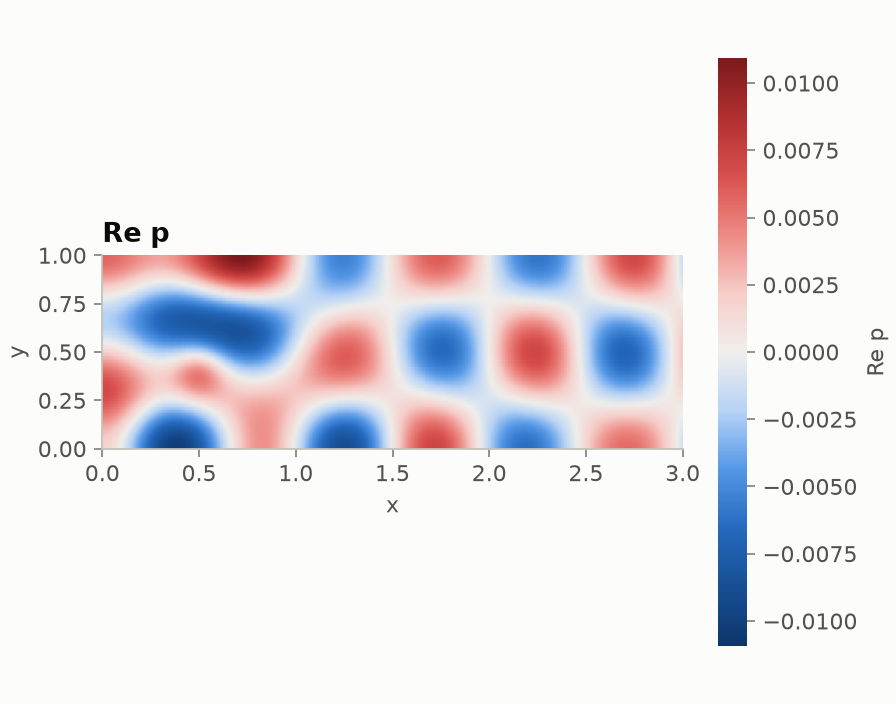
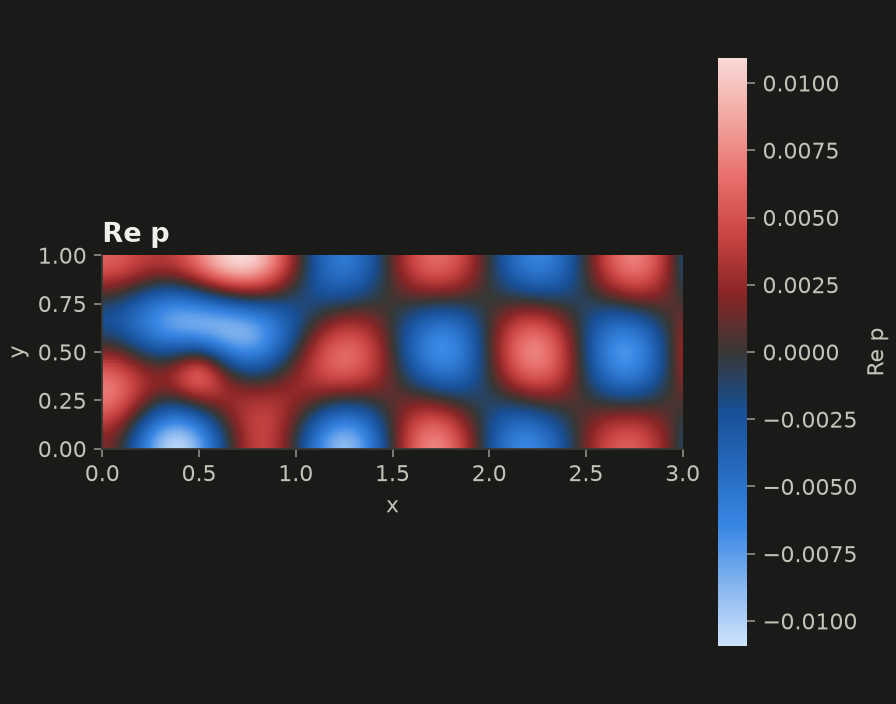
A steady tone in a long room with hard walls, whose far side is open and lets the sound out.
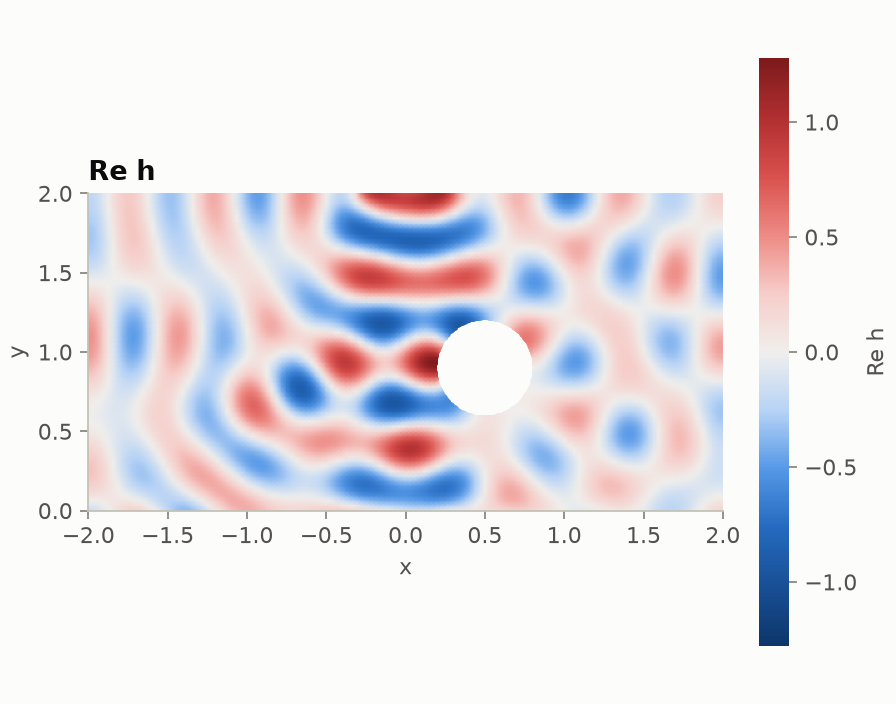
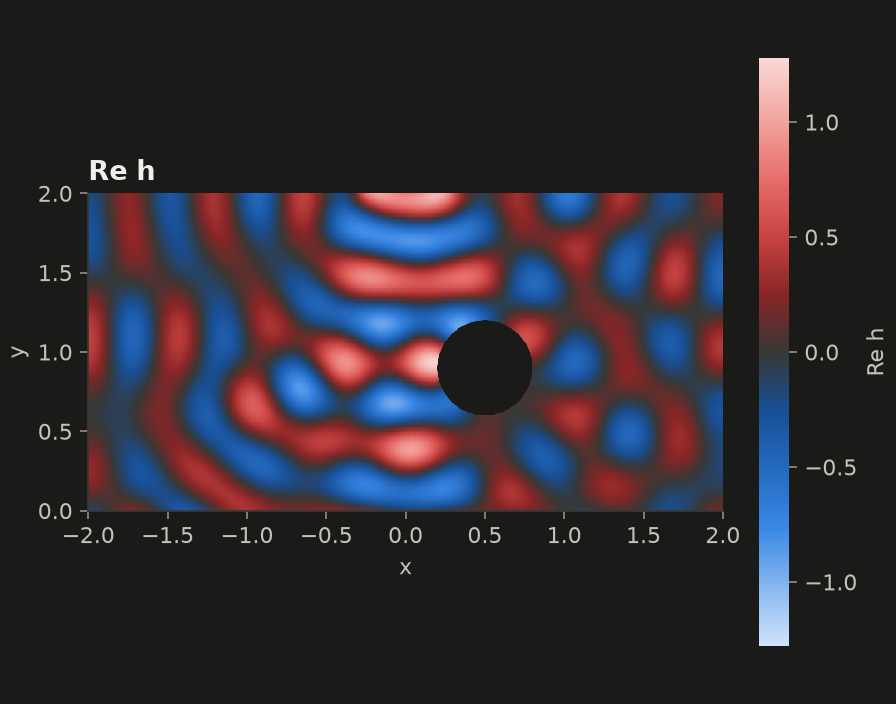
Swell that enters a harbour through its mouth, spreads behind the quay, passes an island and runs out on the beach.
Beams, plates and more than one solution
Equations of fourth order, and a nonlinear equation with two solutions.
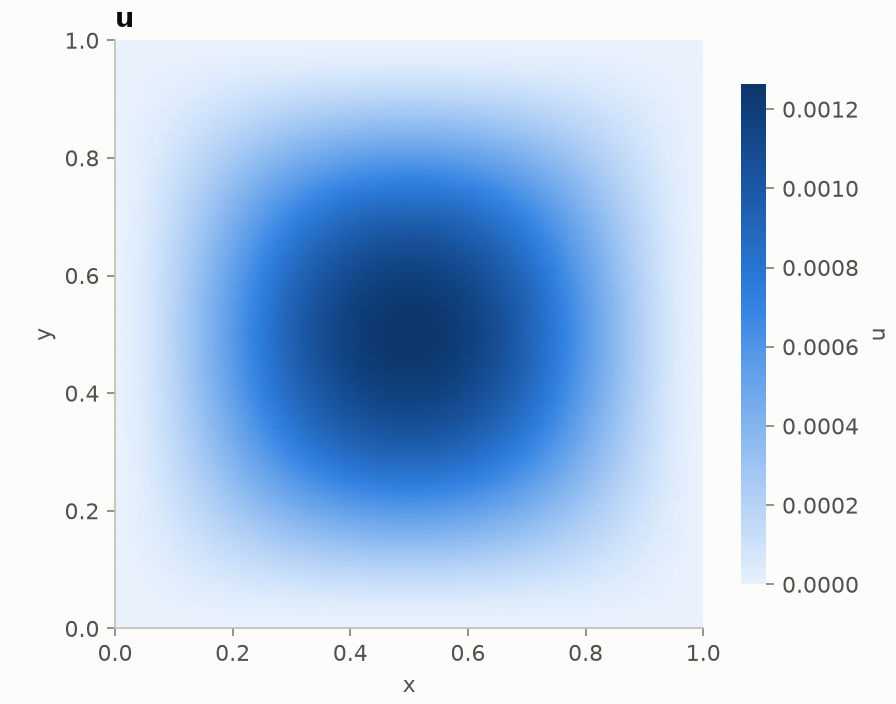
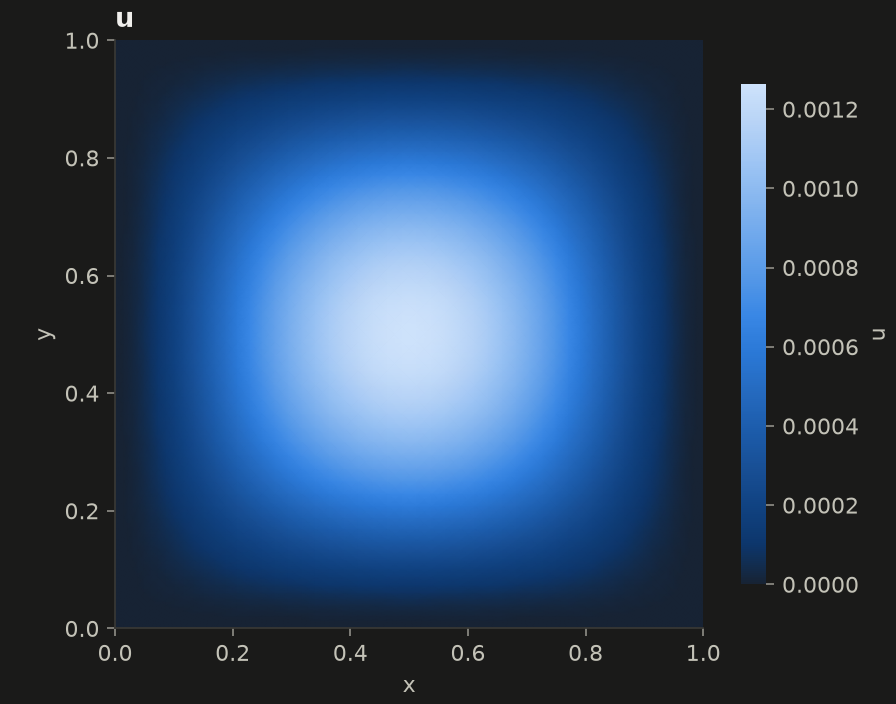
A square plate that is clamped along all four sides and bends under an even load.
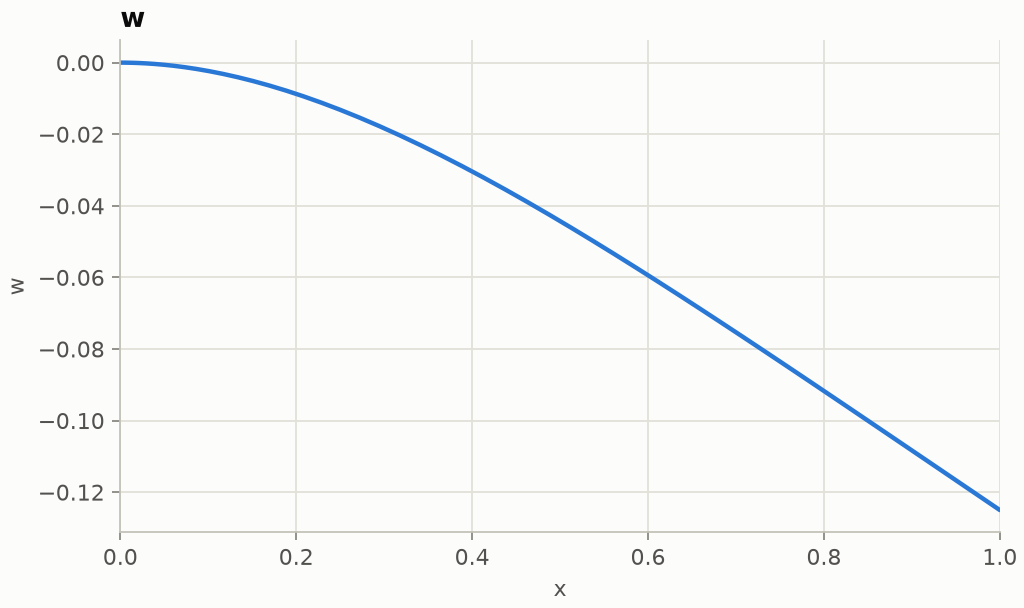
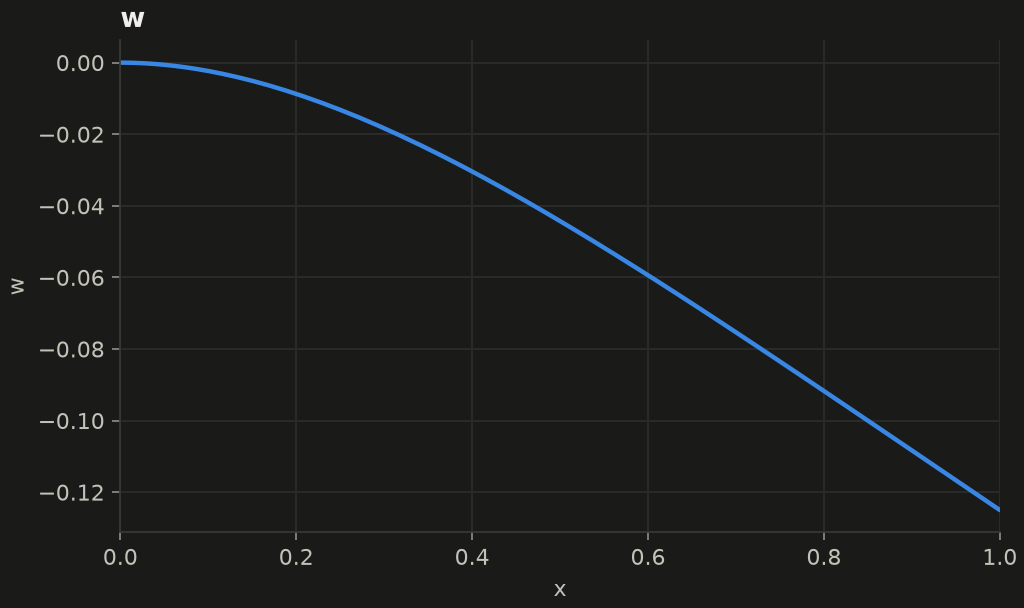
A beam that is clamped into a wall at one end and free at the other, and hangs under its own weight.
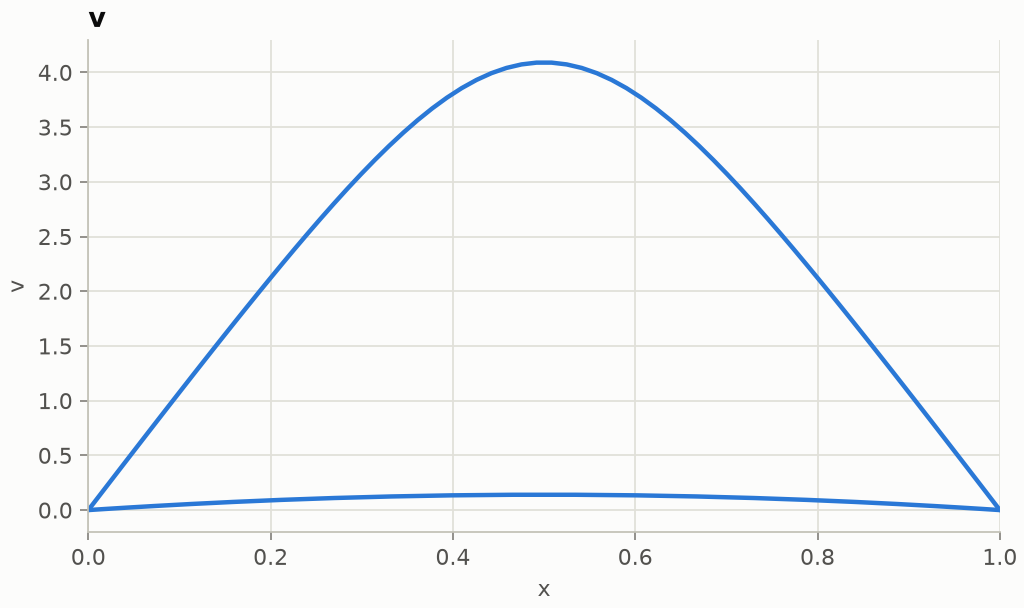
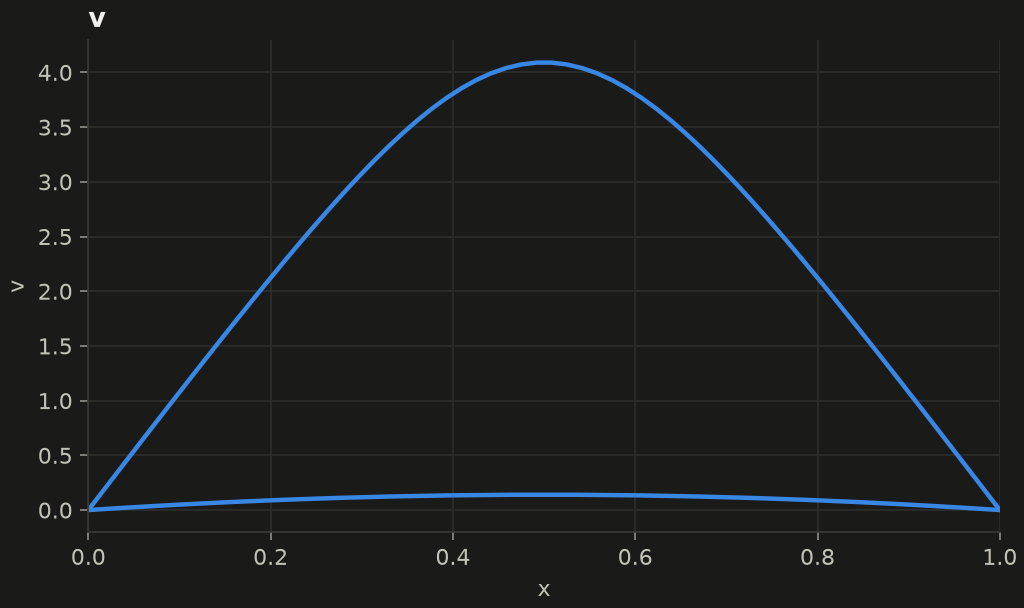
One nonlinear equation between two walls and its two solutions, each found from its own starting value.
Heat
Diffusion in time: in free space, in a rod, in a shape, in a disk.
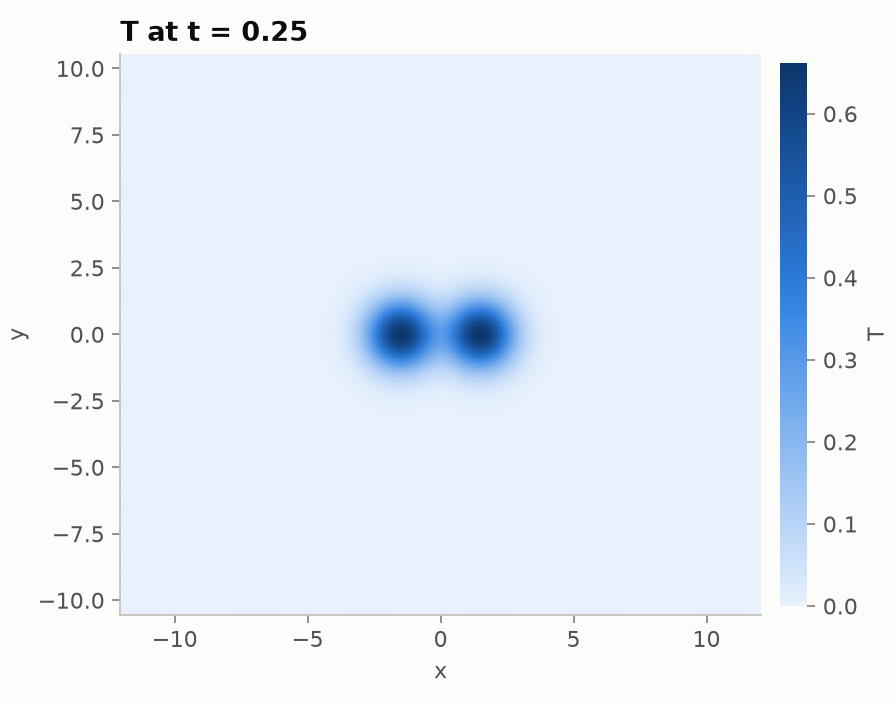
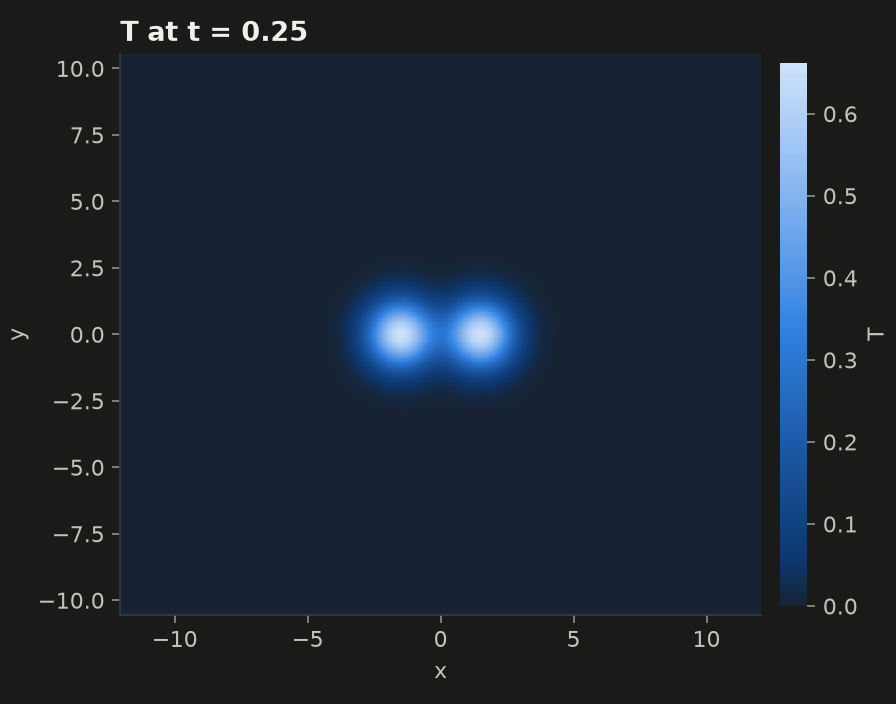
Two hot spots in the plane, a quarter of the way through the time span: each has widened, and they begin to merge.
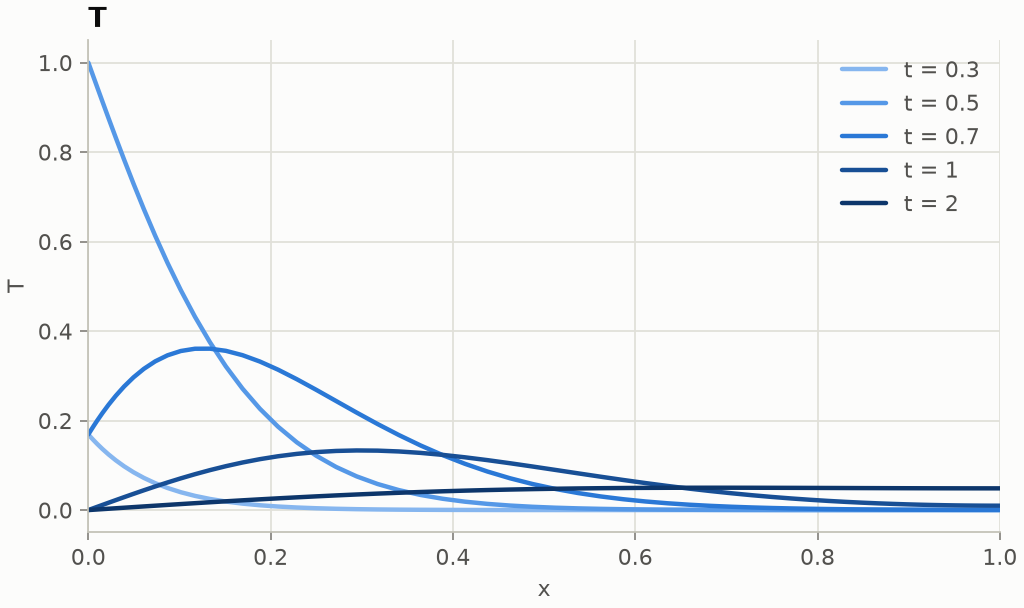
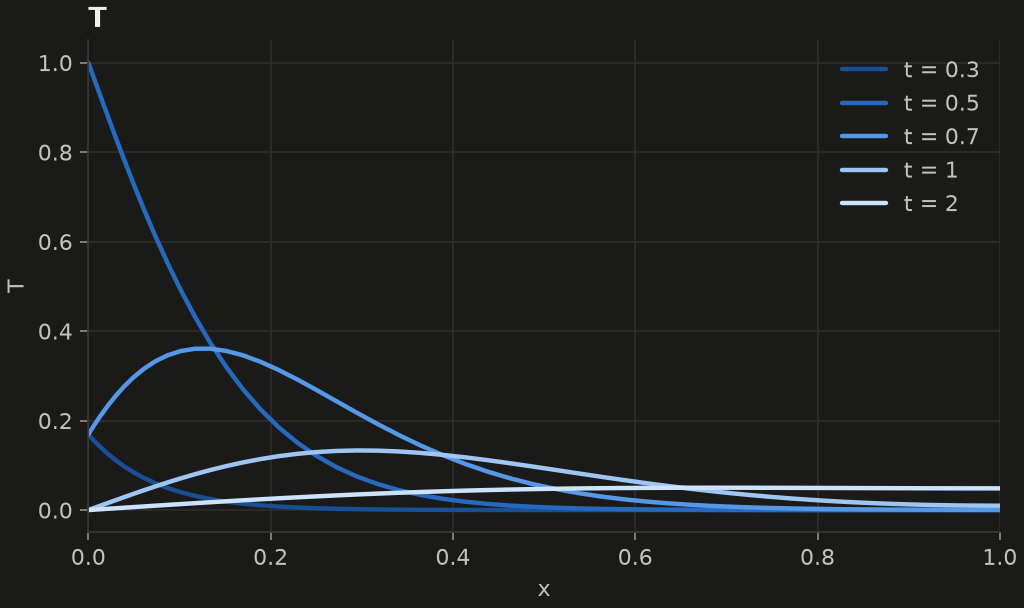
A flame is held to one end of a rod and taken away: the heat moves into the rod, and reaches the far end long after.
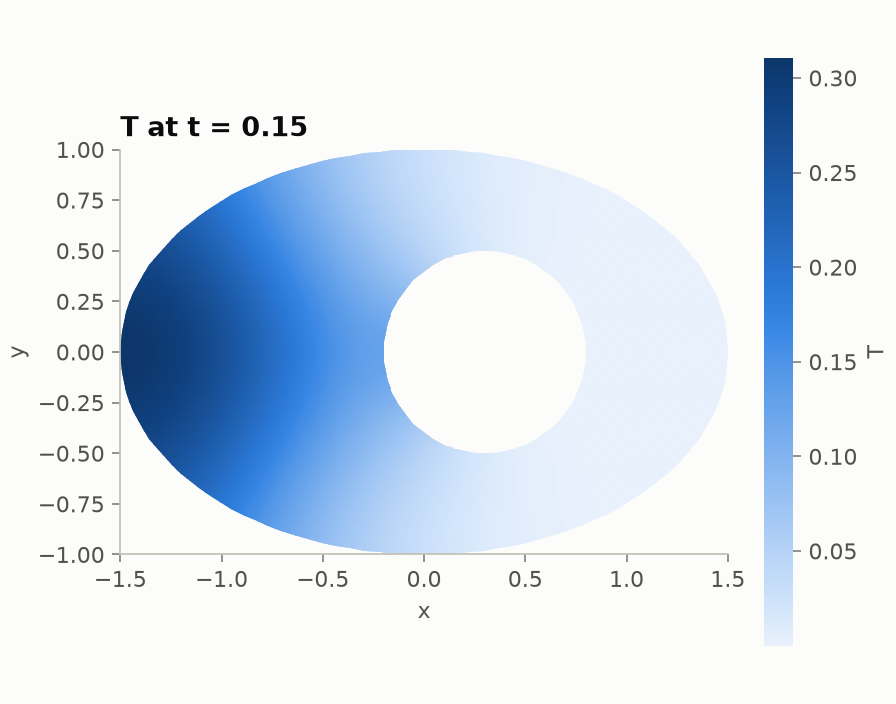
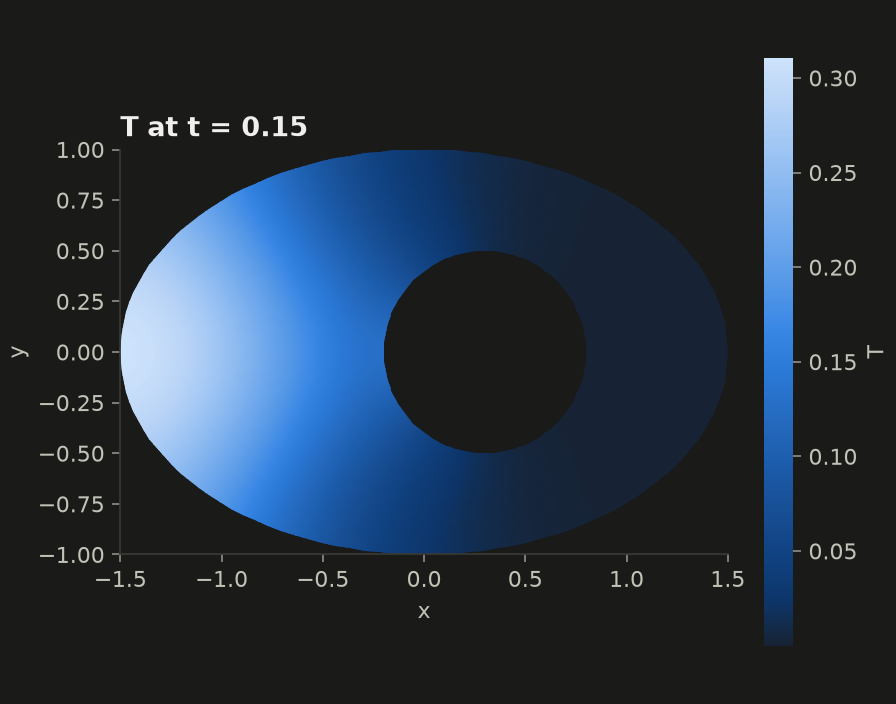
A plate in the shape of an ellipse with a hole, warmed at one end: the heat flows around the hole, and nothing leaves.
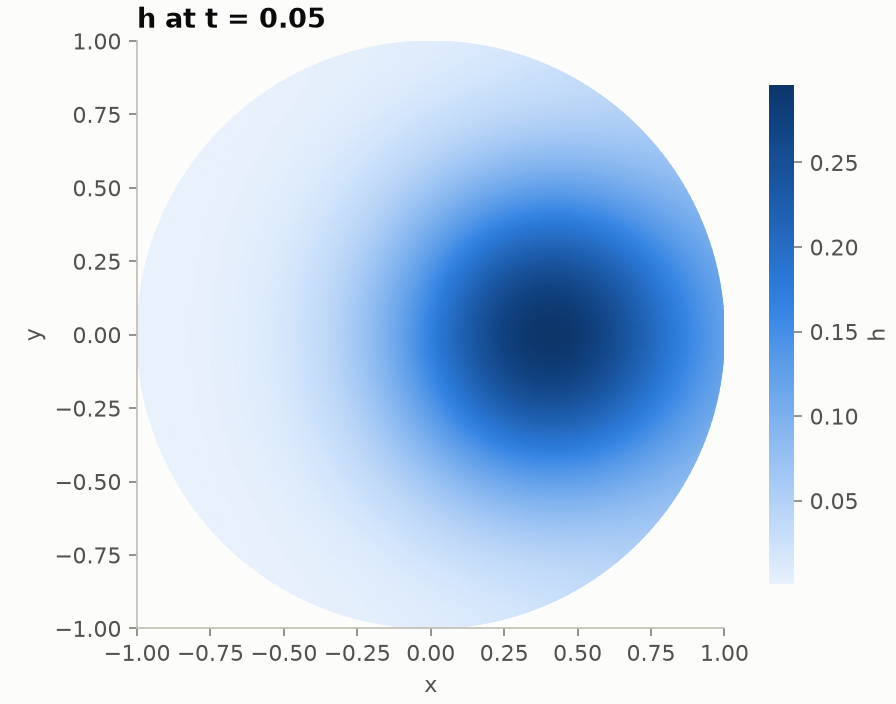
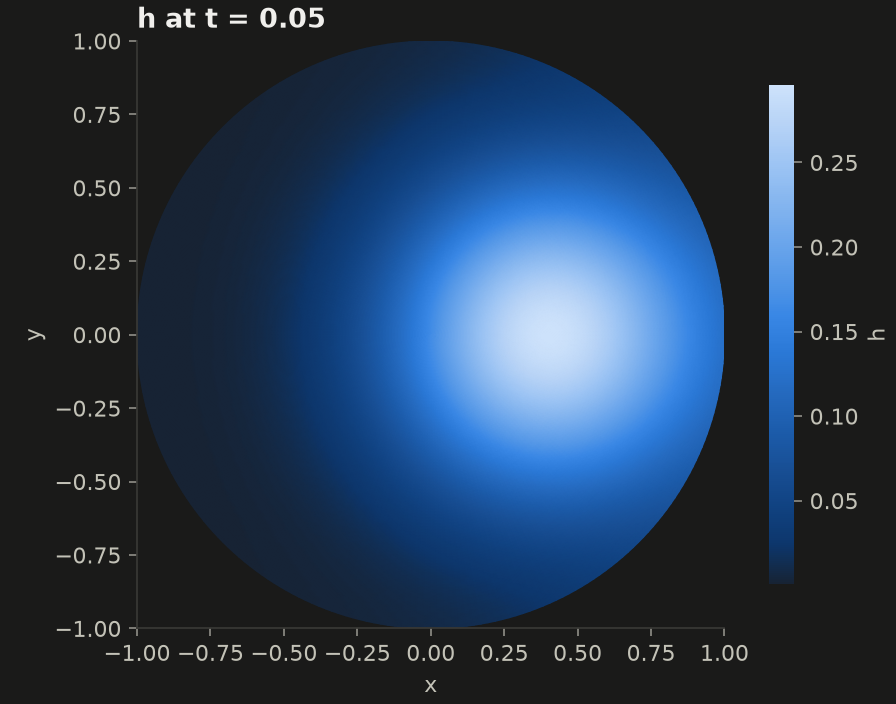
A disk with a warm spot that loses its heat through the rim: the faster, the warmer the rim is.
Waves in time
Strings, drums and light.
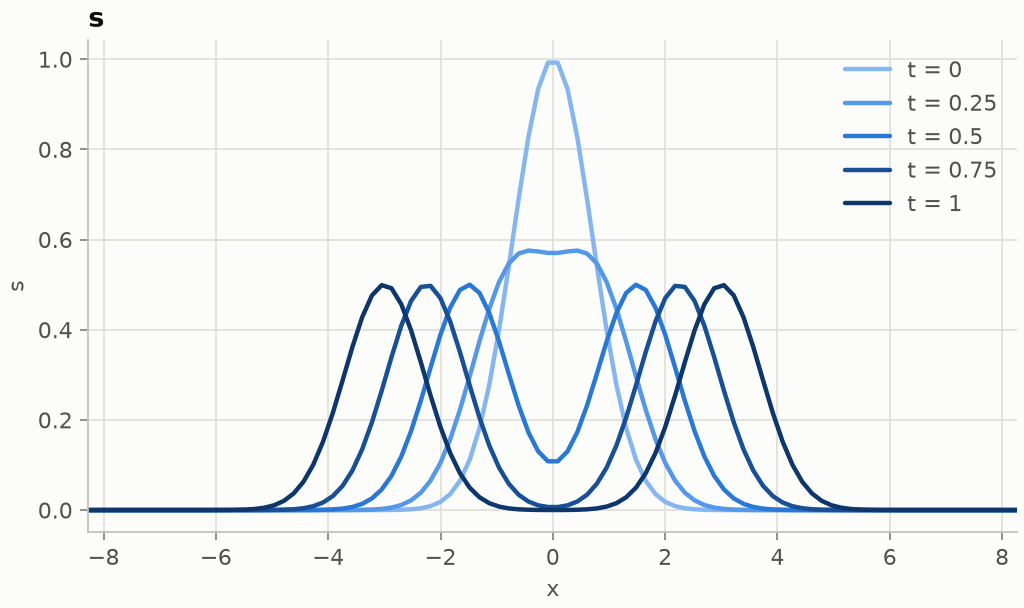
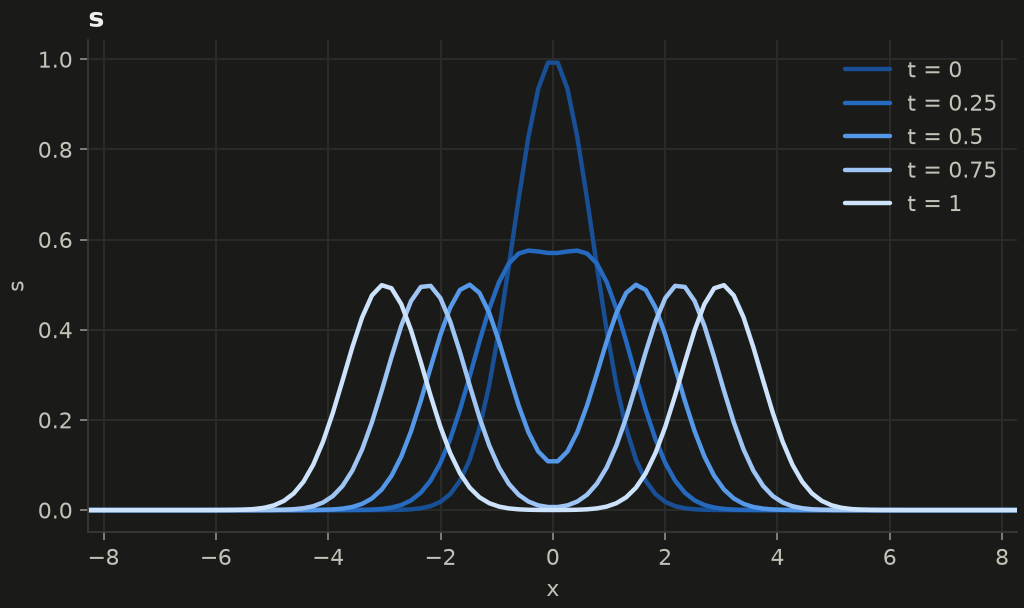
A bump on a long string at five times: it splits into two halves that move apart.
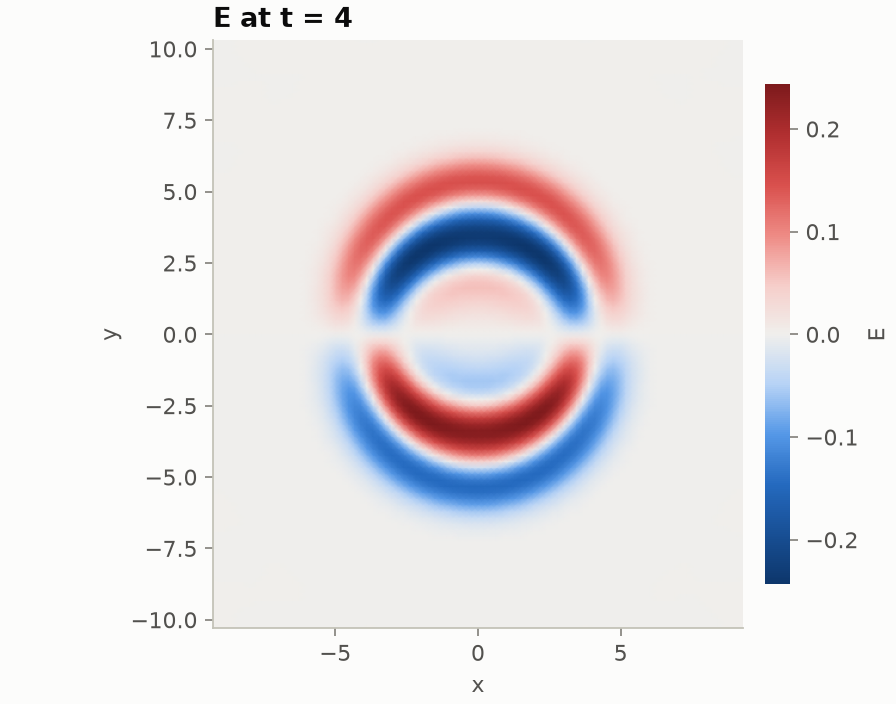
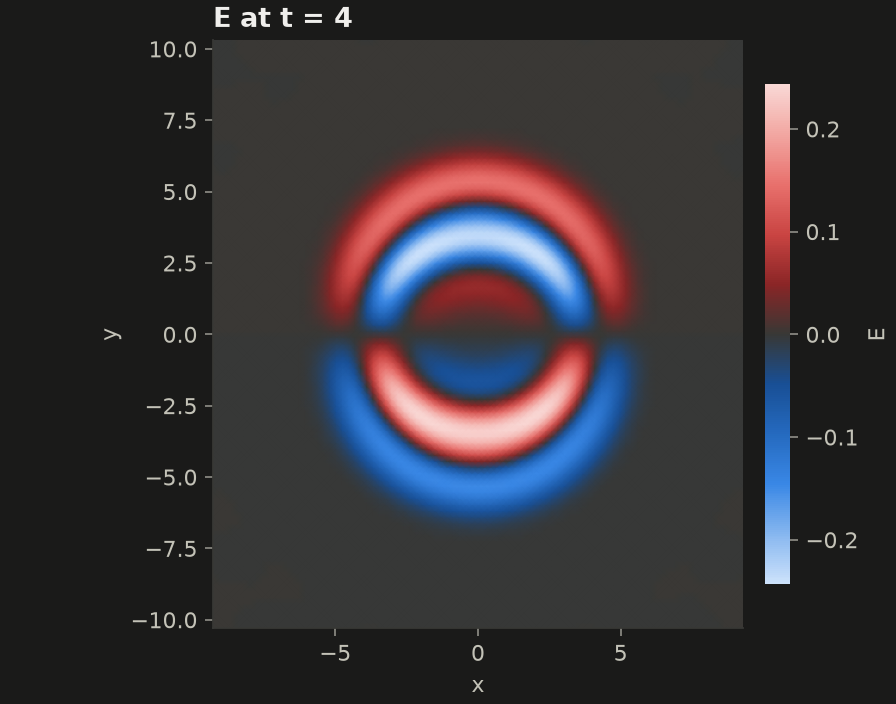
The electric field of two pulses of opposite sign, some time after the flash: each has spread as a ring.
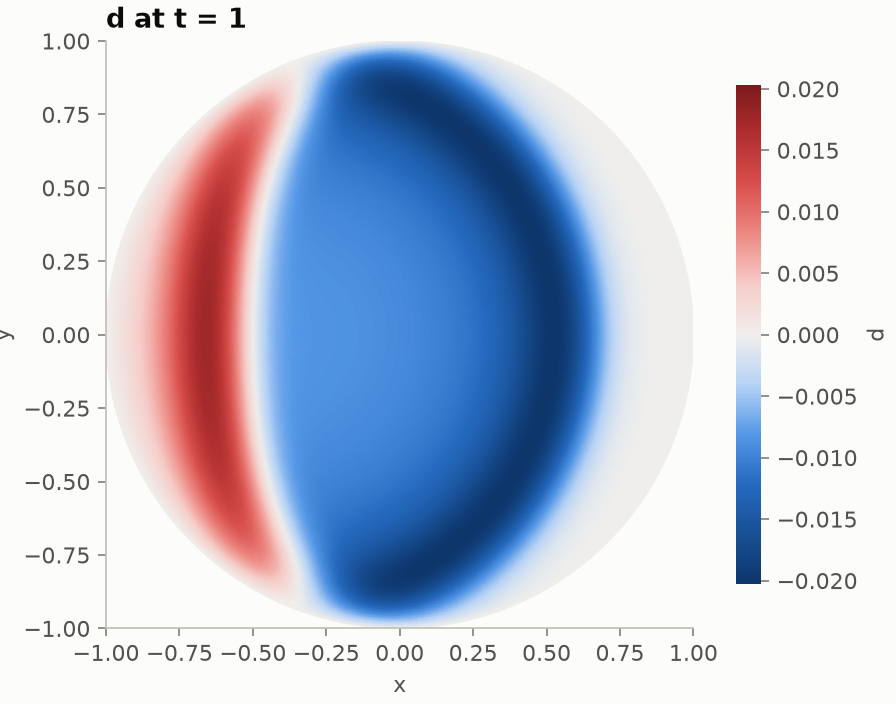
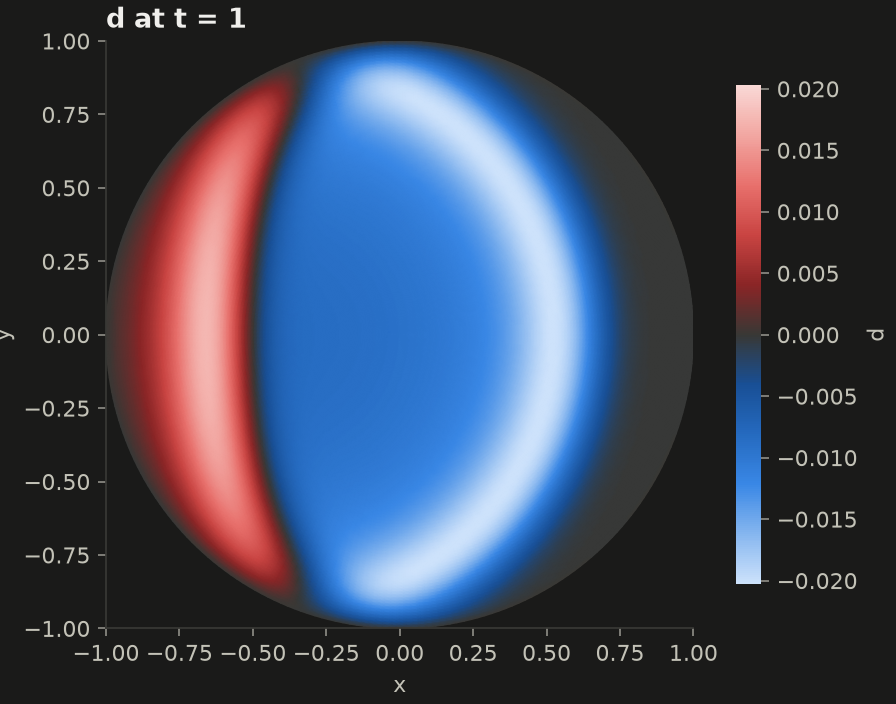
A round drum one unit of time after a blow off its centre: the dent has become a ring, and the near rim has thrown it back.
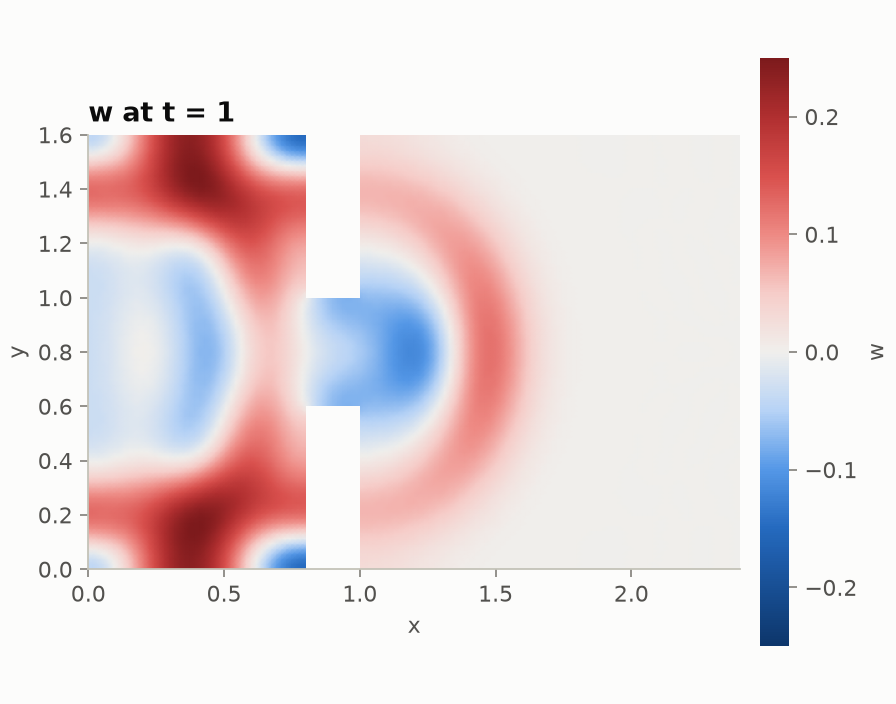
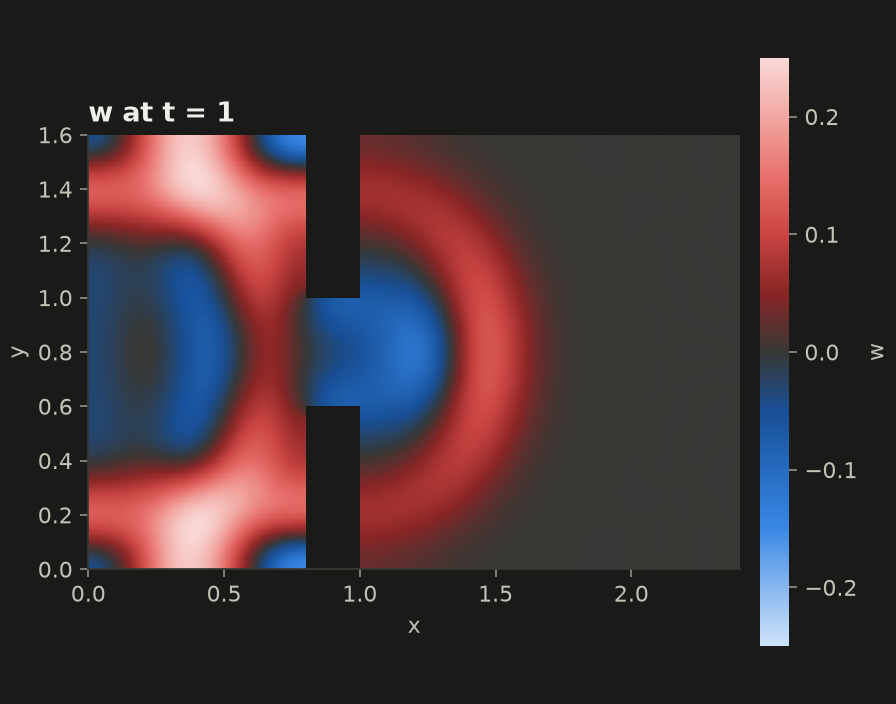
A pulse of sound in a room with a partition: what passes the slit leaves it as a new wave that spreads to all sides.
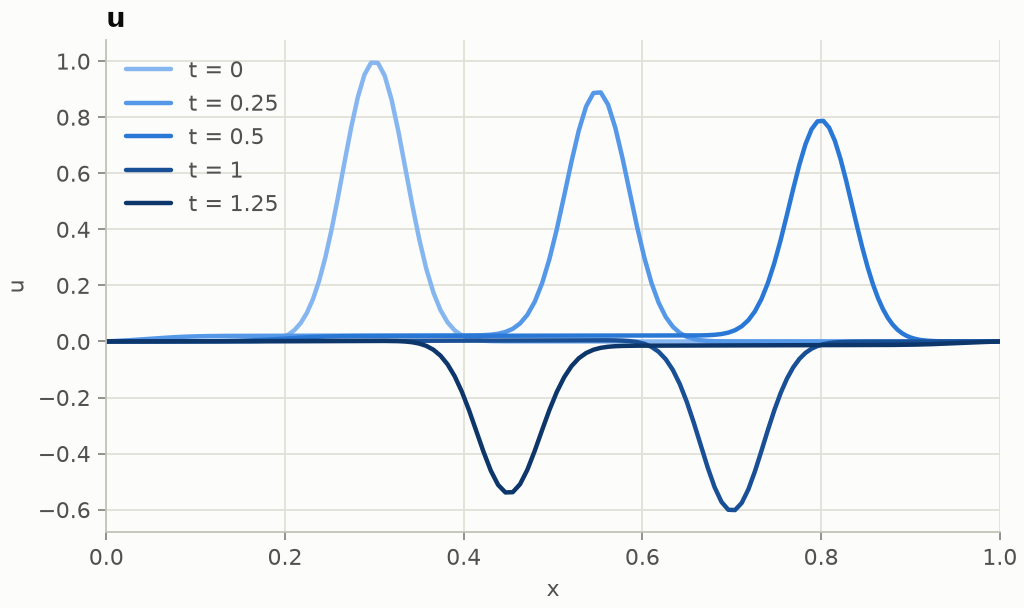
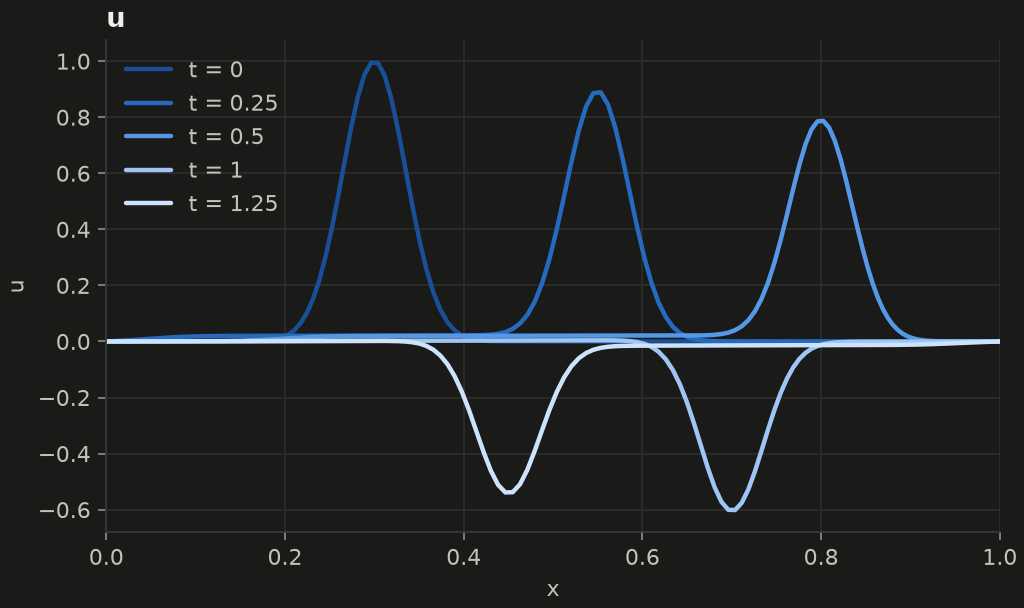
A pulse on a damped string at five times: it runs to the wall, comes back upside down, and fades all the way.
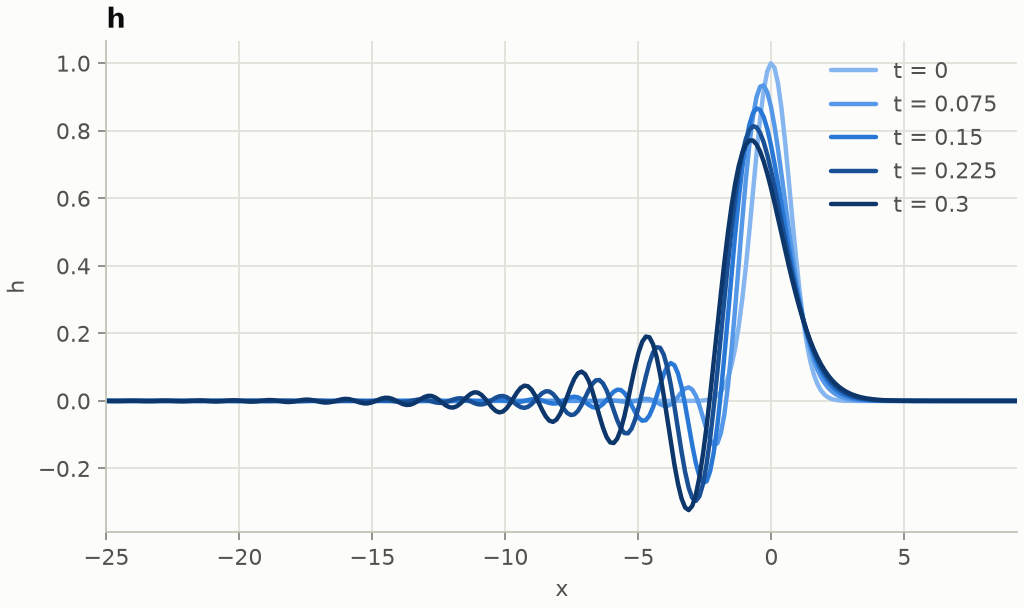
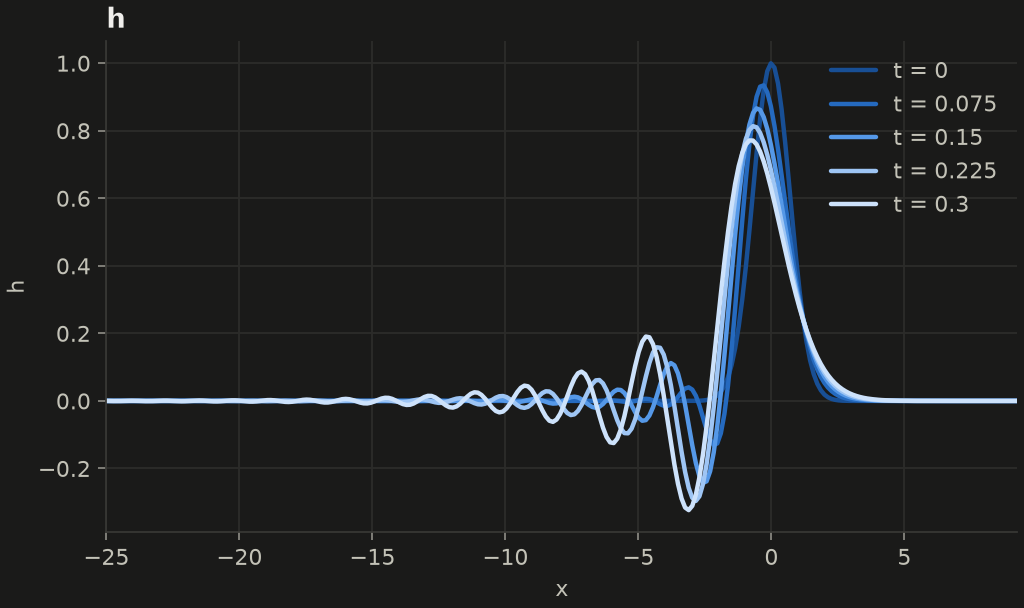
A hump on the line whose short waves outrun the long ones: it leans back, and a train of ripples runs off to the left.
Nonlinear waves and patterns
Waves that steepen, solitons that keep their shape, patterns that grow.
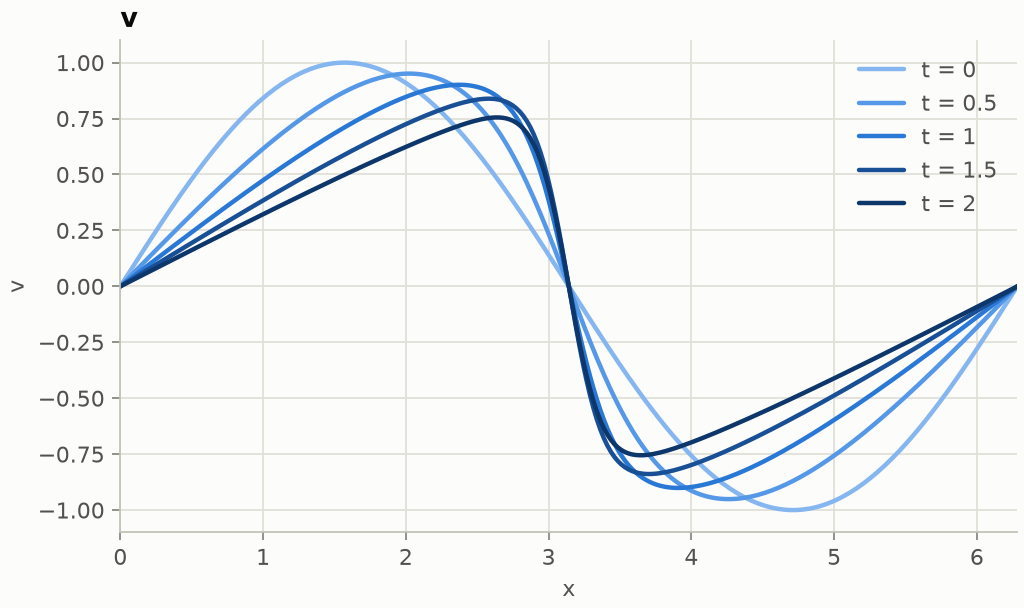
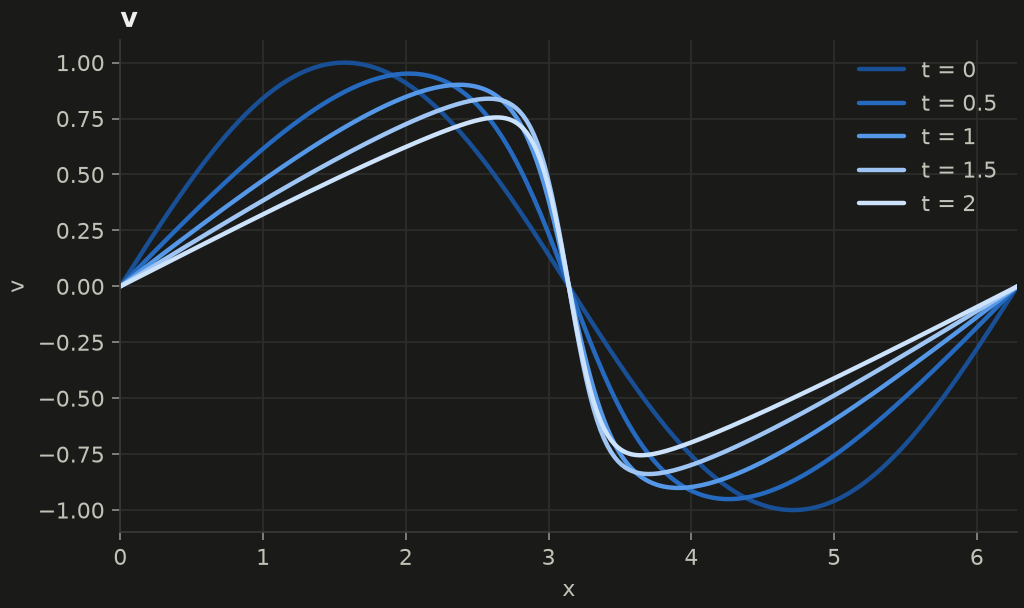
A sine wave under Burgers’ equation at five times: it leans forward into a steep front.
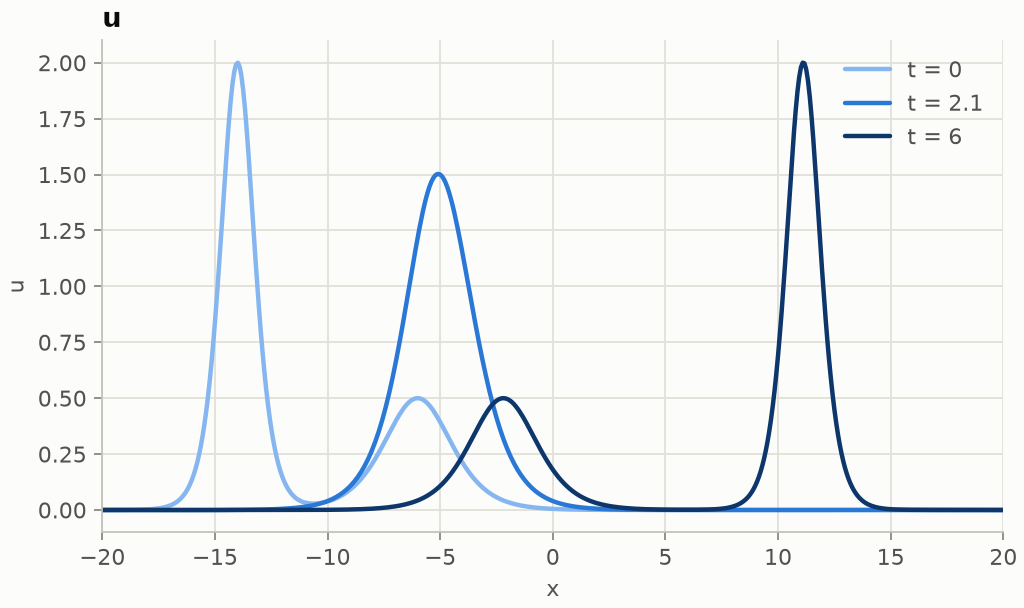
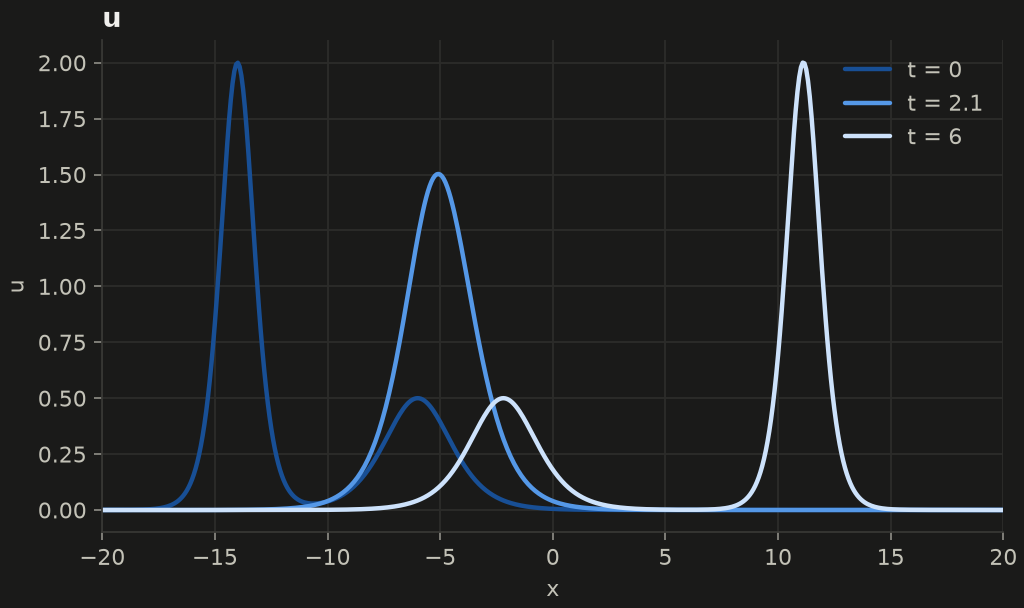
Two solitons before, during and after their meeting: the tall one overtakes the small one, and both keep their shape.
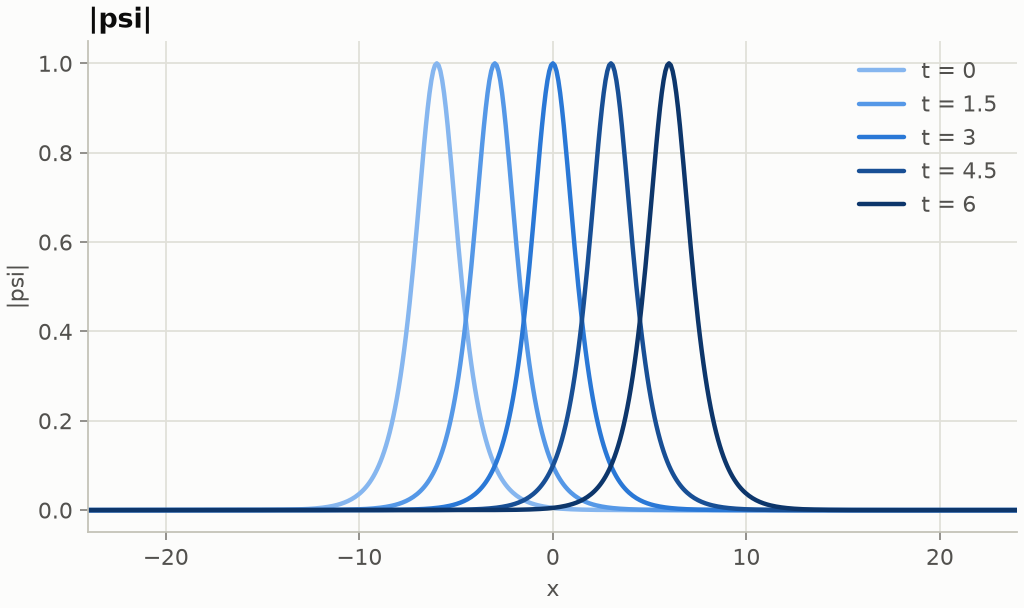
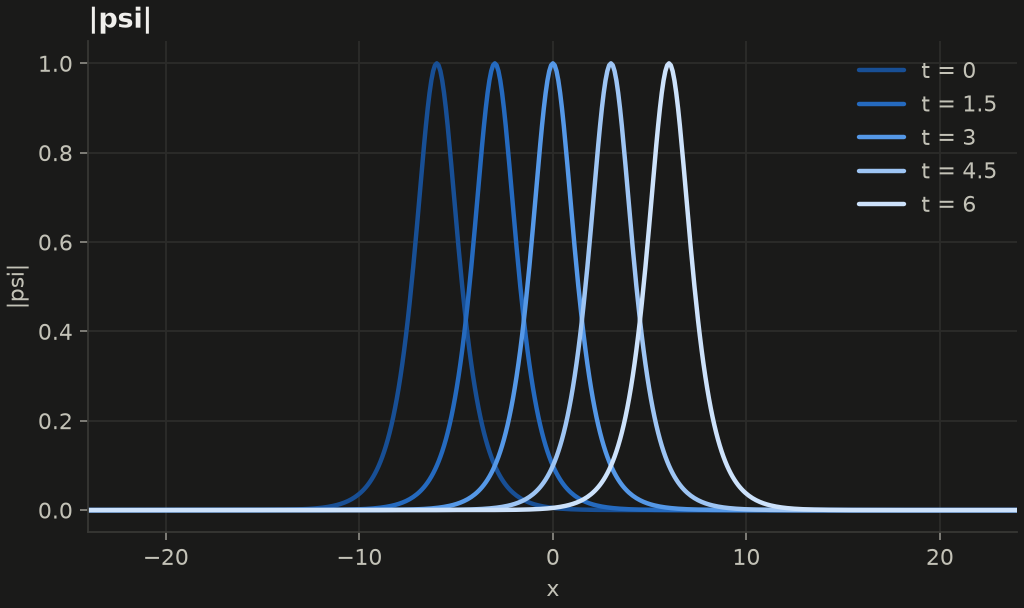
The magnitude of a pulse of light in a glass fibre at five times: it moves and does not spread.
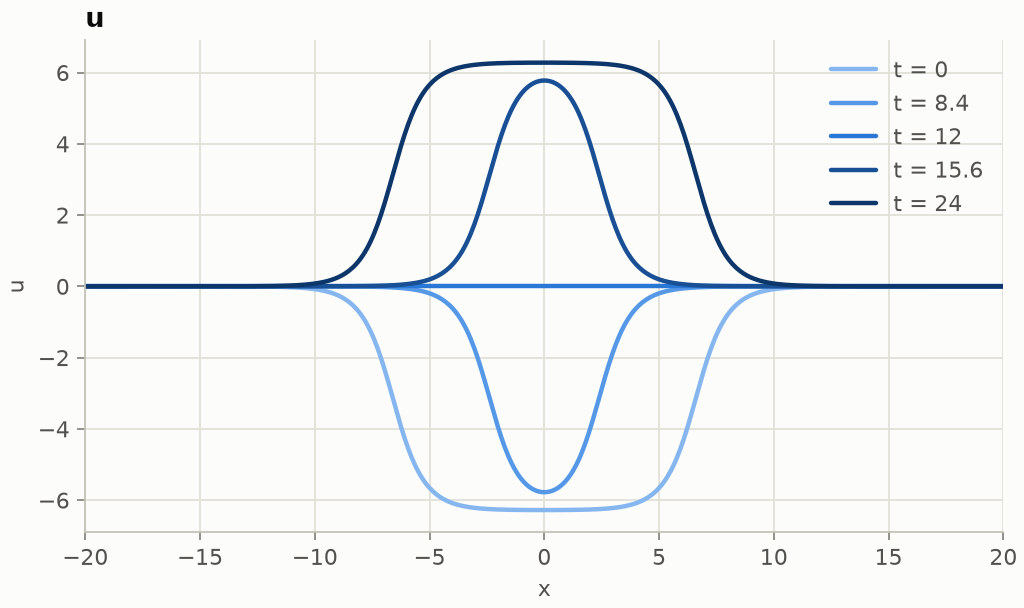
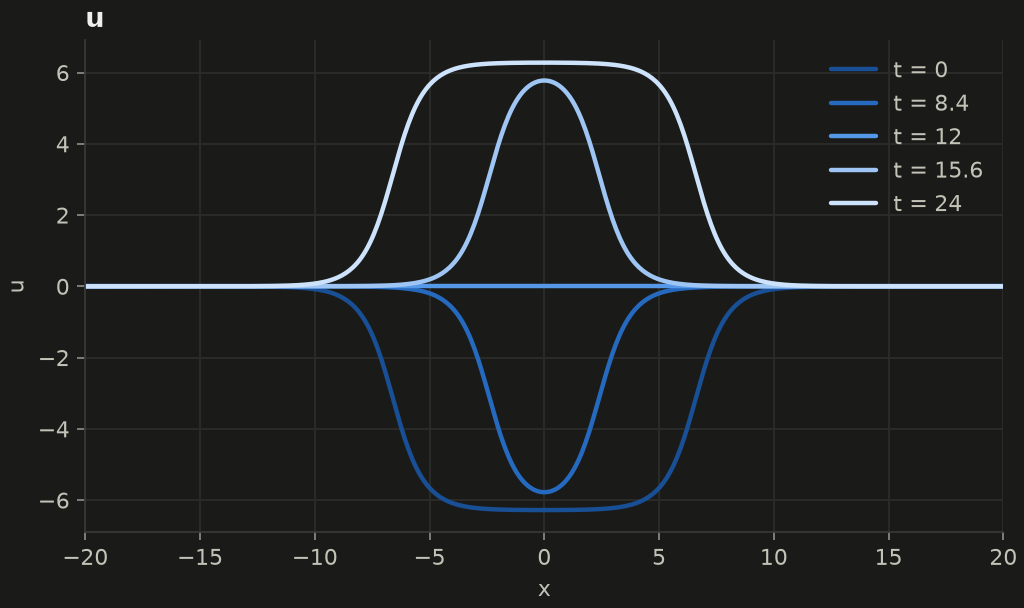
A kink and an antikink of the sine-Gordon equation run into each other and pass: the turn of the field between them changes sign.
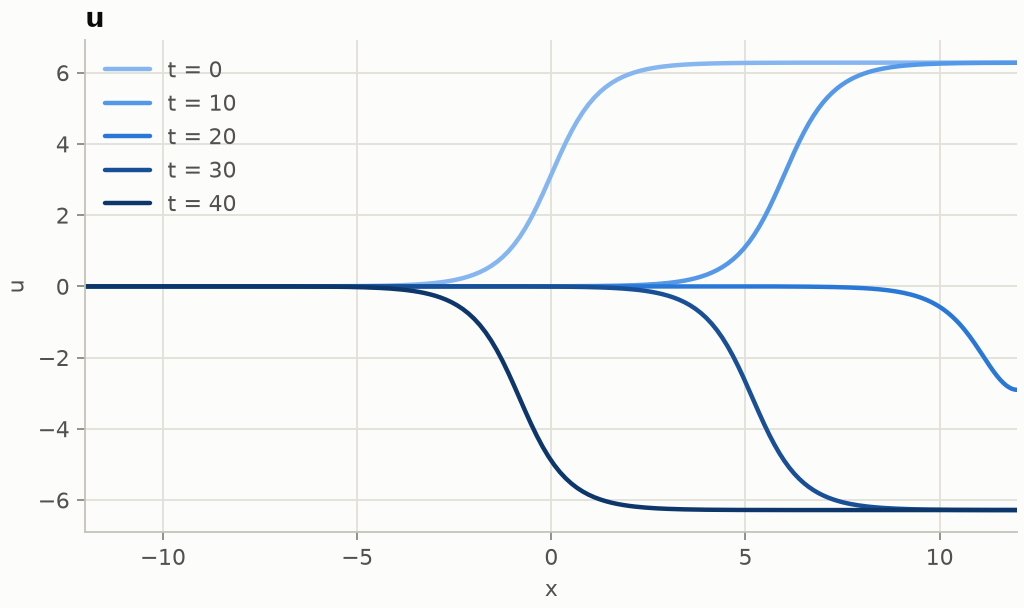
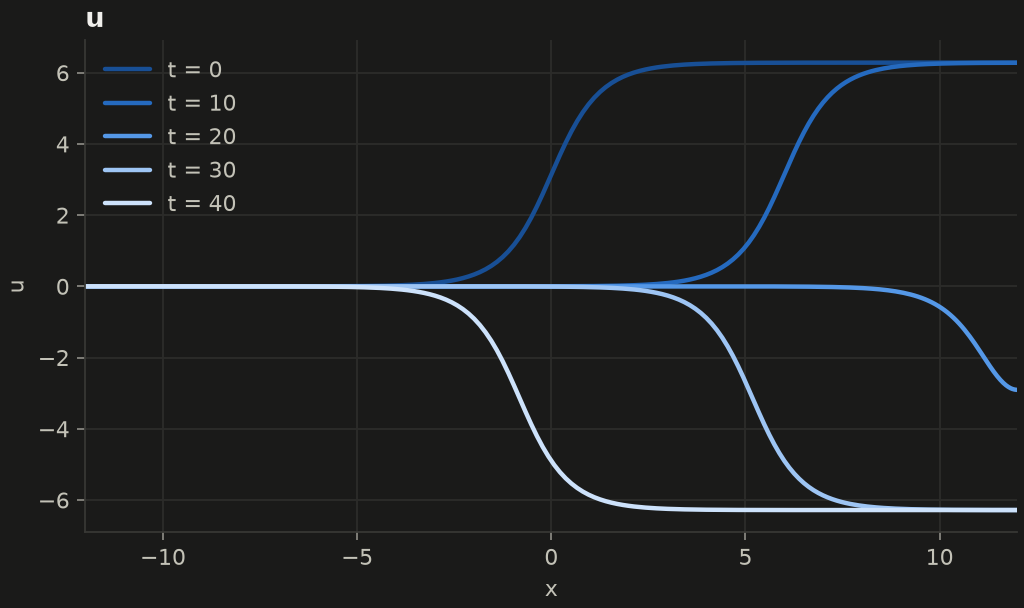
A kink of the sine-Gordon equation runs against the free end of its line and comes back turned over.
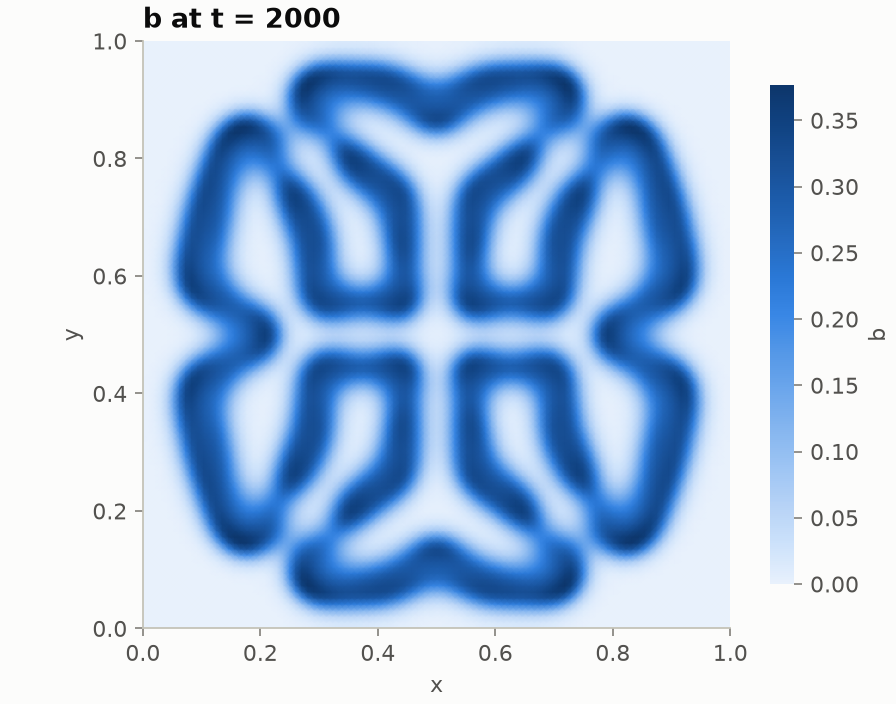
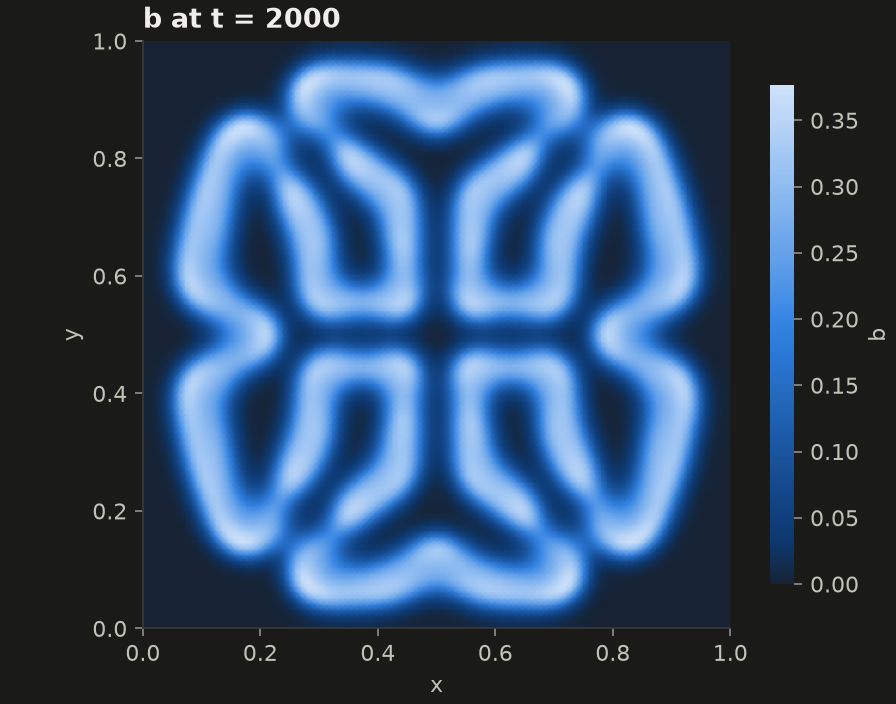
One of two substances that diffuse and react, long after a small seed was set: it has grown into a pattern of bands.
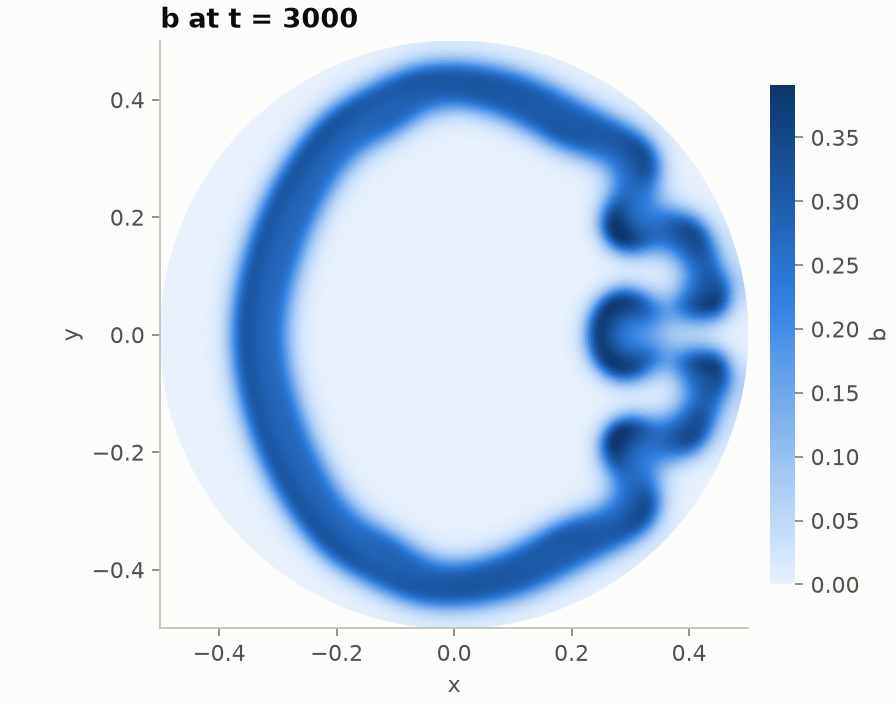
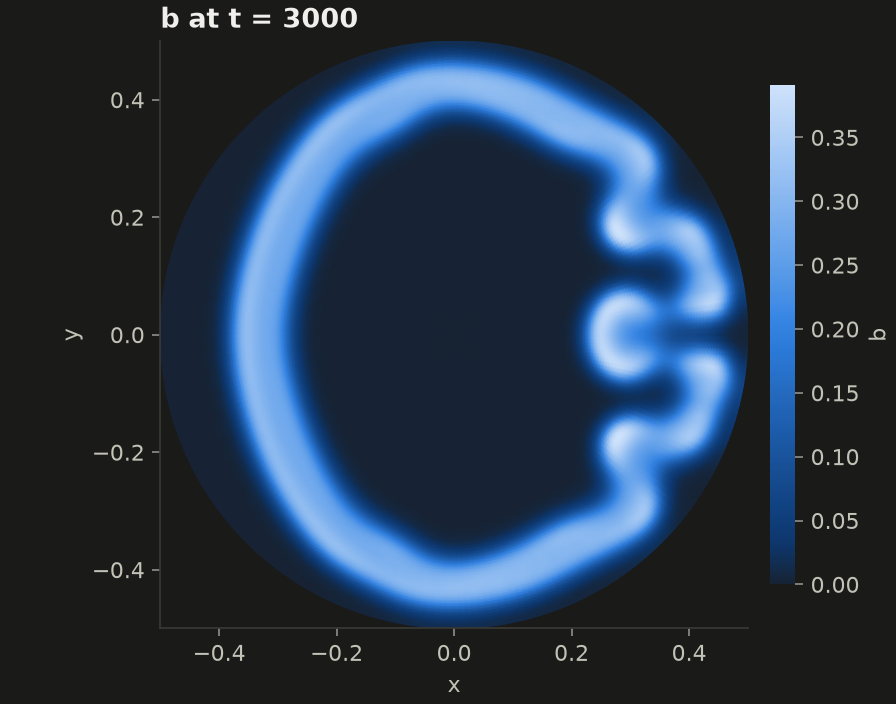
Two substances that diffuse and react in a round dish whose rim lets nothing out: a ring that spreads from a seed, and buckles where it meets the rim.
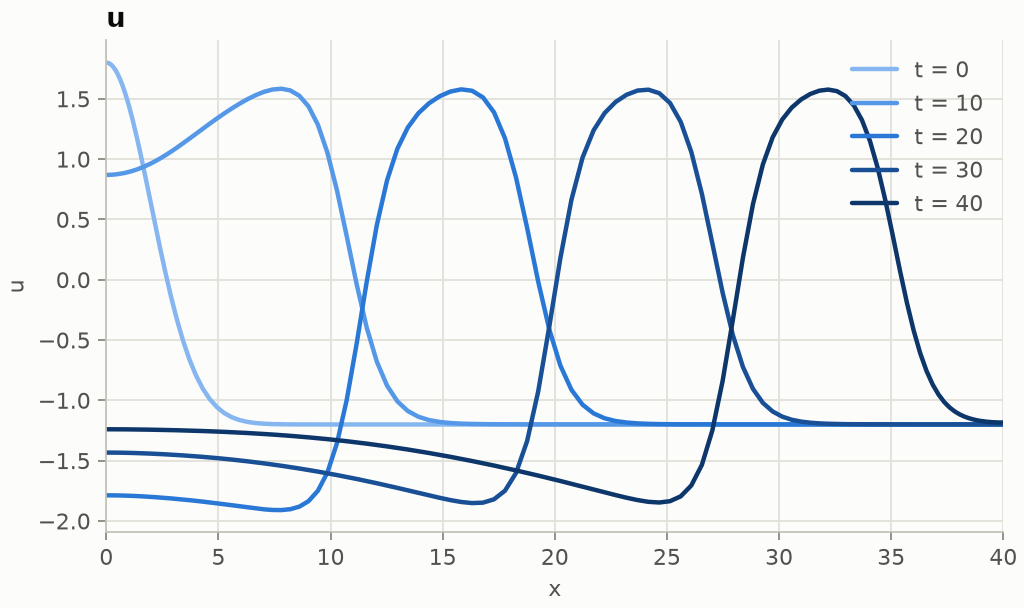
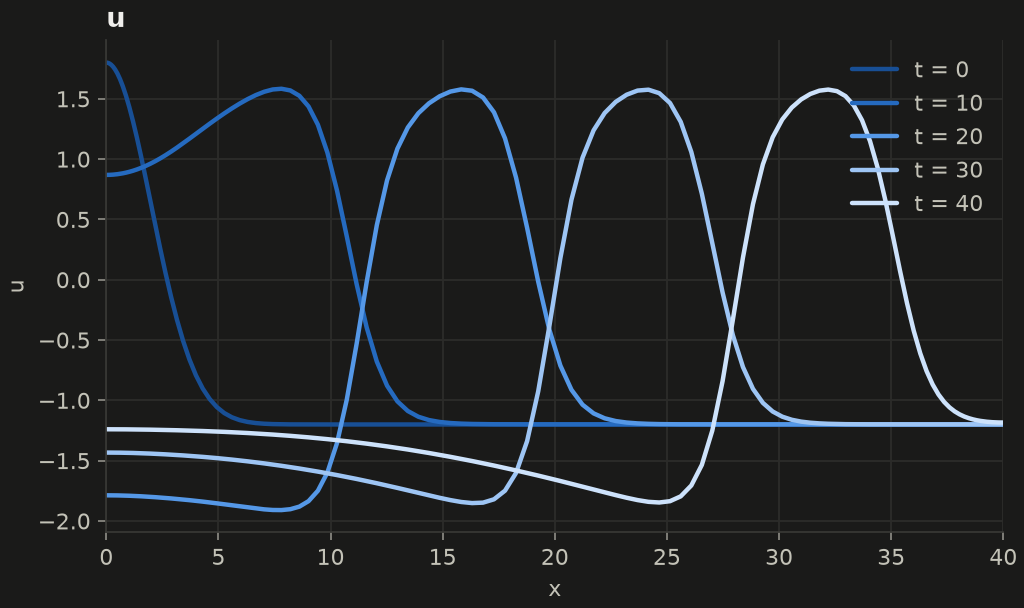
A pulse of excitation runs along a fibre between two closed ends, at five times.
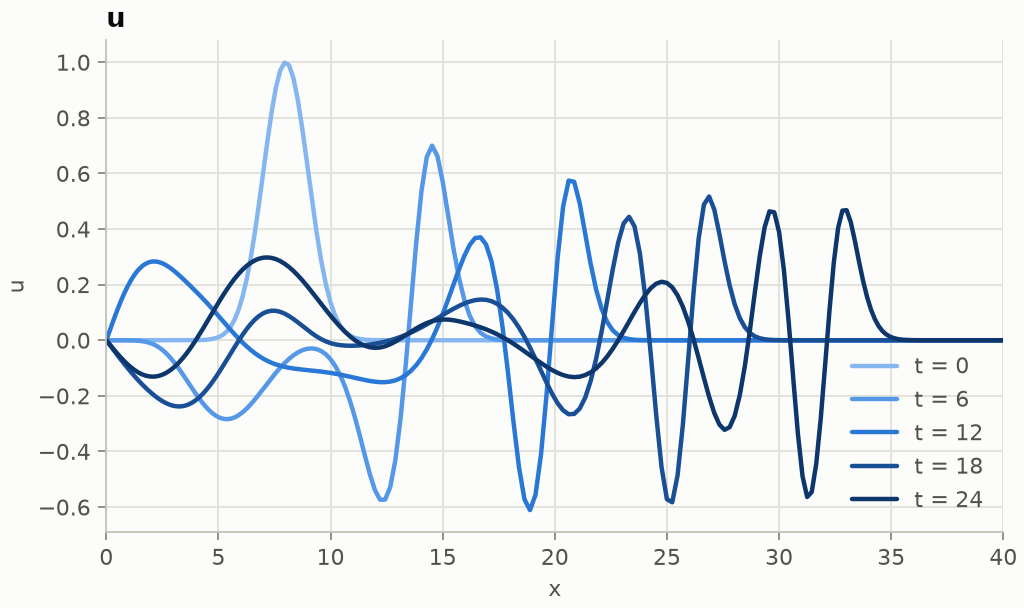
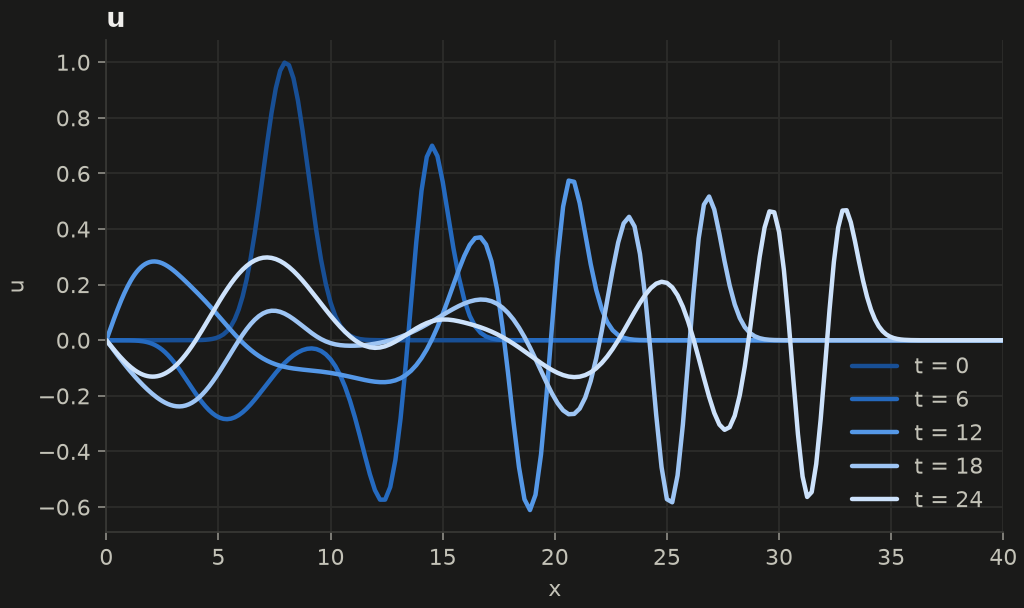
A pulse runs along a string whose bed hardens where the string has moved, at five times.
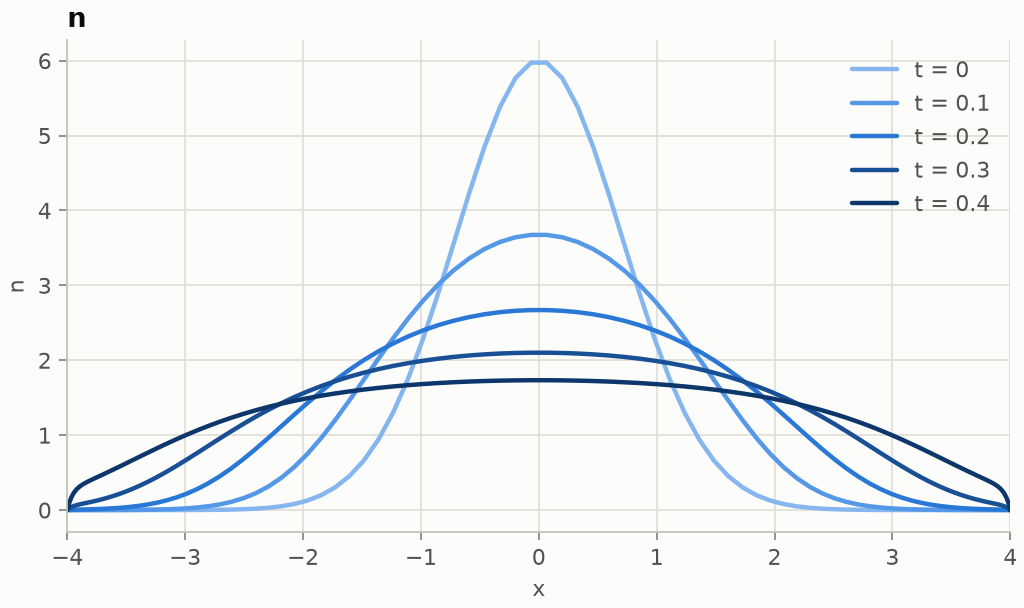
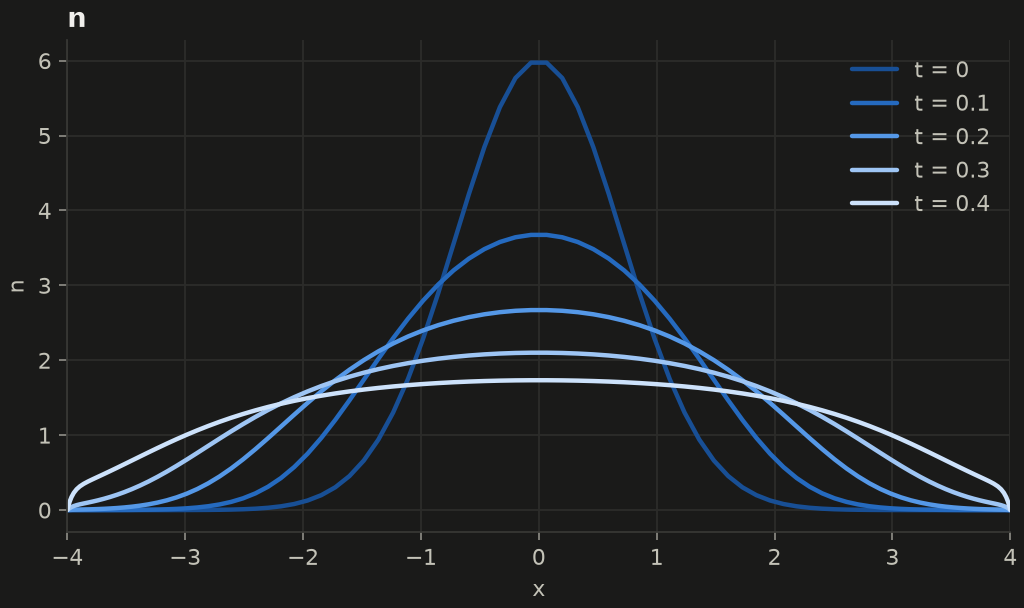
A cloud of ions between two grounded plates pushes itself apart, at five times.
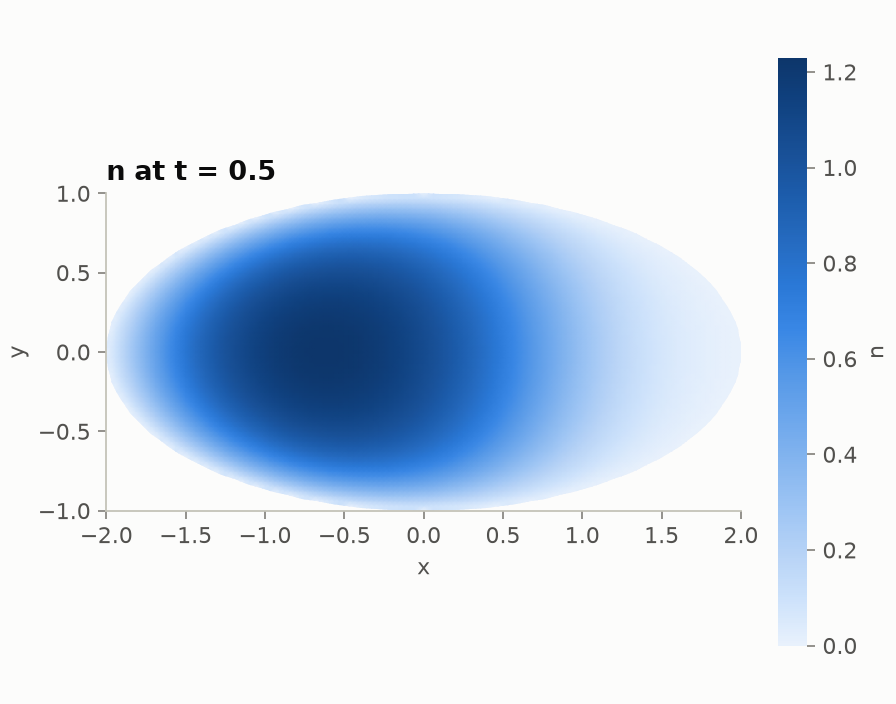
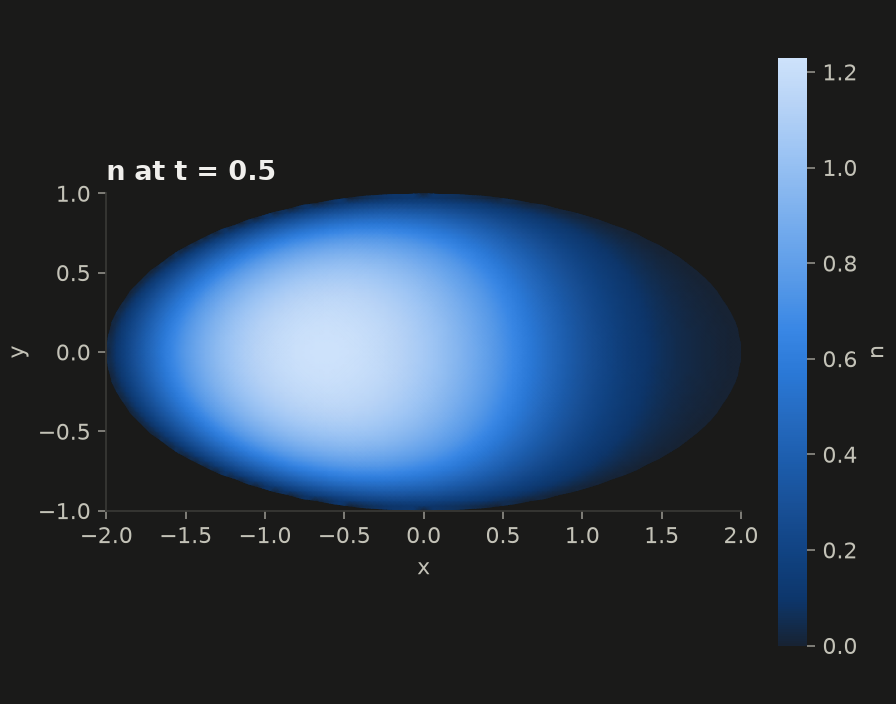
A cloud of ions in a grounded dish with the shape of an ellipse, after it has pushed itself apart for half a unit of time.
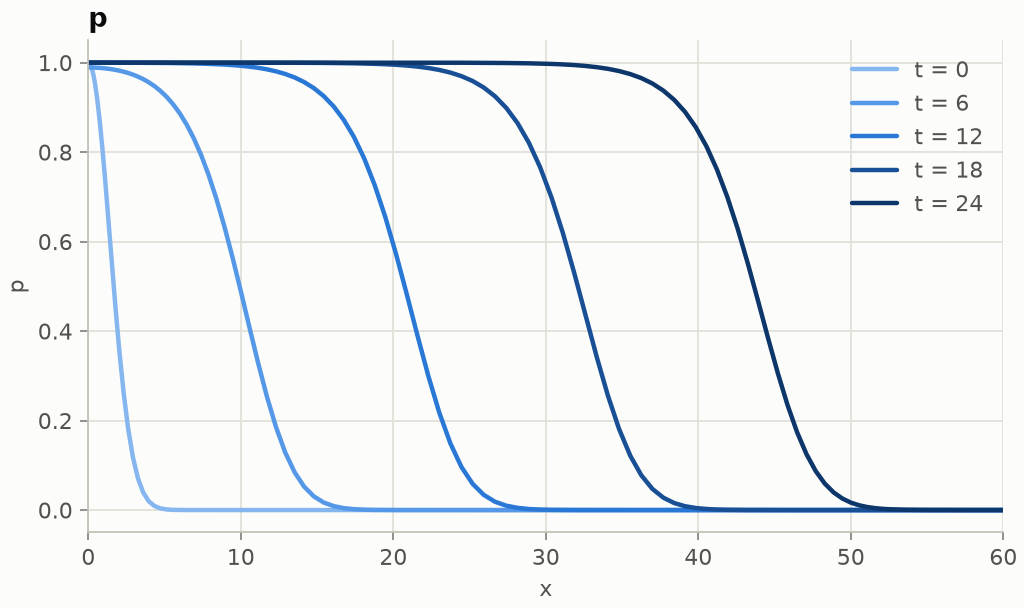
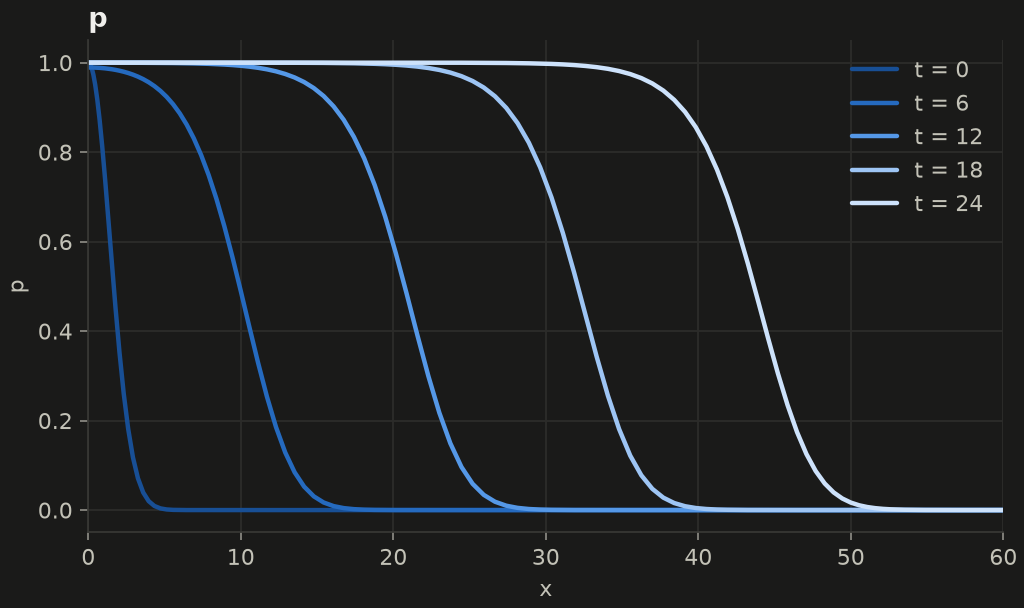
A population that grows and spreads, at five times that are equally far apart: its front advances at a nearly steady speed.
Quantum mechanics
Wave packets, and the states of a potential.
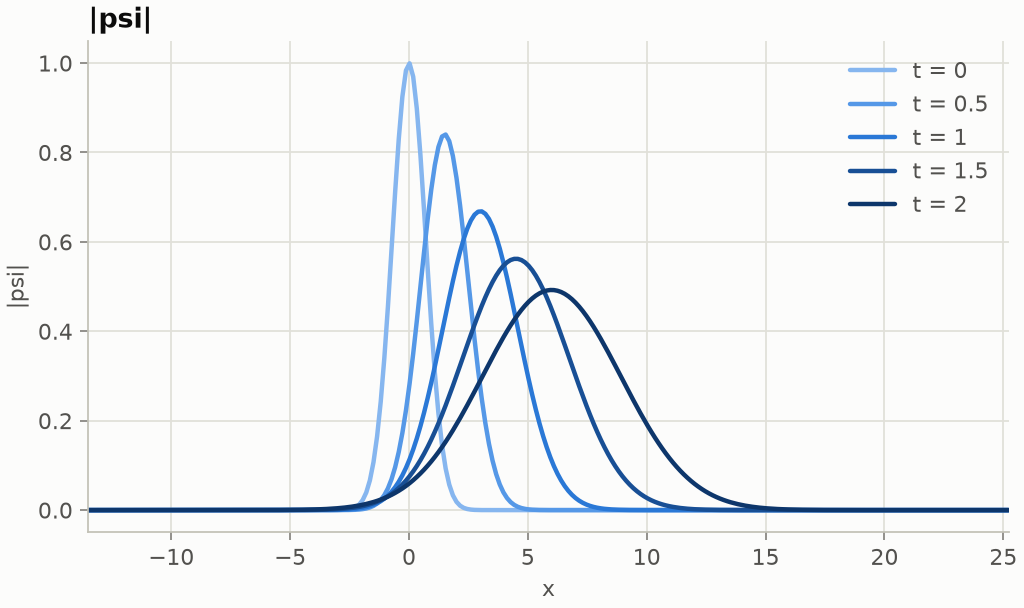
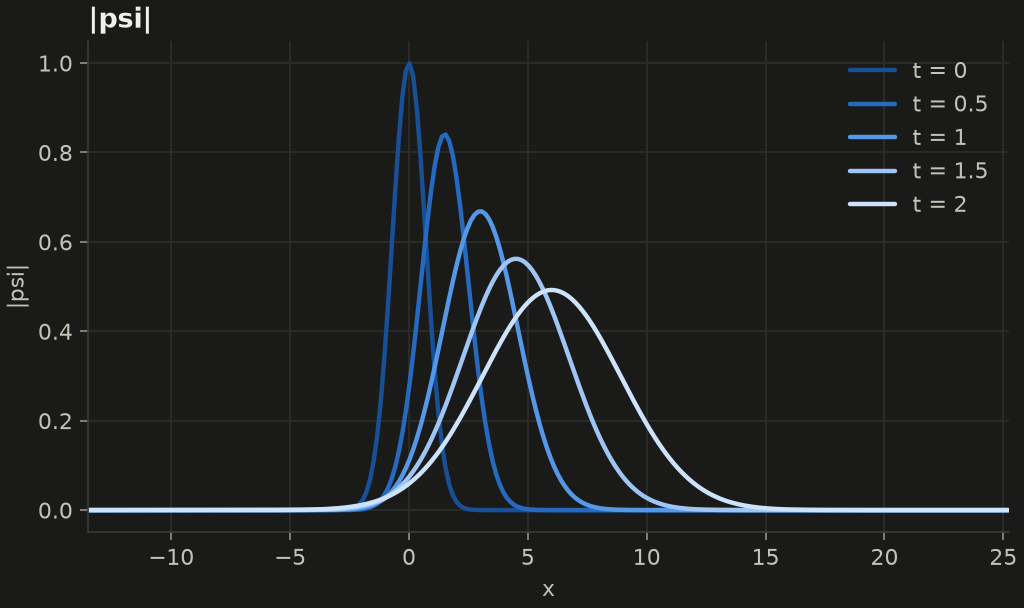
The magnitude of the wave function of a free particle at five times: the packet moves and spreads.
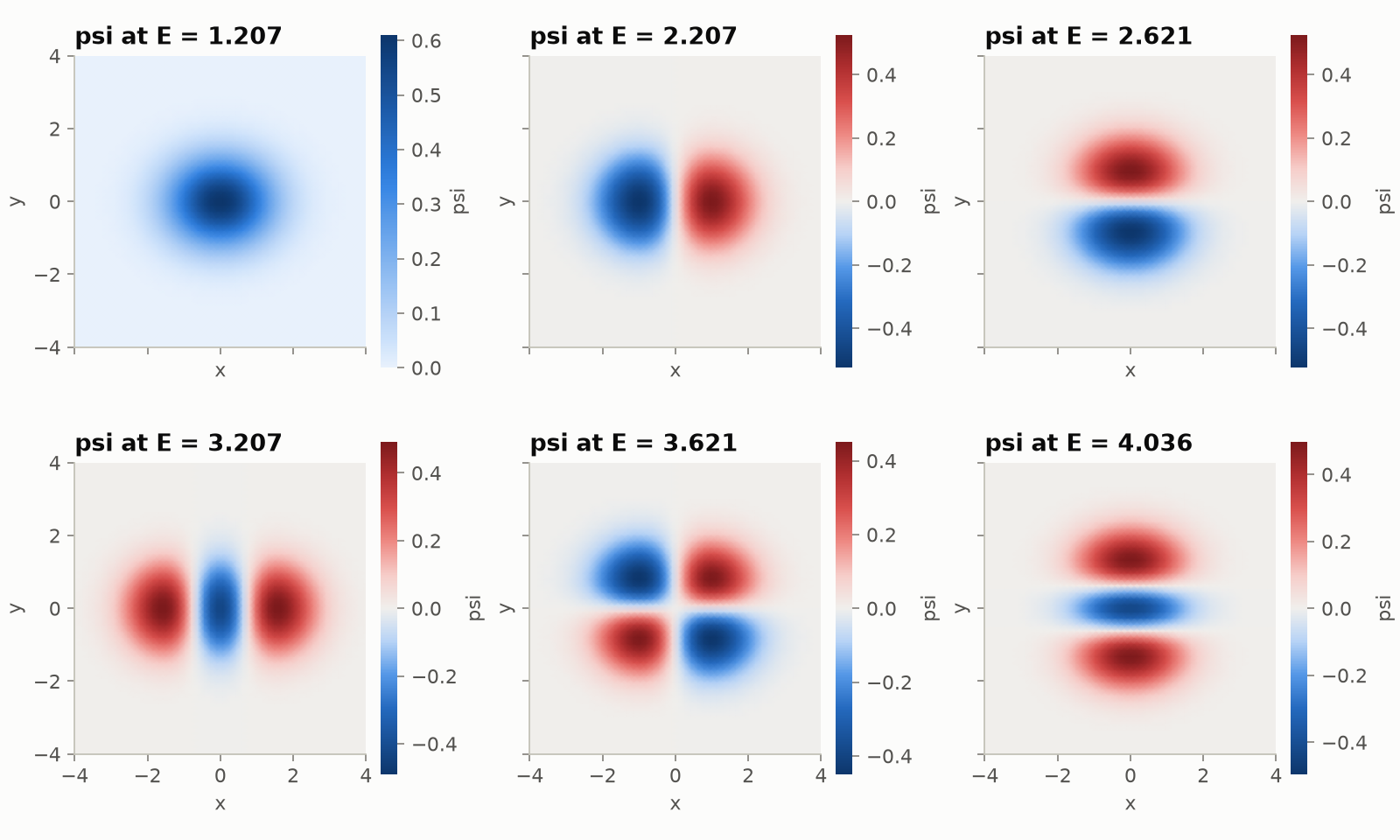
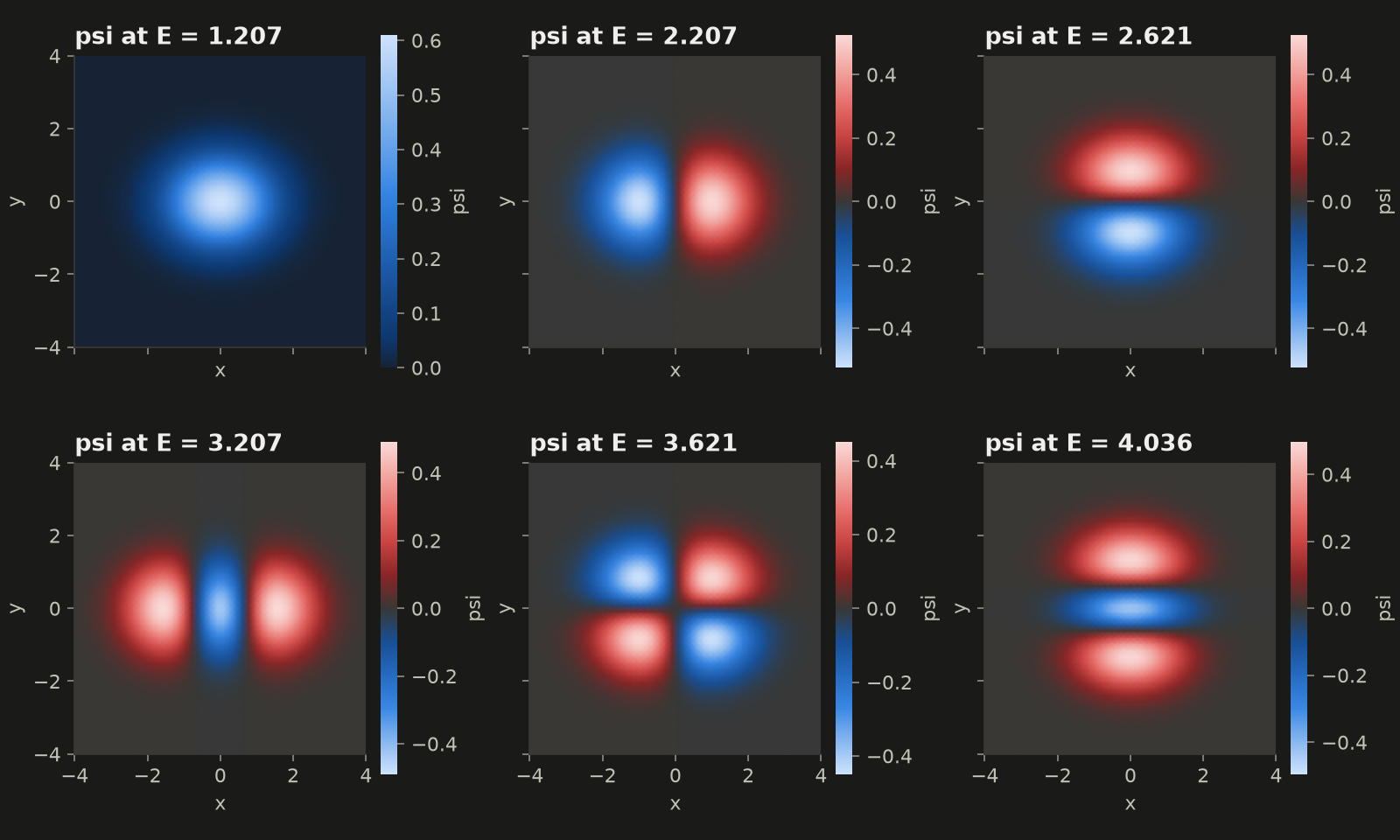
The six lowest states of a particle in a well that is steeper along one axis: each has its own pattern of nodes.
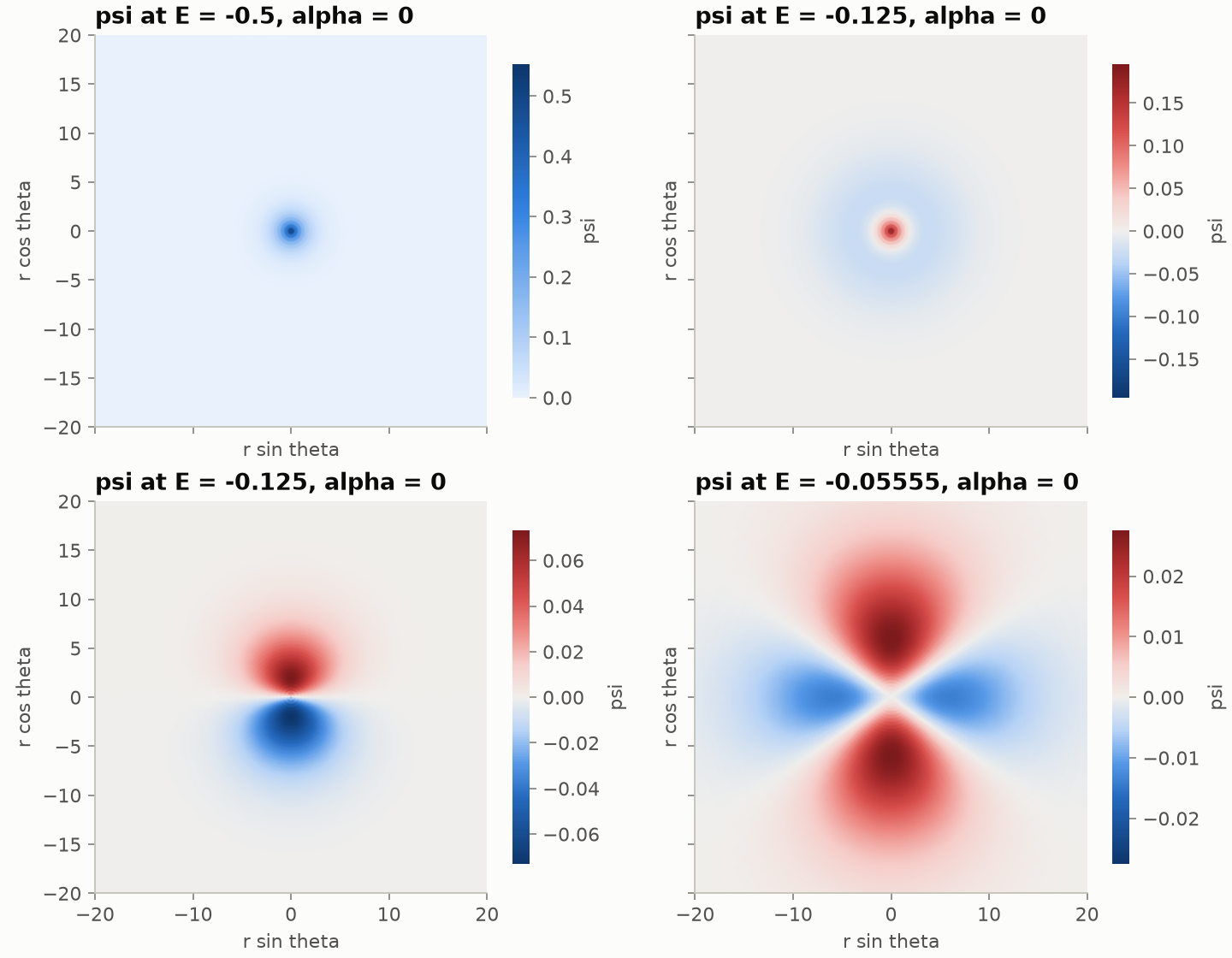
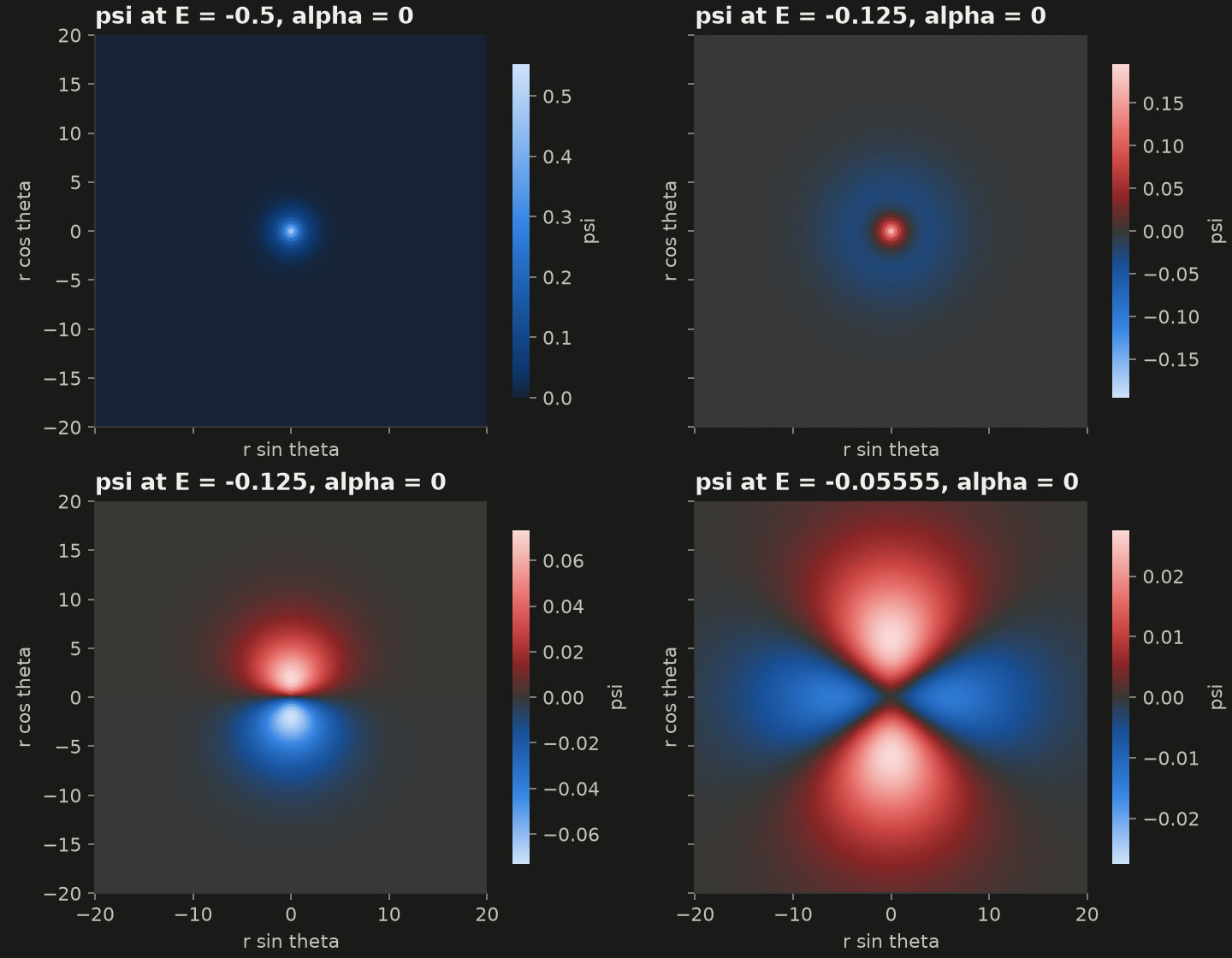
Four states of the hydrogen atom in a section through the axis: 1s and 2s above, a 2p and a 3d state below.
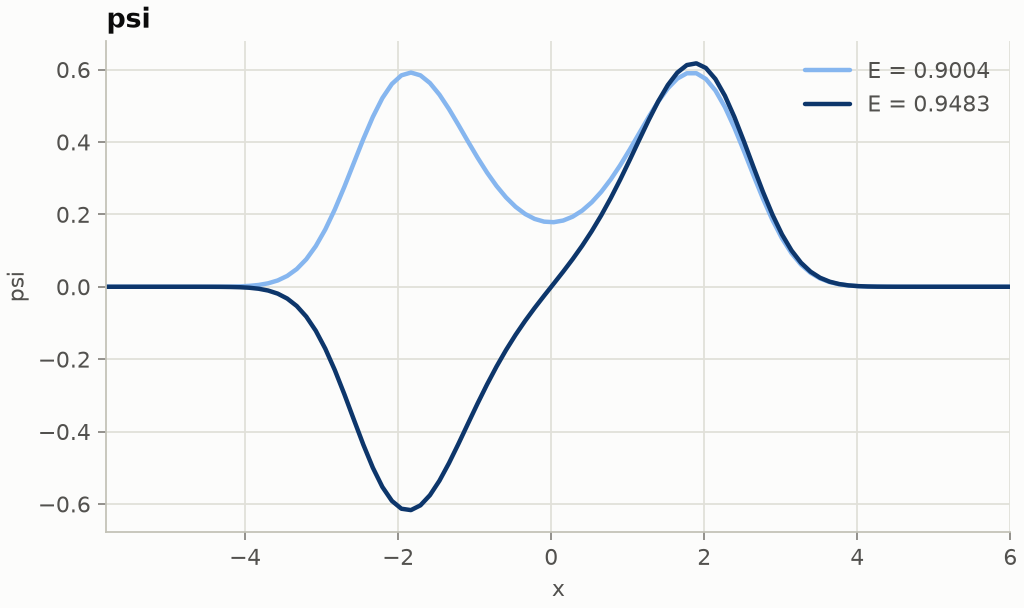
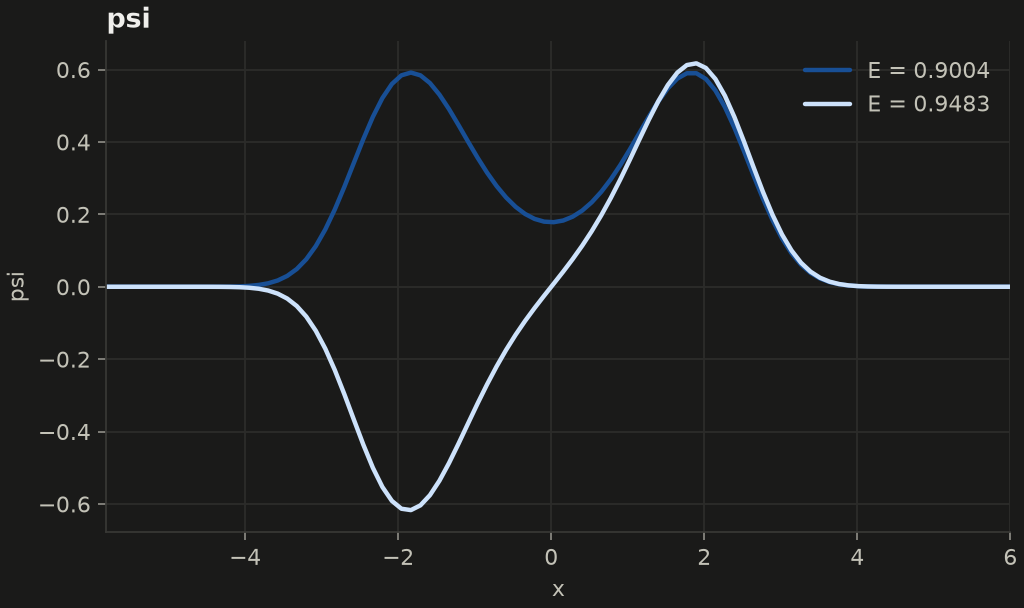
The two lowest states of a particle in a well with two minima: one is even, one is odd, and tunnelling splits their energies.
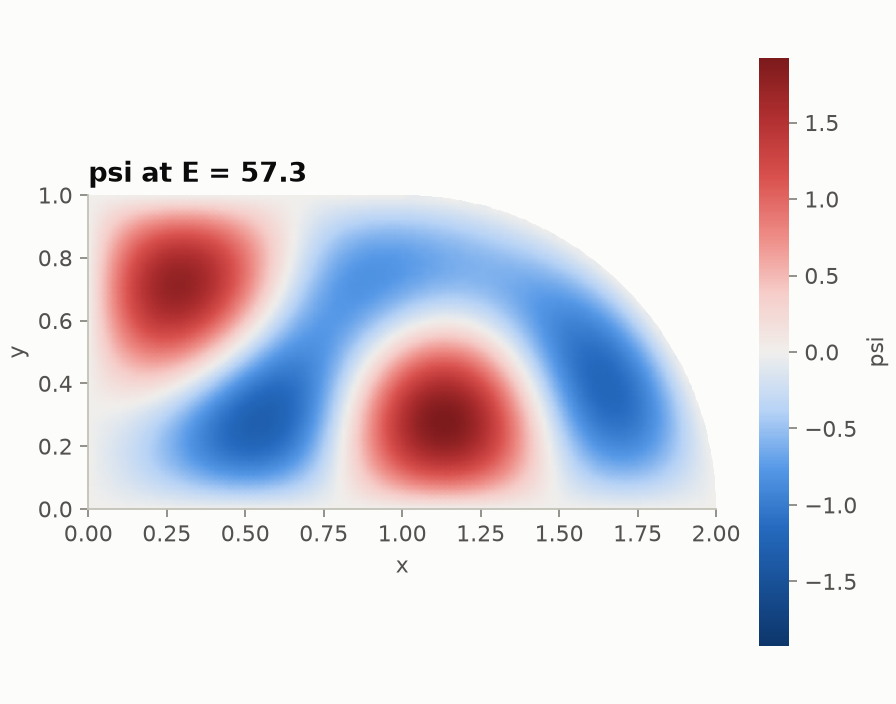
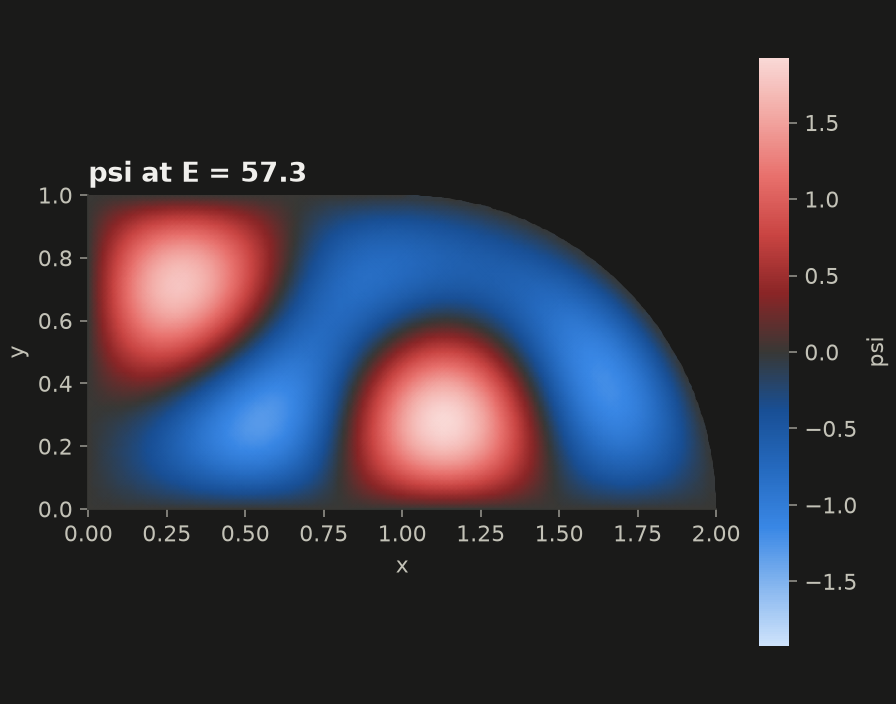
A mode of a quarter of a stadium: mirrored across its two straight cuts with the sign changed, it is the 27th mode of the whole.
Tones
The modes of drums, rooms, balls and plates.
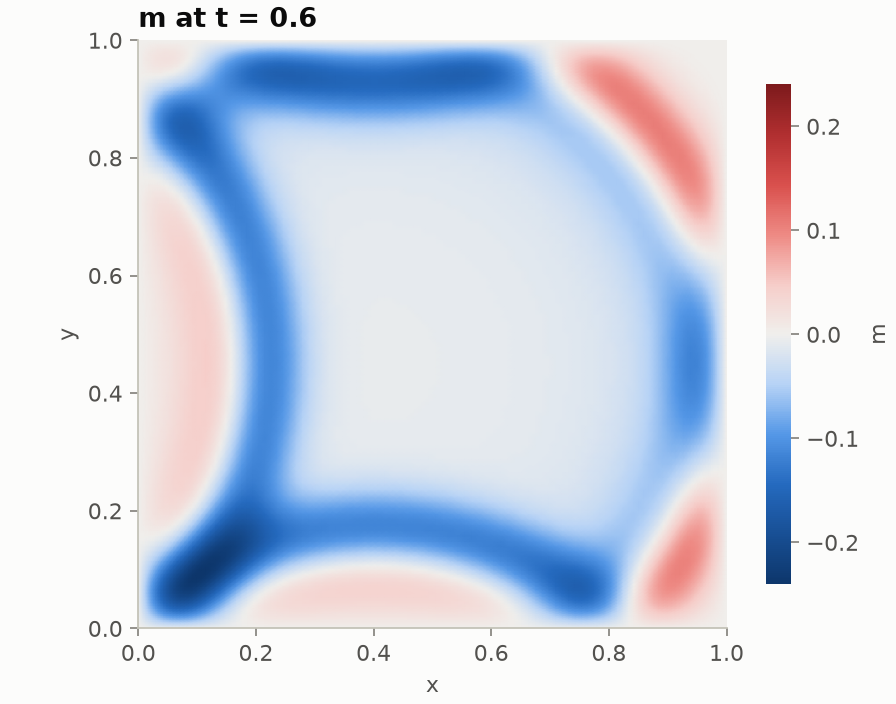
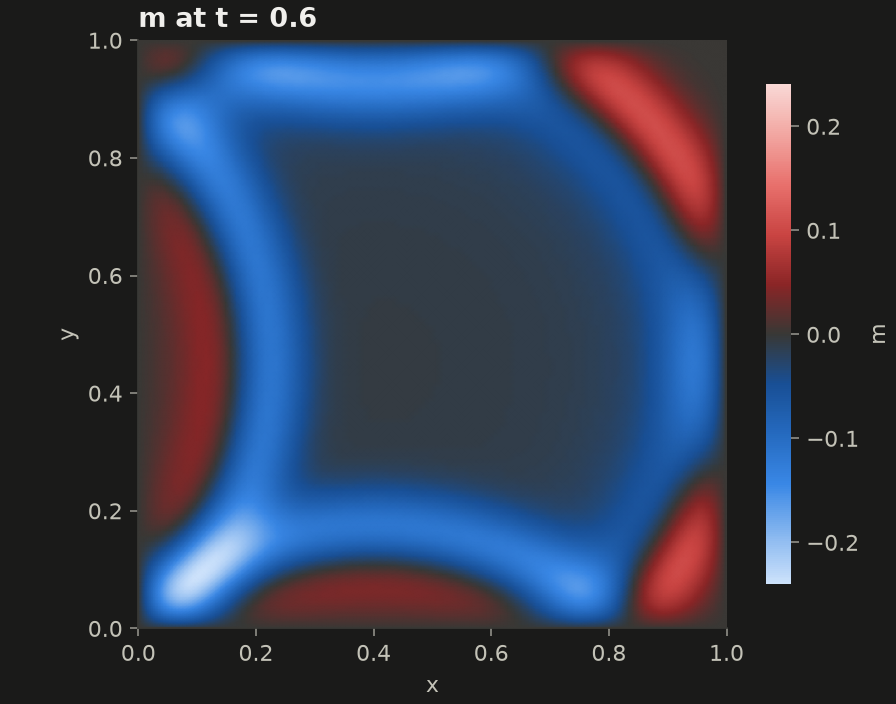
A square membrane that is held at its rim, a moment after it was let go from a dent off its centre.
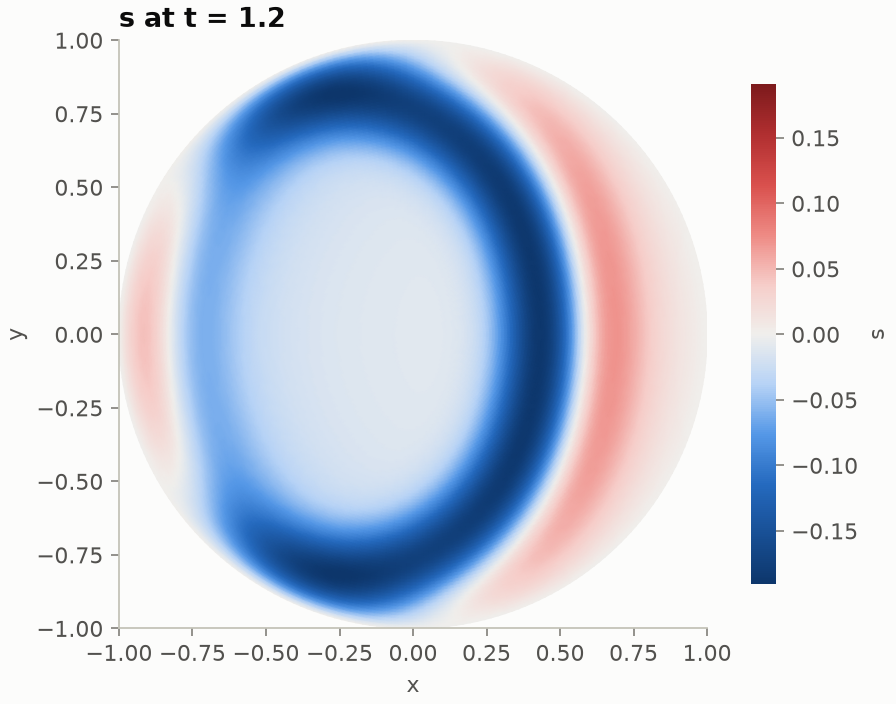
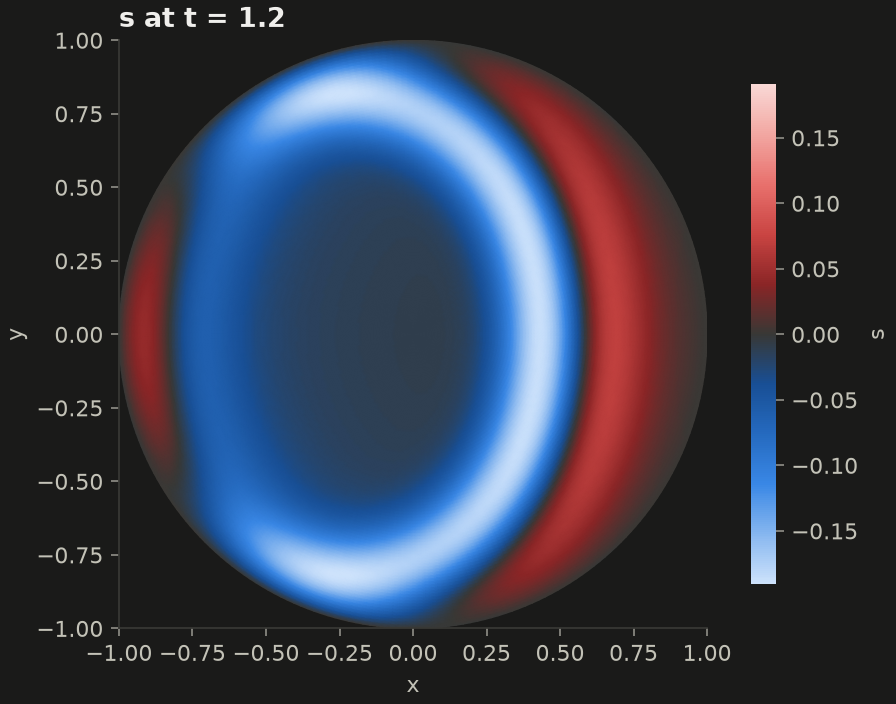
A round membrane that is held at its rim, let go from a dent off its centre: the wave has reached the rim and comes back.
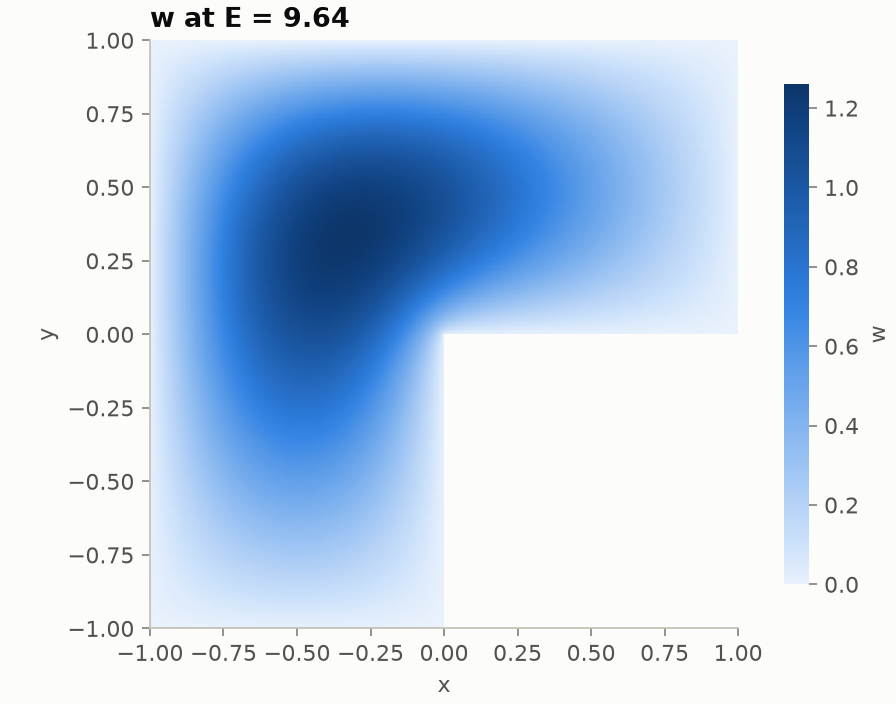
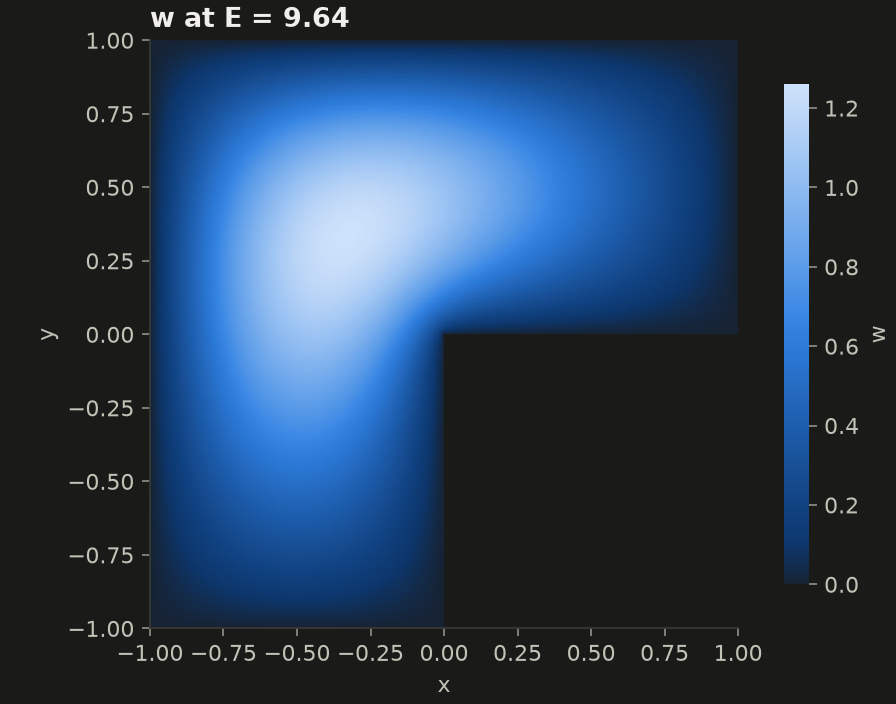
The lowest mode of a membrane in the shape of an L: it bulges in the bend and fades into the two arms, and no formula gives it.
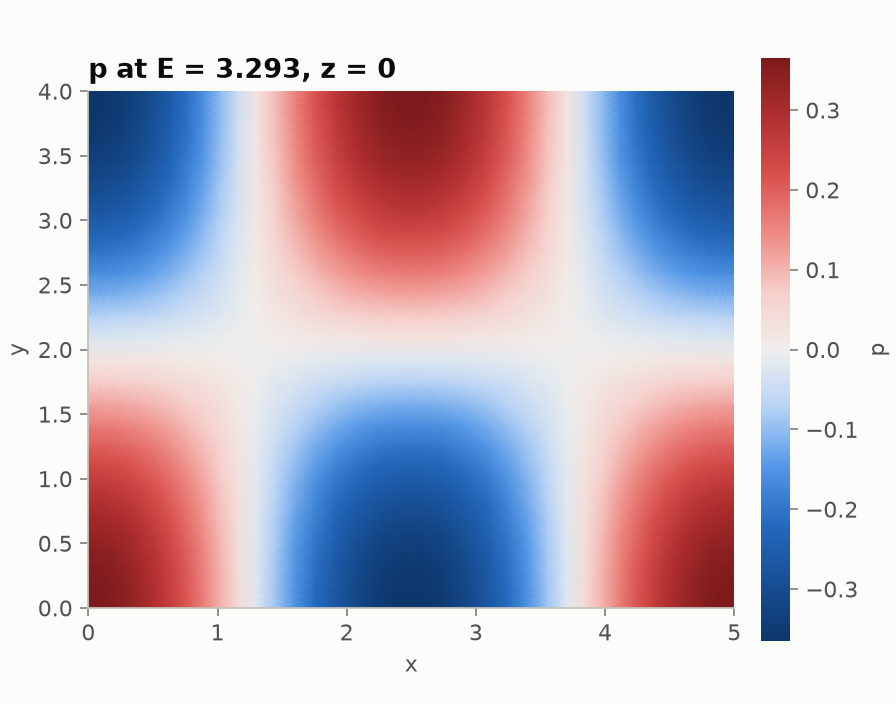
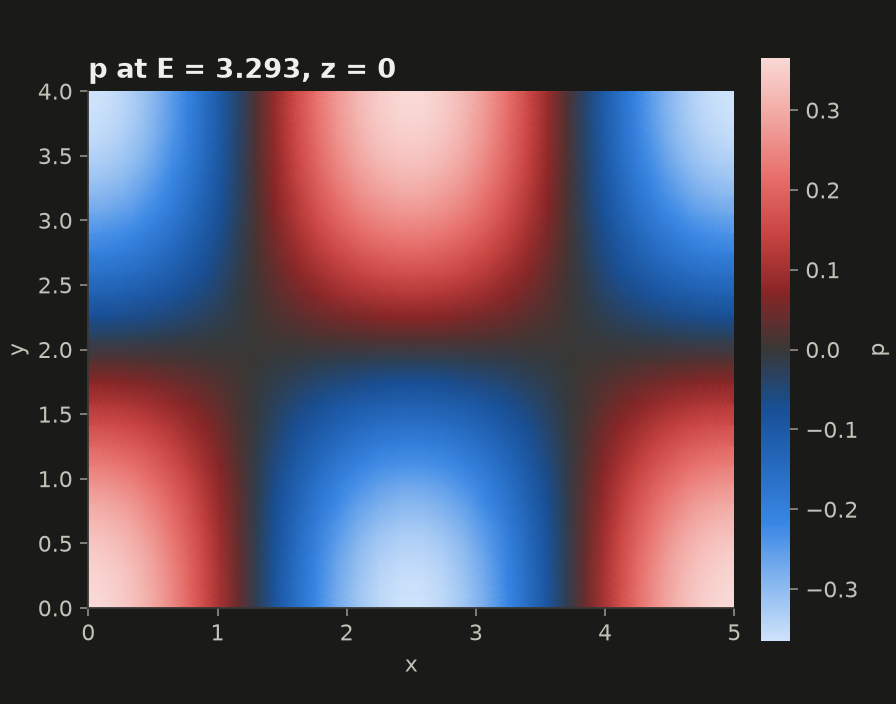
One of the lowest tones of a room with hard walls: the pressure on the floor, with two nodes along the room and one across it.
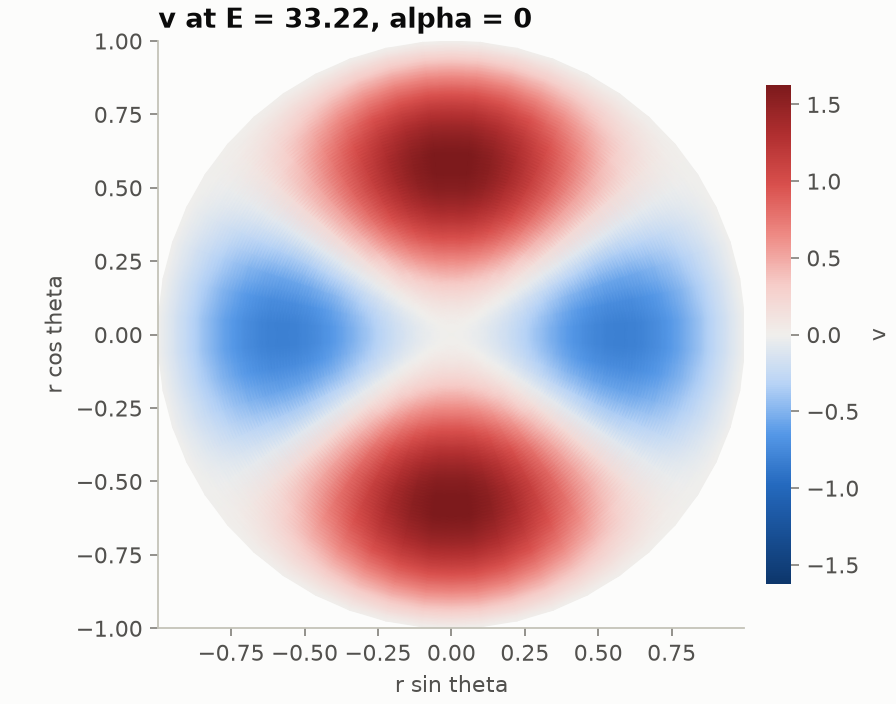
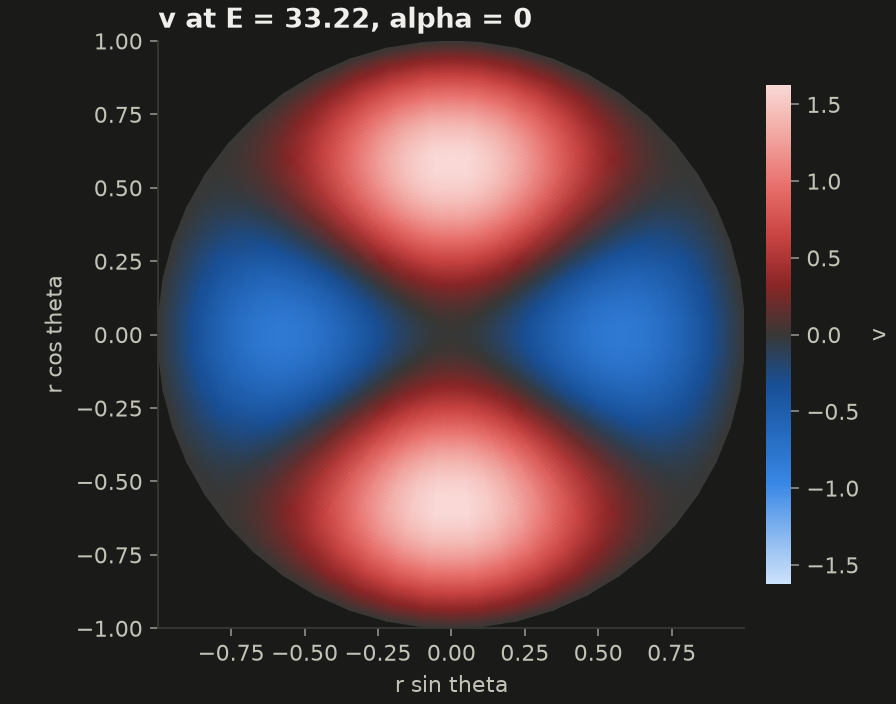
A mode of a ball that is held on its surface, in a section through its axis: two lobes along the axis and a belt around it.
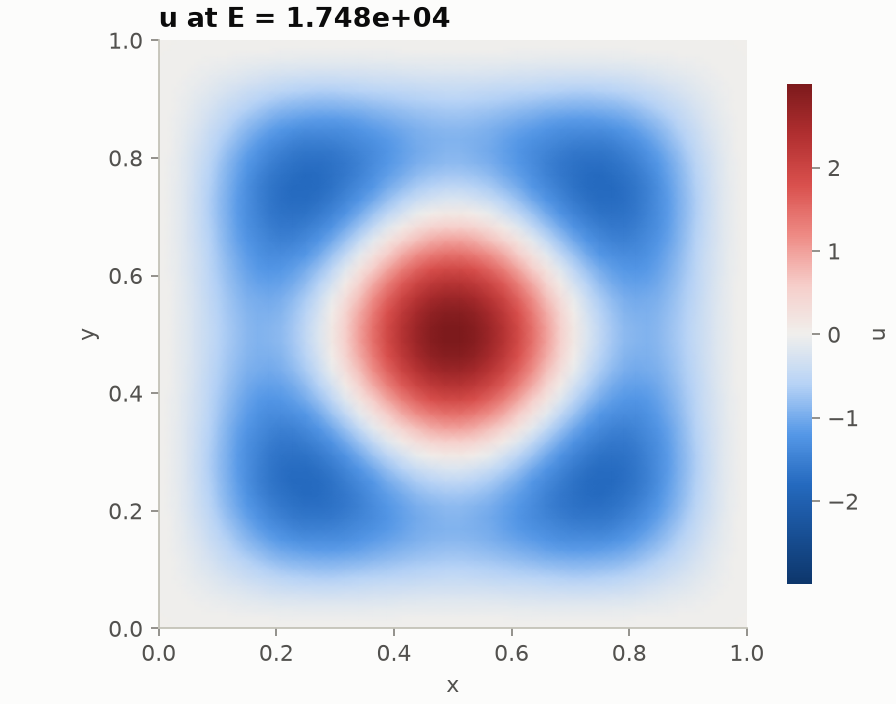
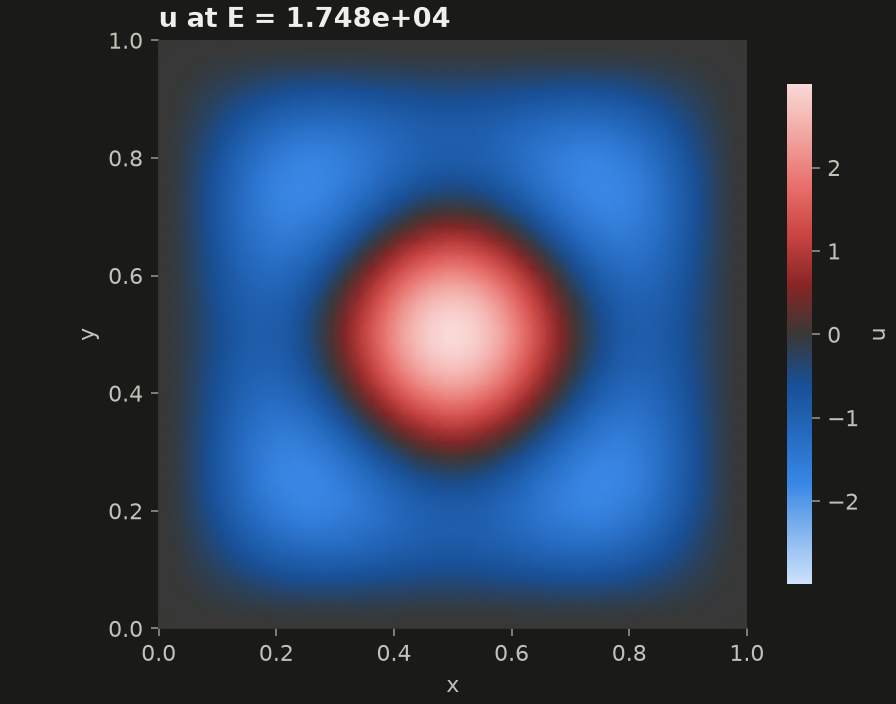
A tone of a square plate that is clamped along its sides: where the two colours meet the plate stays at rest, and sand on it would gather.